
There are moments in public life when the language of power reveals more than policy papers, press briefings, or official doctrine ever could. A state can still pretend to coherence while its spokesmen posture, its diplomats equivocate, and its institutions defer. But eventually the performance breaks down. What remains is the raw expression of impulse.
That is where the United States appears to be now.
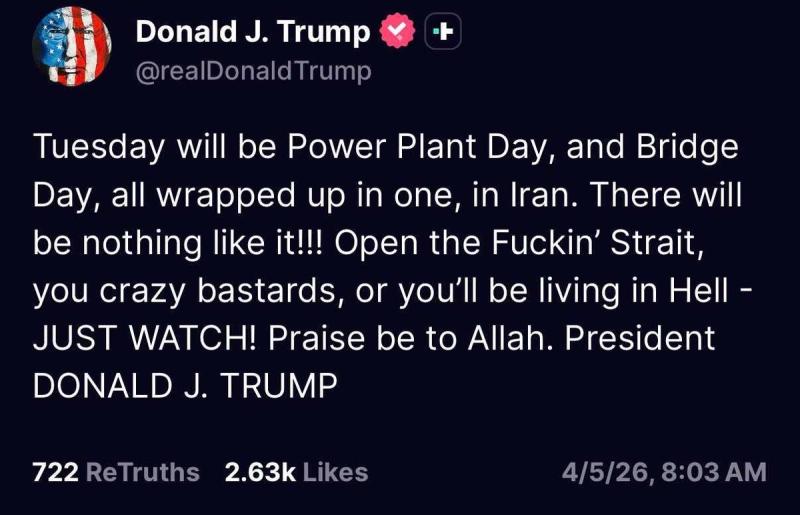
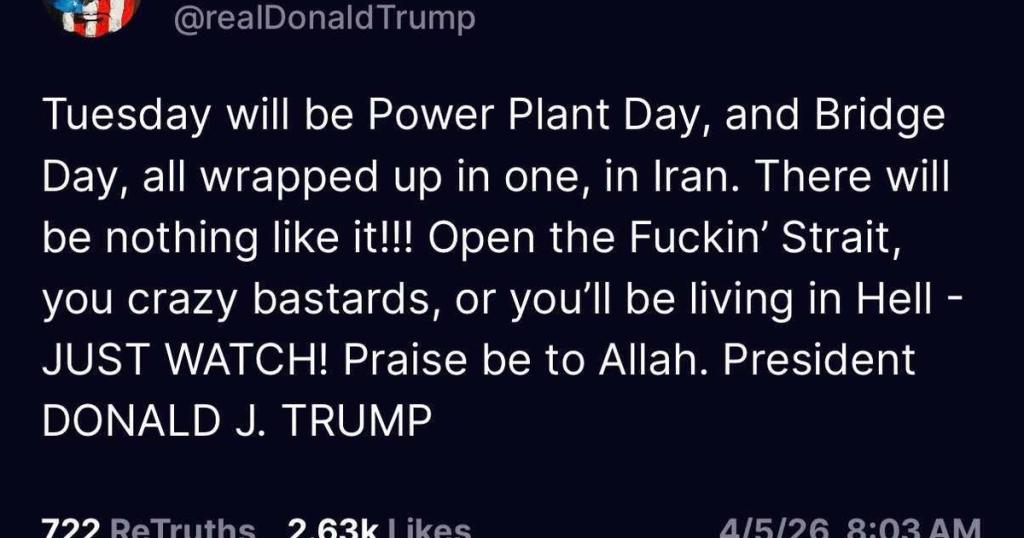
When an American president publicly threatens an entire nation in profane, apocalyptic terms, the issue is not simply decorum. It is not nostalgia for a vanished era of presidential restraint, though the loss of restraint is real enough. It is not even, primarily, a matter of taste. The deeper problem is that such rhetoric suggests something far more dangerous than vulgarity: the absence of strategy, the collapse of discipline, and the possibility that the most heavily armed state in the world is being steered by emotion rather than judgment.
The most alarming feature of this moment is not merely the recklessness of the language. It is that the language seems to mirror the underlying reality. The United States does not appear to have a clear political objective. The stated mission shifts by the day. First it is deterrence. Then it is restoring freedom of navigation. Then it is punishing resistance. Then it is cleaning up the consequences of earlier escalation. None of these add up to a coherent end state. They describe improvisation disguised as resolve.
That matters because wars are not redeemed by bravado. They are judged by outcomes, costs, and the clarity of the political purpose that supposedly justifies them. If the objective now is simply to create an exit ramp that allows Washington to declare victory after making the region more unstable, then the operation has already exposed its own emptiness. The mission becomes less about national security than about personal and political salvage.
This is what makes the present danger so acute. A cornered leader without a plan is often more dangerous than an ideologue with one. Ideologues at least proceed from a worldview. Desperation is less predictable. It can swing between retreat and overreaction, between pleading and menace, between extension and escalation. It is unstable by nature.
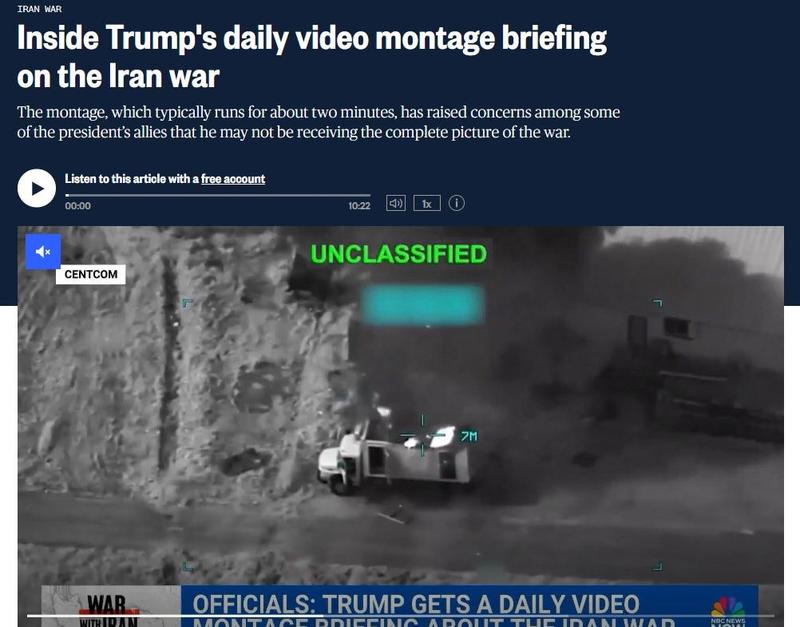
There is a particular peril in modern warfare when political leaders consume it as spectacle. If a president is surrounded by flattering advisers, shielded from unwelcome intelligence, and fed a steady stream of curated destruction, he may come to mistake imagery for control. Explosions on a screen can create the illusion of dominance. Bridges collapse, power stations burn, and edited clips suggest progress. But war does not unfold through highlight reels. A country is not defeated because its suffering has been made visually satisfying for foreign audiences. Infrastructure can be destroyed without political submission. Bombardment can inflame resistance rather than break it.
That misunderstanding has long haunted American power. The belief that enough force, displayed dramatically enough, will compel obedience has repeatedly collided with reality. Reality has a way of reasserting itself through retaliation, attrition, and the simple fact that other societies also possess will, memory, and means of response.
The current crisis is forcing another recognition that Washington has resisted for years: intimidation is not strategy, and coercion is not the same as control.
What the world sees now is not only aggression but confusion. Threats are issued and then softened. deadlines are announced and then extended. Catastrophic warnings are followed by hesitation. The message to adversaries is not fearsome consistency but visible uncertainty. The message to allies is even worse. They are being asked to trust the judgment of a patron that appears increasingly impulsive, erratic, and unable to define success.
That loss of confidence may prove more consequential than any single military exchange. For decades, the United States has sustained its position not only through force but through the perception of force paired with rational command. Even states that disliked American policy often continued to rely on American leadership because they believed the system, however cynical, remained legible. It had a logic. It had lines. It had adults in the room.
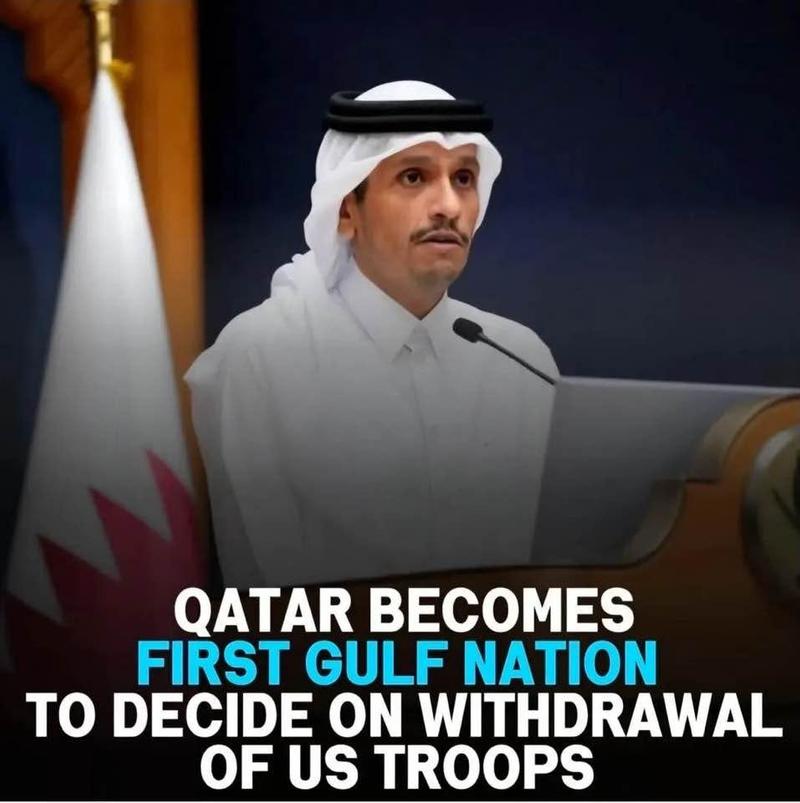
When that confidence evaporates, the geopolitical consequences spread quickly. Countries begin to hedge. They diversify partnerships. They open channels to rivals they were once told to isolate. They ask whether dependence on Washington is still a source of security or a growing liability. They reconsider sanctions regimes, basing arrangements, and energy alignments. They stop assuming that the United States can manage the very crises it helps create.
This process is already underway. It is not driven by ideology so much as by survival. States that feel endangered by American recklessness will seek alternatives wherever they can find them. Some will turn to regional accommodation. Others will deepen ties with China or Russia. Others will simply try to reduce exposure to a deteriorating American order. The point is not that these alternatives are morally pure or politically uncomplicated. It is that the old assumptions are eroding.
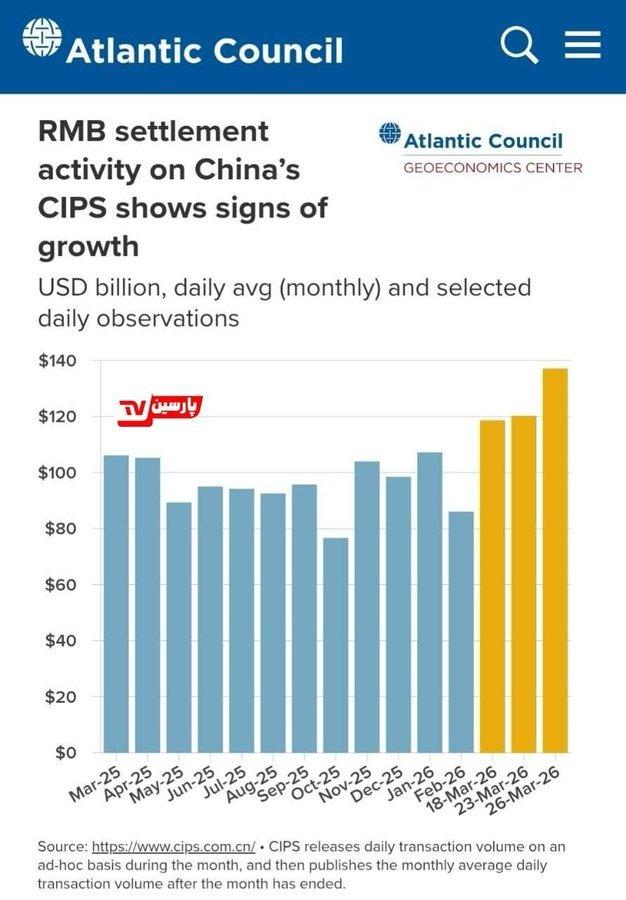
American leaders often imagine credibility as something preserved through escalation. In fact, credibility is more often destroyed by the inability to match threats to achievable outcomes. A great power does not look strong when it keeps widening the circle of destruction without a discernible path to resolution. It looks trapped.
This is why the moral dimension of the crisis cannot be separated from the strategic one. The deliberate targeting of civilian infrastructure, the use of rhetoric that suggests collective punishment, and the public normalization of exterminatory language do not merely stain a nation’s conscience. They also reveal a government losing its sense of limits. And once limits vanish rhetorically, they become easier to abandon operationally.
That is how the unthinkable begins to enter serious conversation.
The fear of nuclear escalation is often dismissed as alarmism until the political and military conditions that make it plausible are already in place. Those conditions are not only technological. They are psychological and institutional. They arise when a superpower begins to perceive both moral impunity and strategic humiliation at the same time. It can no longer easily win, but it cannot imagine accepting visible defeat. In that space, escalation becomes tempting precisely because it seems to offer a shortcut back to dominance.
This is not inevitable. But it is possible, and possibility is enough to demand urgency.
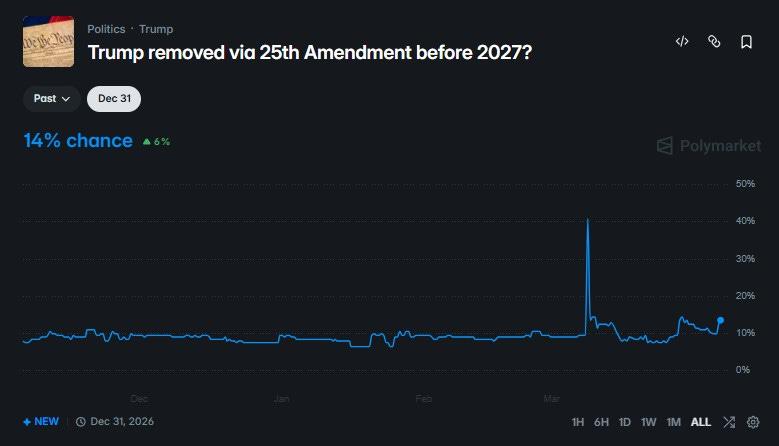
There is another uncomfortable truth buried in this crisis. The problem is not only one man, though personal decline, instability, and impulsiveness can make every danger sharper. The problem is also a political system that keeps elevating elderly leaders whose limitations are obvious, then insisting that the public deny what it can plainly see. It is a system that normalizes cognitive deterioration when it is politically convenient and suppresses scrutiny when scrutiny would be destabilizing. Such denial is not a private failing. In matters of war, it becomes a public hazard.
Still, it would be too easy to reduce everything to questions of temperament or age. The machinery around the president matters as much as the president himself. Advisers, ideological lobbies, deferential institutions, and a media culture that often treats war as theater all contribute to the fog in which recklessness flourishes. Personal instability becomes most dangerous when surrounded by structural enablement.
The world, meanwhile, faces its own test. Expressions of concern are no longer enough. Mild criticism accompanied by continued cooperation is not restraint. It is complicity with better manners. If foreign governments believe, as many clearly do, that the United States and its regional partners are pushing the region toward catastrophe, then their responsibility does not end with carefully worded statements. The question is whether they are prepared to act in ways that impose real political costs on escalation.
History is unforgiving toward those who recognize the abyss and continue walking toward it because the alternative feels inconvenient.
The Western allies now muttering unease should consider what exactly they are preserving through passivity. If the aim is to remain in good standing with a power that is discrediting itself before the world, they may find that they have traded moral standing for a vanishing strategic dividend. If the aim is to avoid rupture, they should ask whether a greater rupture lies ahead if this trajectory continues unchecked.
The burden of what follows will not be borne only by those issuing threats. It will also be borne by those who enabled them, excused them, and decided that the risks of opposition were greater than the risks of silence.
There is still time to choose differently. But the window is narrowing.
What is at stake is larger than one presidency or one war. It is the question of whether international order will be governed by law, restraint, and political reality, or by wounded vanity backed by overwhelming firepower. It is the question of whether a declining hegemon can accept limits without setting the world on fire. And it is the question every allied capital should now be asking with far more urgency than it has shown so far: at what point does loyalty to a reckless power become a form of collective self-destruction?
The answer should already be clear.
Listen to CATR on:
Newsletter
Subscribe to Conversations Among the Ruins
Long-form geopolitics and the decline of the unipolar world order. New episodes straight to your inbox.
Free. No spam. View on Substack →
Reader-funded
This is independent, long-form work.
Conversations Among the Ruins is written, not repackaged, and it stays free because readers choose to fund it. If it is worth your time, a paid subscription or a one-off tip keeps it going.
Become a supporter →