
We are now more than a month into a conflict that has fundamentally rewired the global economy, and Washington is running out of options. As the White House prepares to address the nation, the prevailing mood is one of profound strategic entrapment. The temptation for the administration is obvious: declare a decisive victory, claim the enemy has been sufficiently degraded, and initiate a swift withdrawal from the region.
But geopolitical realities rarely bend to the demands of domestic political messaging. A speech cannot reopen a maritime chokepoint, nor can it force a newly emboldened alliance of adversaries to capitulate.
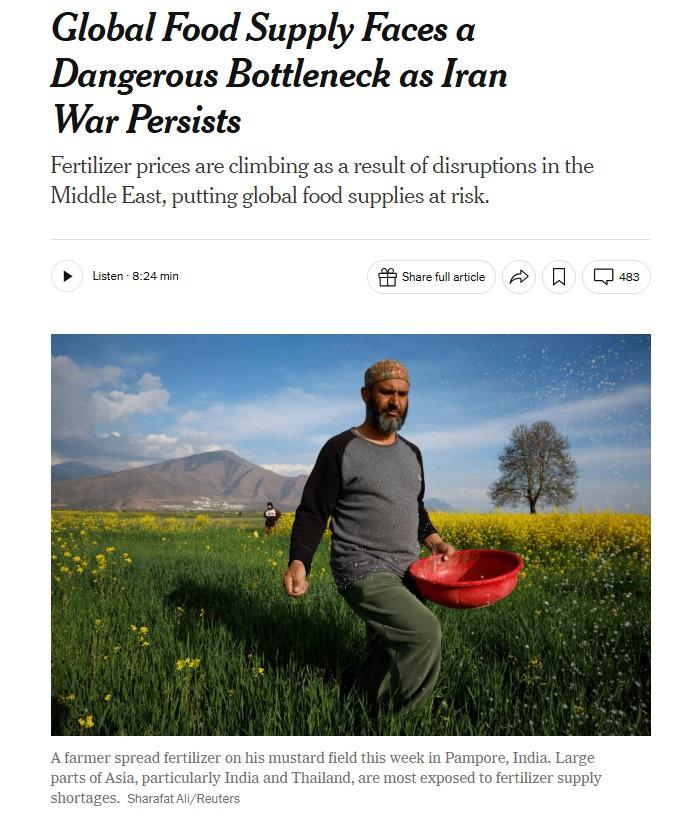
At the center of this crisis is the Strait of Hormuz. The waterway remains effectively sealed off to hostile actors, functioning now under a highly selective toll system. This is not merely a military blockade. It is a calculated strike at the architecture of American financial supremacy. By allowing ships from friendly, developing nations to pass freely while demanding hefty tolls from others in non-dollar currencies, the architects of this blockade are accelerating a global trend of de-dollarization. The consequences for US-led Western hegemony could be fatal. There is the further prospect of a global economic depression fueled by paralyzed energy markets and frozen agricultural exports like urea.
The administration’s frustration is palpable. Washington has demanded that European allies step up to secure their own energy interests, effectively suggesting that NATO members should resolve a crisis born of unilateral American action. Unsurprisingly, European capitals have balked. The reality is that no Western naval coalition currently possesses the capability or the appetite to open the Strait.
If the administration chooses to declare a premature victory and withdraw the protective umbrella of American military might, the regional fallout will be unprecedented. Gulf states, long reliant on Washington for security, will be left entirely exposed. We are already seeing the diplomatic calculus shift. Nations that built their economic models on being safe, stable oases for international investment are quietly realizing that the old security guarantees are null and void. In the absence of an American hegemon, they will have no choice but to negotiate new terms of coexistence with Iran.
Nowhere is the potential for destabilization more acute than in Israel. The country is currently fighting a grueling, multi-front campaign that is severely straining its military manpower and its civilian economy. Ground operations in southern Lebanon have resulted in heavy armor losses, while a continuous barrage of sophisticated aerial attacks has disrupted daily life to an unsustainable degree. If Washington packs up and goes home, Israel will find itself in an asymmetrical war of attrition it cannot win on its own.
The historical reflex of the global market has always been to bet on the United States. During times of global instability, investors invariably rush toward the safety of the US dollar and American treasuries. Yet, there is a growing sense among international observers that this crisis is different. The institutional bias in favor of American invincibility is fracturing.
We are witnessing a profound transition. For decades, the implicit rule of international relations was that the American military could impose a resolution to any conflict, anywhere on the globe. That era is drawing to a close. The limits of unipolar power have been thoroughly exposed.
Venezuela, militarily much weaker than Iran, is pursuing a different strategy. Despite years of crushing economic pressure, asset seizures, and diplomatic isolation, Venezuela has maintained its internal structures. Visitors to the country note a society far more open and stable than Western narratives suggest. In contrast to Iran, Venezuela has chosen against a direct military confrontation with the American behemoth. Instead, it has decided to wait out the storm, betting that the American empire will eventually exhaust its capacity to project force.
Washington is now facing a choice between two highly unpalatable outcomes. The administration can remain entrenched in a rapidly escalating conflict that risks a devastating nuclear threshold, or it can accept a humiliating withdrawal that signals the definitive end of American hegemony.
Whatever is said from the Oval Office in the coming days, the dust will eventually settle. When it does, the world will likely find itself irrevocably transformed. The age of the unipolar American veto is over, and the messy, complicated reality of a multipolar world has officially arrived.
Listen to CATR on:
Newsletter
Subscribe to Conversations Among the Ruins
Long-form geopolitics and the decline of the unipolar world order. New episodes straight to your inbox.
Free. No spam. View on Substack →
Reader-funded
This is independent, long-form work.
Conversations Among the Ruins is written, not repackaged, and it stays free because readers choose to fund it. If it is worth your time, a paid subscription or a one-off tip keeps it going.
Become a supporter →