
In a move that jolted oil markets, the United Arab Emirates has announced it is leaving both OPEC and OPEC+. Crude prices briefly dropped more than $2 a barrel on the headline before clawing some of it back. On Chinese social media, the reaction was immediate: is this just an oil production dispute, or does it signal a much bigger rift inside the Gulf, with consequences for Saudi leadership, U.S. influence, and the future of global energy pricing?
What Actually Happened
According to the reports circulating across Chinese media and commentary threads, the UAE said it would formally exit OPEC and OPEC+ from May 1. That is a major break. The country has been a key producer inside the cartel for decades, and it is not some marginal member. It is one of the group’s most important oil exporters and one of the few with meaningful spare capacity.
The immediate market interpretation was simple: if the UAE leaves the quota system, it gains more freedom to pump more oil. More supply usually means downward pressure on prices. But the real story is more complicated because this is happening during a period of regional instability, shipping risk, and deep political frustration inside the Gulf.
The Core Economic Reason
Strip away the drama and one reason stands out: the UAE has spent heavily to expand its oil production capacity, but OPEC’s quota system has limited how much of that capacity it can actually use. In other words, Abu Dhabi has invested for growth but has been stuck inside a structure designed to hold output back in order to support prices.
Estimates cited in Chinese commentary say the UAE wants to raise crude production from roughly 3.4 million barrels per day to 5 million by 2027. That is a huge strategic commitment. If your long-term plan is to produce more, gain market share, and turn investment into revenue, staying inside a production restraint club becomes increasingly painful.
This is why many analysts see the exit first as an issue of liyi fenpei, or unequal benefit distribution. The UAE believes it has shouldered the costs of capacity expansion without getting a fair enough share of the upside. That tension has existed for years. The current crisis may simply have turned a simmering dispute into a formal break.
“The UAE did not spend billions building extra capacity just to leave it sitting idle for the sake of someone else’s quota strategy.”
But This Is Also About Saudi Arabia
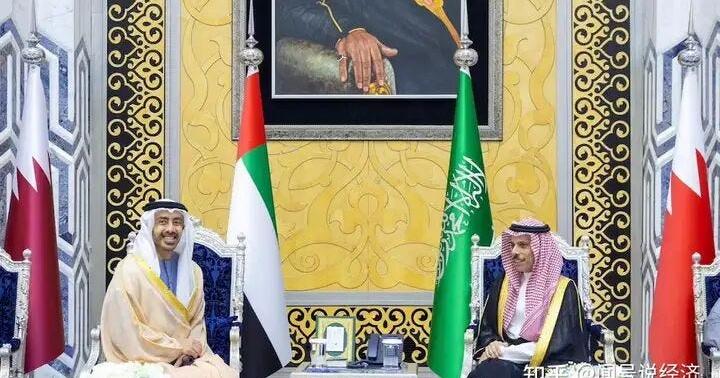
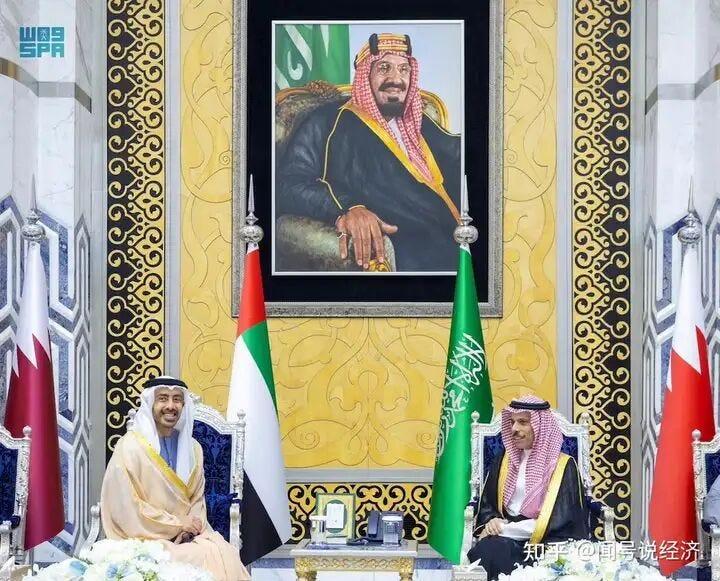
The second layer is political. OPEC has always been more than a market coordination mechanism. Inside the Gulf, it is also about hierarchy, prestige, and who gets to lead. That usually means Saudi Arabia. Several of the most widely shared Chinese takes argue that when a Gulf monarchy exits OPEC, it often reflects a breakdown with Riyadh as much as a disagreement over barrels.
The UAE and Saudi Arabia have not been identical strategic partners for some time. They have differed on production quotas, on regional security questions, and on how confrontational to be toward Iran. The UAE appears to have concluded that Saudi caution has protected Saudi interests better than Emirati ones, especially during the latest regional conflict.
That matters because leaving OPEC is not just an energy policy shift. It is also a way of saying that Abu Dhabi wants more sovereign room to choose its own economic and diplomatic path, even if that means visibly stepping outside a Saudi led framework.
War, Vulnerability, and a Very Expensive Wake Up Call
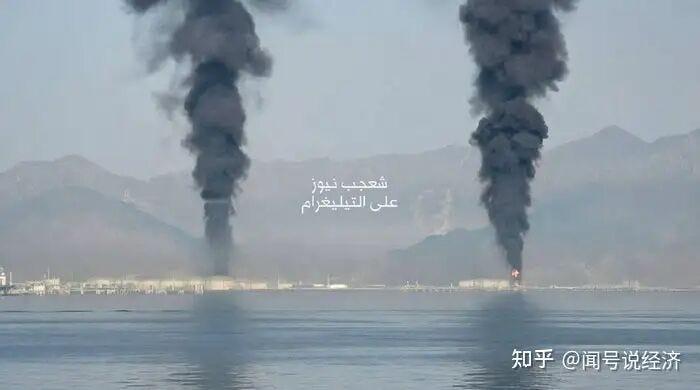
Much of the Chinese discussion focuses on a broader geopolitical trigger: the UAE has been badly exposed by the current U.S.-Iran-Israel confrontation. Commentators describe it as one of the largest third-party economic losers in the crisis. Whether every figure circulating online proves accurate or not, the basic logic is easy to understand.
The UAE built its modern growth model on three pillars: oil income, financial services, and its role as a regional logistics and business hub. Conflict threatens all three at once. If energy infrastructure is vulnerable, shipping routes are disrupted, insurance costs rise, flights get canceled, investors pull back, and tourism falls, then the UAE’s diversified success story starts to look fragile very quickly.
That helps explain why some analysts believe the UAE no longer sees controlled oil restraint as a luxury it can afford. If the region is unstable and growth outside oil is under pressure, then pumping more crude becomes less a strategic option and more a cash flow necessity.
Why the Hormuz Factor Matters So Much
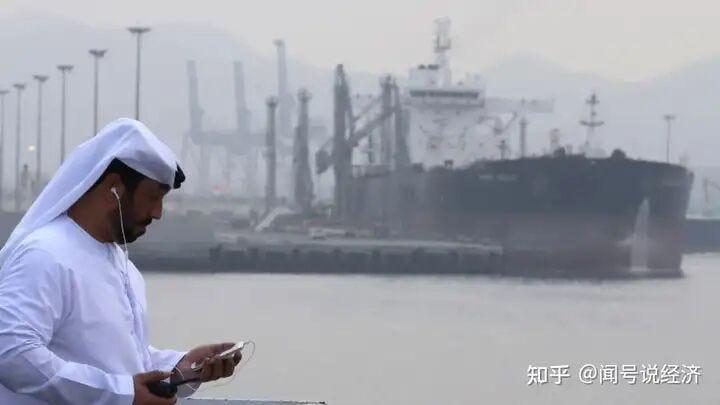
One of the sharpest concerns is the Strait of Hormuz. Even if the UAE wants to produce more, exporting that oil is another matter if the region remains dangerous. Chinese commentators repeatedly noted that this crisis exposed the limits of OPEC as an institution. OPEC can coordinate output. It cannot guarantee shipping security or defend member states from missile and drone attacks.
That distinction is crucial. For years, membership in OPEC offered influence over pricing and a seat at the table. But when national survival and export security become the urgent issue, an output cartel starts to look inadequate. From the UAE perspective, if the organization cannot help protect the route through which your oil leaves the Gulf, then the value of cartel discipline declines sharply.
Some discussion has also highlighted Fujairah on the Gulf of Oman as an alternative export route that sits outside the narrowest chokepoint logic. Even so, few believe geography alone fully solves the problem if the broader regional security picture keeps deteriorating.
The U.S. Angle Is Hard to Ignore
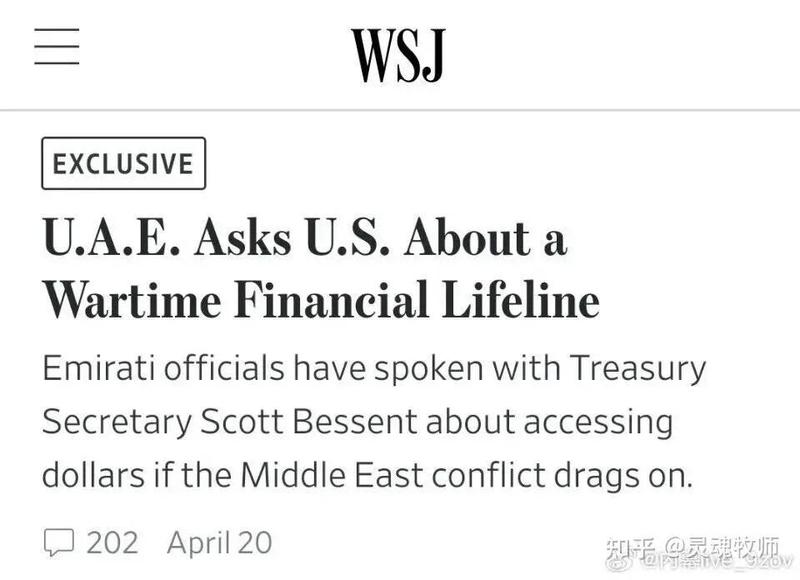
Another striking thread in the Chinese discussion is the idea that the UAE is trying to rebalance its relationship with Washington. Reports cited in commentary say Emirati officials sought wartime financial support from the United States. That has fueled speculation that Abu Dhabi wants both economic relief and stronger security backing, while also signaling that it may rethink how tightly its oil wealth remains tied to old political assumptions.
Whether or not one accepts the more dramatic claims online, the core point is plausible: the UAE has learned that wealth alone does not guarantee protection. If Washington cannot fully stabilize the region, and OPEC cannot protect exports, then Abu Dhabi has strong incentives to maximize autonomy, raise revenue where possible, and avoid being trapped by other countries’ strategic caution.
What This Means for OPEC
For OPEC and OPEC+, the symbolic damage is serious. Qatar’s earlier exit was one thing. The UAE leaving is another. This is a bigger producer, a richer state, and a much more central Gulf player. If a country of this weight decides that quota discipline no longer serves its national interest, it raises awkward questions about the cohesion of the whole system.
In the short term, this does not automatically mean OPEC collapses. Saudi Arabia still has enormous influence, and global oil markets remain highly sensitive to supply coordination. But the exit does weaken the image of unity. It reminds the market that the cartel is only as strong as the willingness of sovereign states to keep sacrificing flexibility for collective pricing power.
If other producers start asking the same question the UAE just answered for itself, then OPEC’s future becomes less about price management and more about whether its members still believe the arrangement is worth the political and economic tradeoffs.
“This is not just a fight over barrels. It is a test of whether the old Gulf energy order still works under wartime pressure.”
So Will Oil Prices Fall or Rise?
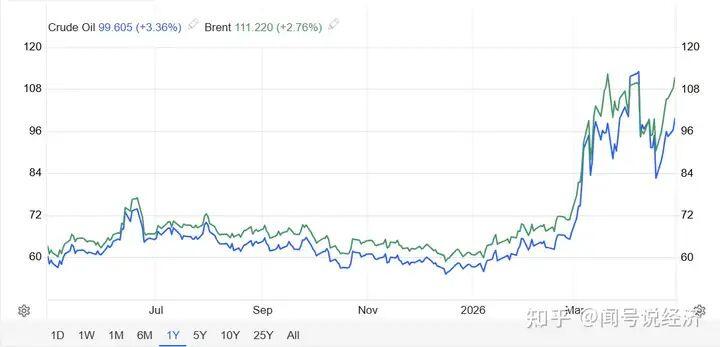
The answer, frustratingly, is both, depending on the timeline. In theory, a freer UAE with a desire to increase production should be bearish for crude. More barrels usually soften prices. That explains the first market reaction.
But in practice, the same event can also be bullish in the near term because it highlights fractures inside OPEC, adds uncertainty to Gulf diplomacy, and unfolds during a period when shipping routes and regional security remain unstable. Traders are not only pricing future supply. They are also pricing the risk that supply still cannot move safely.
That is why several Chinese commentators framed this as a volatility story more than a one direction price story. The UAE may want to produce more. The market still has to decide whether that oil can be exported smoothly, whether others will retaliate politically, and whether the Gulf is entering a more fragmented and dangerous phase.
The Bigger Read
The cleanest way to understand this is to see the UAE’s exit as the convergence of three pressures. First, it wants to monetize its rising production capacity. Second, it no longer wants to be constrained by a Saudi dominated quota framework that may not match Emirati interests. Third, the regional conflict has made cash flow, export flexibility, and strategic autonomy much more urgent.
In other words, this was not one sudden emotional decision. It looks more like a long brewing structural dispute that became impossible to postpone once war, insecurity, and economic damage raised the cost of staying inside the old arrangement.
Curated and translated from Zhihu, China's largest Q&A platform.
Newsletter
Subscribe to The Expat Edit
Chinese perspectives on global events, wars, and great power competition. Curated from Zhihu.
Free. No spam. View on Substack →