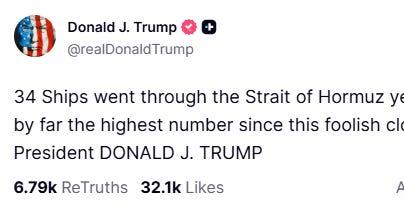
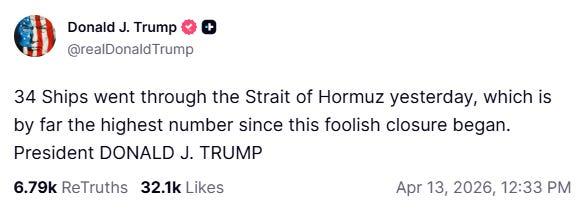
The latest Middle East flashpoint just got bigger. According to Chinese state media and U.S. Central Command statements, the U.S. military has begun intercepting vessels linked to Iranian ports, effectively imposing a maritime blockade on traffic entering and leaving Iran’s coastline in the Persian Gulf and Gulf of Oman. Washington says ships merely transiting the Strait of Hormuz without calling at Iranian ports should not be disturbed. Tehran calls the move a bluff. The rest of the world is now asking the same question: if the U.S. tries to choke Iranian shipping without fully shutting the strait, who actually gets hurt first?
What Washington Says It Is Doing
On paper, the U.S. position sounds narrower than the viral headlines suggest. The stated target is not every ship passing through Hormuz. Instead, the blockade is aimed at ships entering or leaving Iranian ports and coastal waters. That distinction matters. If enforced literally, tankers heading between non Iranian ports could still transit the strait. If enforced aggressively, though, the line between “Iran linked shipping” and ordinary commercial traffic could quickly get blurry.
That ambiguity is already shaping market reaction. Some ships appear to be getting through. Some operators are hesitating. Some governments are objecting. And traders are trying to price in a crisis whose rules may be changing by the hour.
Why This Is Bigger Than Iran
Hormuz is not just another waterway. It is one of the world’s most important energy chokepoints. A huge share of globally traded crude oil, condensate, and LNG moves through this narrow passage. Even if the blockade only targets Iran bound or Iran departing shipping, the political signal is enormous. Insurance costs can rise. Freight rates can jump. Shipowners can delay sailings. Refiners can start hoarding. Markets do not need a total closure to panic. They only need uncertainty.
That is why one of the strangest details in this story is that oil prices and stock markets have not behaved as dramatically as many expected. Some observers now think markets are betting the blockade will either be softened, selectively enforced, or quietly narrowed to avoid a larger war. In other words, traders may believe Washington is trying to scare Iran without triggering a real global energy shock.
“The danger is not only a closed strait. It is a half open strait where nobody knows the rules.”
The China Angle Is What Everyone Is Watching
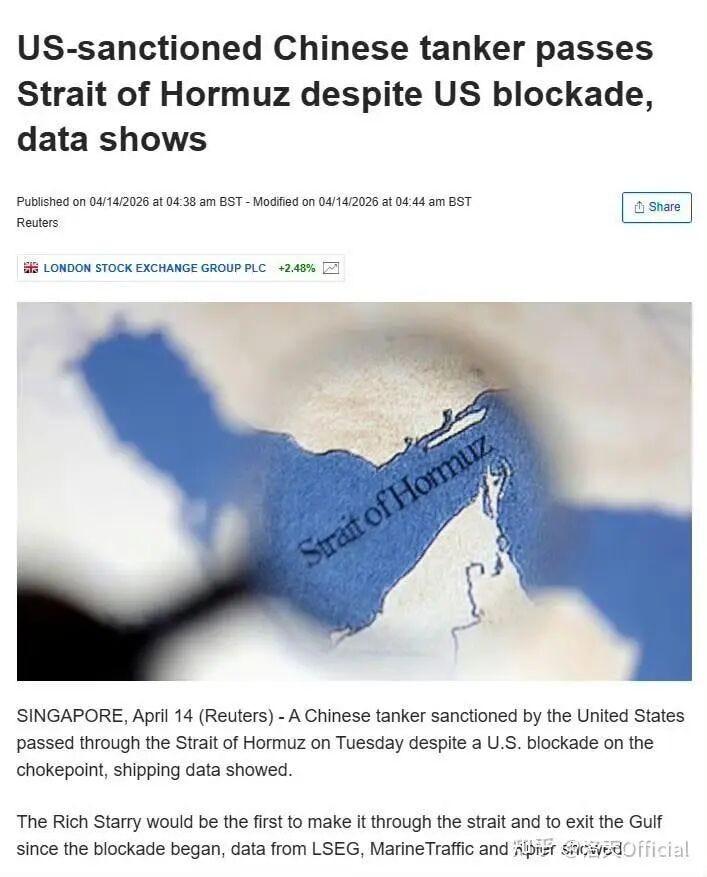
Chinese discussion online has focused heavily on one point: can Chinese shipping still move through? The Reuters report that a U.S. sanctioned Chinese tanker passed the strait despite the blockade poured fuel on speculation that Washington is being careful not to directly hit Chinese or Russian vessels and risk a much wider confrontation. Whether that caution holds is another matter. But the signal is important. Even a superpower blockade looks more complicated when major powers’ ships are involved.
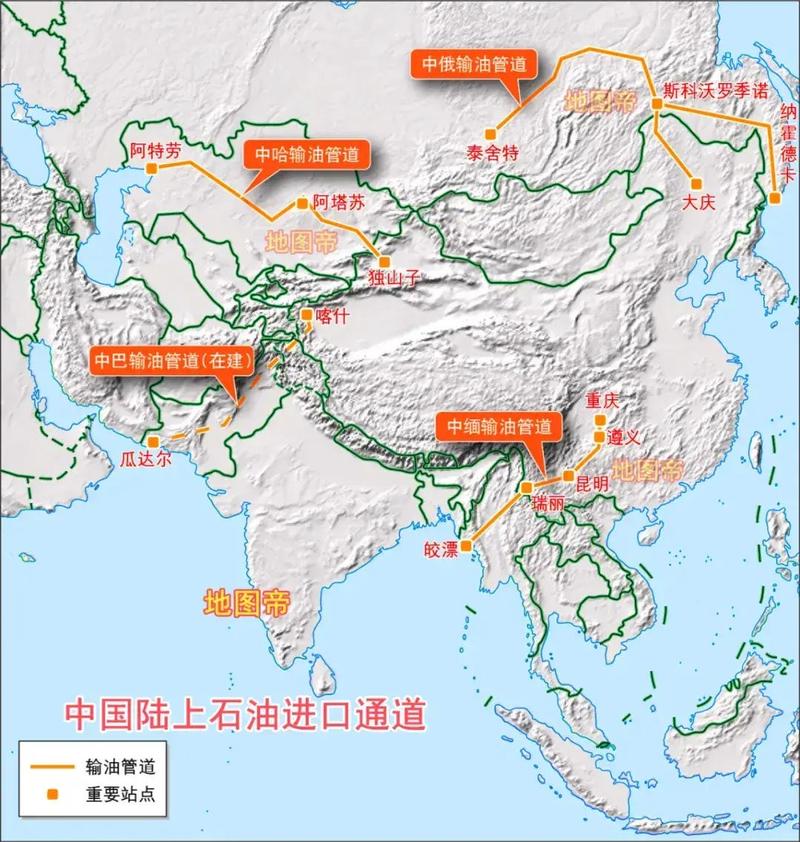
For China, the risk is obvious. It remains the world’s largest crude importer, and the Middle East still matters enormously to its supply mix. Yet China is not entering this crisis empty handed. Over the past decade, Beijing has diversified land routes, expanded strategic reserves, accelerated EV adoption, and built out renewable energy at a pace unmatched anywhere else. That does not make China immune, but it does make China less vulnerable than many assume.
In practical terms, the immediate Chinese concern is not “Will China run out of oil tomorrow?” It is “How much does this raise costs, stress logistics, and complicate trade flows over the next weeks and months?”
Iran’s Problem Is Immediate, But Not Absolute
Iran would clearly be hit hardest in the short term. Much of its oil trade, imports, and seaborne commercial life depend on access through Hormuz and the surrounding Gulf waters. If ships linked to Iranian ports are delayed, inspected, turned back, or denied passage altogether, Tehran loses export revenue and faces pressure on essential imports. That includes not only energy sales, but also industrial goods, medicine, food inputs, and other critical supplies.
At the same time, Iran is not a passive target. Analysts in China have pointed to overland and Caspian alternatives, though these are far less efficient than open sea access. Tehran can also retaliate asymmetrically by raising regional shipping risks, leaning on allied forces, or making life harder for America’s Gulf partners. That is why many countries are uneasy with Washington’s move. A blockade meant to isolate Iran could just as easily spread instability across the entire energy corridor.
Why Oil Markets May Still Be Underreacting
A lot of commentary out of China has centered on a paradox: if this is such a big deal, why have prices not completely exploded? One answer is that the market still expects partial workarounds. Another is that strategic reserves are cushioning the first shock. A third is that traders may think the U.S. itself cannot afford a prolonged squeeze that sends inflation soaring just as domestic political pressure builds.
But underreaction can be just as dangerous as panic. Refining systems cannot instantly replace Middle Eastern grades with any random crude. Shipping schedules do not magically reorganize overnight. Diesel, aviation fuel, petrochemicals, and fertilizer supply chains can tighten before headline crude shortages become obvious. The deeper the disruption runs, the more the economic pain shows up in freight, food, manufacturing, and electricity costs.
In that sense, the biggest risk may not be a dramatic one day spike. It may be a slower grind of higher costs, patchy shortages, and prolonged volatility.
China’s Real Hedge Is Structural
One of the most interesting threads in Chinese commentary is the argument that China’s strongest response to any Hormuz crisis is not military but structural. The country still imports vast amounts of oil, yes. But it is also replacing oil demand where it can. By the end of 2025, China had nearly 44 million new energy vehicles on the road. Renewable capacity kept surging. Strategic petroleum reserves remained substantial. And non Middle Eastern supply channels, both land based and maritime, had grown over time.
None of that removes the shock. It just changes the math. A country that needs less oil growth each year, electrifies more transport, and spreads supply risk across more routes is harder to squeeze than a country that stays locked into a single chokepoint.
So What Happens Next?
The most likely near term scenario is not a clean, total shutdown. It is a messy, selective contest. The U.S. pressures Iranian shipping. Iran looks for ways around it. Major powers test the boundaries. Markets swing between alarm and disbelief. And every ship that gets through or gets stopped becomes part of the political theater.
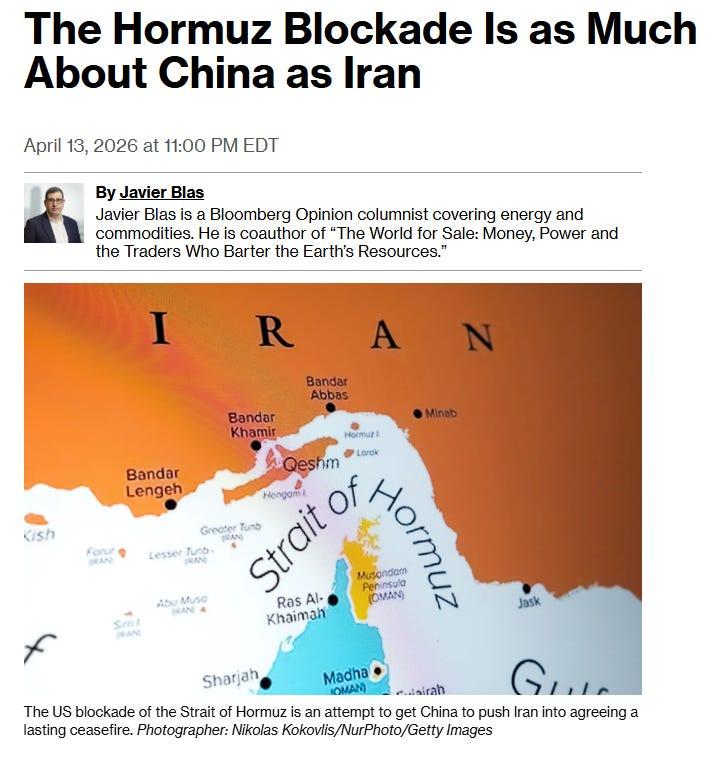
If Washington keeps narrowing the scope to avoid direct clashes with Chinese or Russian linked shipping, the blockade may remain more symbolic than decisive. If enforcement hardens, the chance of escalation rises fast. Either way, the crisis exposes something bigger than one military order. It shows how fragile the global energy system still is, and how quickly geopolitics can turn a shipping lane into a pressure point for the entire world.
For expats in China watching from afar, the key takeaway is simple: this is not just another Middle East headline. It is a story about oil, inflation, trade, great power limits, and why China has spent years trying to make itself less dependent on exactly this kind of chokepoint.
Curated and translated from Zhihu, China's largest Q&A platform.
Newsletter
Subscribe to The Expat Edit
Chinese perspectives on global events, wars, and great power competition. Curated from Zhihu.
Free. No spam. View on Substack →