
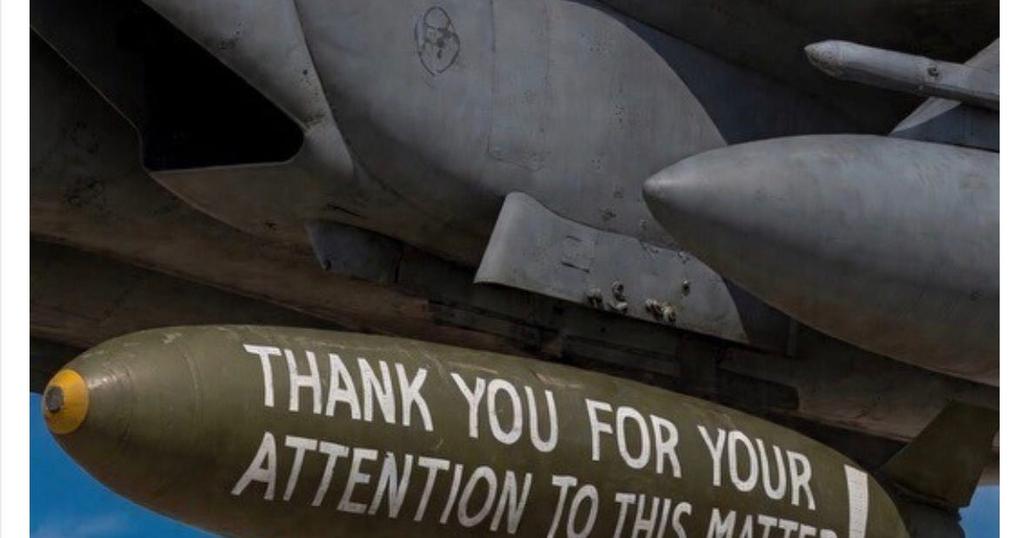
Washington is running out of ways to pretend it has a good option.
That is the clearest lesson of the standoff over Iran. Strip away the bluster, the leaks, the contradictory headlines, and the familiar boasts about strength, and what remains is a more sobering reality: the United States faces three possible courses of action, none of them offering anything close to a clean success.
The first is renewed military escalation against Iran. The second is some form of negotiated arrangement, whether a formal deal or a narrower understanding that freezes the crisis and reopens regional commerce. The third is to postpone the decision, preserve the appearance of control, and let events drift until a larger economic or military rupture forces everyone’s hand.
None of these options is attractive. But that is what happens when a government helps ignite a conflict without a realistic plan for how it ends.
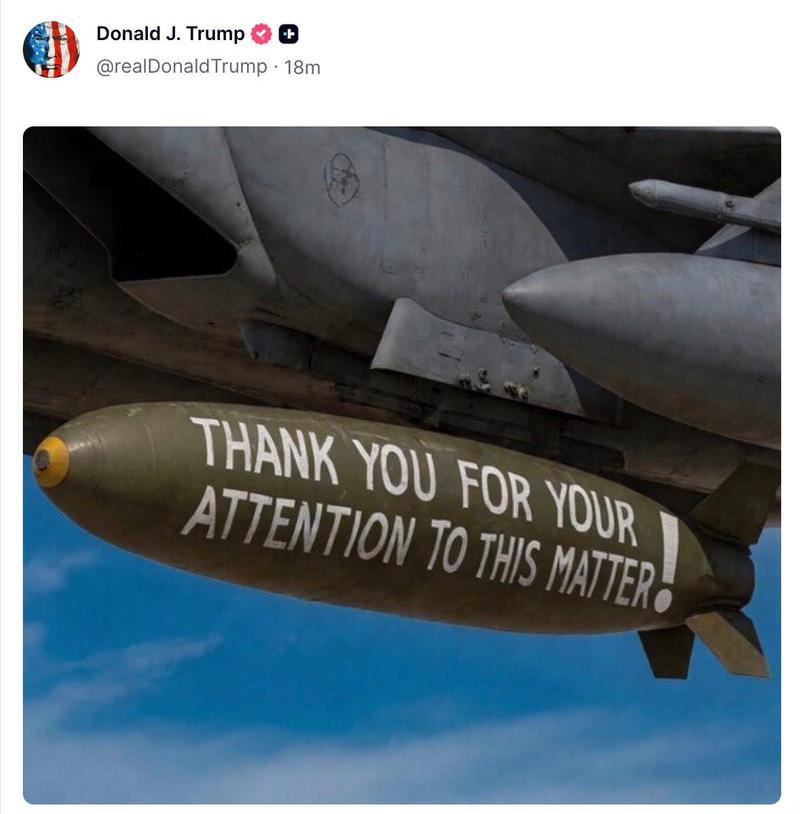
Military escalation risks a broader war that the United States may be unable to control. A diplomatic path runs into the most politically sensitive fact in the region: any real de-escalation would require Washington to say no to Israel. The third option, delay, may be the easiest politically, but it is also the most deceptive, preserving the appearance of control while the costs continue to mount.
Sooner or later, a choice will have to be made.
The most dramatic option, another round of military action, is also the one that seems least viable to anyone looking seriously at the balance of risk. The United States can strike Iran. That has never been the question. The question is whether it can strike Iran and emerge with something that resembles a strategic success rather than a wider regional breakdown.
That prospect appears increasingly doubtful. Iran has already shown it can disrupt shipping, threaten infrastructure across the Gulf, and impose costs well beyond the battlefield. The Strait of Hormuz is not simply another pressure point. It is one of the central arteries of the global economy. Any attempt to resolve the crisis through force risks setting off consequences that would travel quickly from the Gulf to fuel markets, supply chains, inflation data, and food systems around the world.
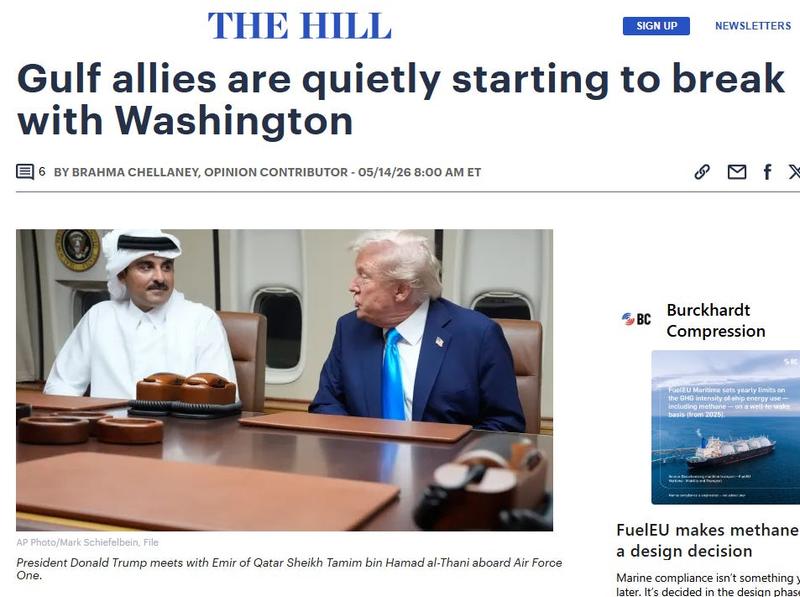
This is why even many governments aligned with Washington want no part of a new war. The Gulf states understand, perhaps more clearly than anyone in Washington, that they would be exposed first and punished fastest. Their economies, infrastructure, and shipping lanes would sit directly in the line of fire. A conflict sold in Washington as an assertion of resolve could look, from Riyadh, Doha, or Abu Dhabi, like an act of strategic insanity.
There is another problem with the military option. It does not seem likely to produce the political result its advocates once promised. Iran has not emerged from this confrontation cowed or isolated. If anything, it appears more unified, more hardened, and more conscious of its own leverage. A campaign meant to diminish Iranian power may instead have clarified it.
That leaves diplomacy, though even the word may promise more than the moment can deliver. What is reportedly under discussion is less a grand bargain than a mechanism for stepping back from the brink: a ceasefire extension, some easing of maritime restrictions, a framework for further talks, and enough stability to get traffic moving again through the Strait of Hormuz.
This would not be peace in any meaningful sense. It would be a temporary arrangement, fragile by design, meant less to solve the underlying dispute than to prevent immediate disaster. But temporary arrangements have their own value when the alternatives are catastrophic. They can reopen trade, calm energy markets, and give political leaders space to claim success while quietly retreating from a failed gamble.
For Washington, such an arrangement would offer something even more important: an exit.
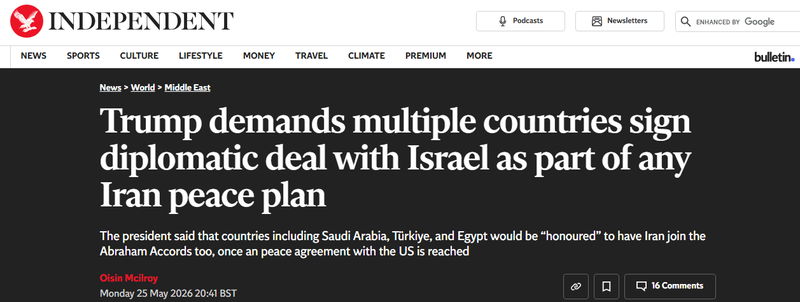
And yet the diplomatic route runs into a problem that is by now impossible to ignore. Any meaningful de-escalation would require restraining Israel. Not rhetorically, not in private whispers, but in concrete terms. It would require the United States to use the leverage it unquestionably possesses and tell its closest regional ally that certain actions will not be supported, subsidized, or politically protected.
That is where the entire edifice begins to shake.
Read more
Listen to CATR on:
Newsletter
Subscribe to Conversations Among the Ruins
Long-form geopolitics and the decline of the unipolar world order. New episodes straight to your inbox.
Free. No spam. View on Substack →
Reader-funded
This is independent, long-form work.
Conversations Among the Ruins is written, not repackaged, and it stays free because readers choose to fund it. If it is worth your time, a paid subscription or a one-off tip keeps it going.
Become a supporter →