

There is a particular kind of political awakening that begins not with ideology, but with humiliation.

It is the moment a citizen realizes he has not merely been mistaken, but managed. That the fears he absorbed, the loyalties he inherited, and the enemies he was taught to recognize did not arise naturally from facts on the ground. They were cultivated. Repeated. Simplified. Moralized. Then folded into public life so completely that questioning them came to feel like a kind of deviance.
For many Americans, that awakening is now arriving in relation to the Middle East.
For more than two decades, and in some respects much longer, the public in the United States and Europe has been encouraged to see Israel not simply as an ally, but as an extension of the West itself. Its conflicts were presented as our conflicts. Its enemies were described as our enemies. Its wars were made to appear as forward defenses of liberal civilization. This framing proved extraordinarily effective because it rested on a broader narrative that had already taken hold after terrorist attacks in New York, Washington, London, Madrid, Paris, and elsewhere. A vast and internally diverse Muslim world was compressed into a single category of threat.
The distinctions that matter in the region, distinctions of sect, theology, history, politics, and national interest, were blurred or ignored. To much of the Western public, “Muslim,” “Islamist,” “Arab,” “Iranian,” “jihadist,” and “anti-Western” became part of the same mental landscape. That confusion was not incidental. It was politically useful.
Once a public is trained to think in civilizational shorthand, almost any target can be placed inside the circle of suspicion. Iran, despite being the enemy of Sunni extremist movements that have slaughtered both Muslims and Westerners, could be marketed as part of the same menacing front. Secular Arab governments hostile to Salafi militancy could also be treated as indistinguishable from the forces the West claimed to oppose. Complexity became an obstacle. Simplicity was more valuable.
This has had consequences far beyond rhetoric. It helped build consent for wars, proxy conflicts, sanctions, covert action, and diplomatic alignments that many citizens did not fully understand. It also helped obscure deeply inconvenient facts. Some of the governments cast as central threats to Western order were, in practice, bulwarks against the very extremist movements that terrified Western populations. Some of the militants tacitly enabled, armed, or tolerated by Western and regional powers were among the most sectarian and destabilizing actors in the region.
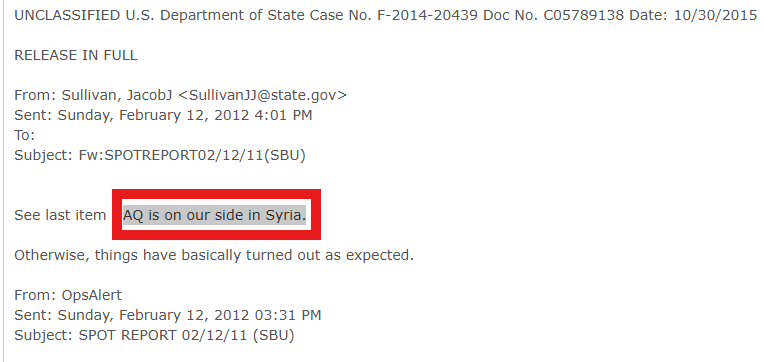
A political system cannot remain healthy if its citizens come to believe that the most consequential foreign policy narratives of their lifetime were built on distortion. Nor can trust survive if voters repeatedly discover that the officials who promise restraint, realism, or balance revert once in office to the same assumptions and the same interests. The injury is cumulative. People do not simply become cynical. They begin to suspect that the system itself is insulated from public will.
That suspicion is becoming harder to dismiss.
Across the political spectrum, Americans are showing signs of fatigue with the old script. They are less willing to accept that every confrontation involving Israel must be understood as a moral test for the United States. They are less willing to believe that every adversary of Israel is therefore an existential adversary of America. Younger voters in particular appear unmoved by the formulas that governed public discourse for decades. What once sounded like moral clarity increasingly sounds like narrative maintenance.
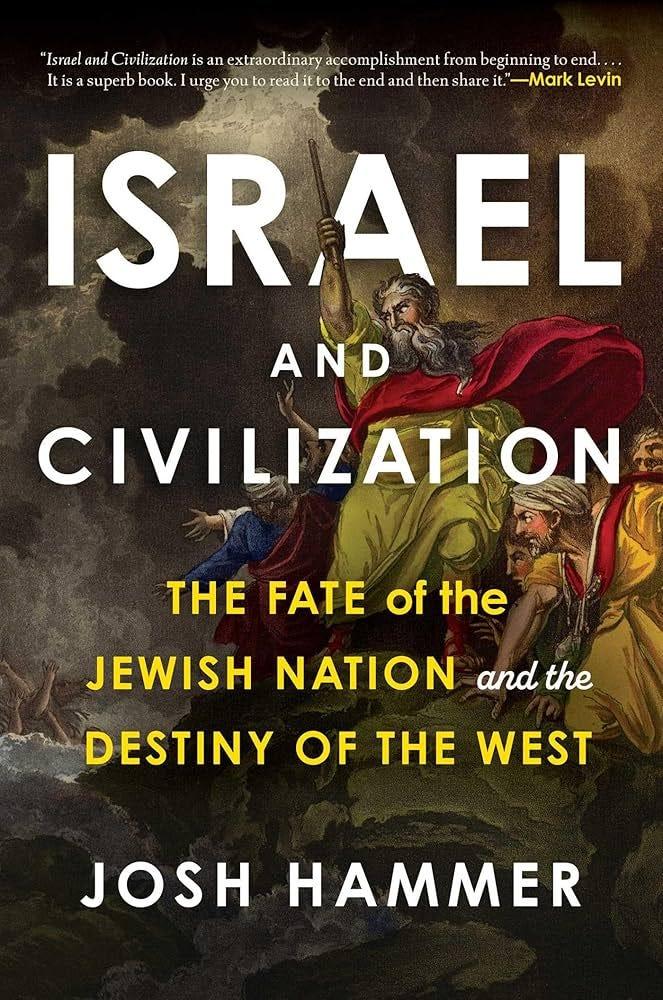
This shift matters, but not only because it may alter public opinion about one country or one conflict. It matters because of what happens when a society realizes that fear itself has been curated. The anger that follows is rarely neat. It can produce serious moral reappraisal, but also conspiracism, overcorrection, and social fracture. People who discover they were manipulated do not always become wiser. Sometimes they simply become impossible to govern in the old way.
That is the deeper risk now facing the American political class. If the public concludes that it was drawn into enmities it never freely chose, and if electoral politics continues to offer only cosmetic variation, then legitimacy erodes further. Voters can endure defeat. They struggle to endure the sense that major questions are settled elsewhere, beyond reach, regardless of who wins.
In that environment, every election starts to look theatrical. Every rhetorical pivot looks focus-grouped. Every candidate who suddenly discovers moral concern after years of alignment with entrenched interests looks less like a leader than a weather vane. Citizens may still vote, but increasingly without faith. And a democracy without faith is not stable simply because its procedures remain intact.
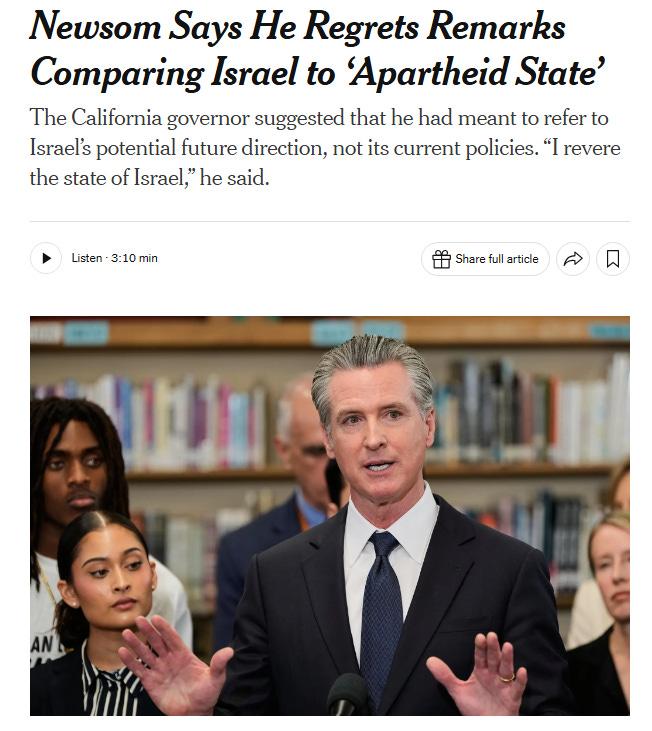
None of this guarantees a dramatic break in American policy. Power seldom surrenders itself voluntarily, and entrenched foreign policy orthodoxies do not dissolve because they have been exposed. They adapt. They rebrand. They survive through personnel changes and softer language. It is entirely possible that the next generation of leadership will speak in the language of restraint while preserving much of the underlying structure.
But there are moments when a governing consensus loses its moral authority faster than it loses institutional control. That may be where the United States is heading on the question of Israel and the wider Middle East.
If so, the most important development is not simply a policy dispute. It is the collapse of a story, one that taught Americans to mistake another nation’s strategic imperatives for their own, and to see an immense and varied region through the narrow lens of fear.
When such stories fall apart, the immediate feeling is disorientation. The longer-term question is whether a democracy can recover its capacity for honest judgment after years of emotional and political conditioning.
The answer will shape more than foreign policy. It will determine whether Americans still believe they are citizens, or merely audiences.
Listen to CATR on:
Newsletter
Subscribe to Conversations Among the Ruins
Long-form geopolitics and the decline of the unipolar world order. New episodes straight to your inbox.
Free. No spam. View on Substack →
Reader-funded
This is independent, long-form work.
Conversations Among the Ruins is written, not repackaged, and it stays free because readers choose to fund it. If it is worth your time, a paid subscription or a one-off tip keeps it going.
Become a supporter →