
There is a revealing asymmetry in how many Western audiences process modern war.
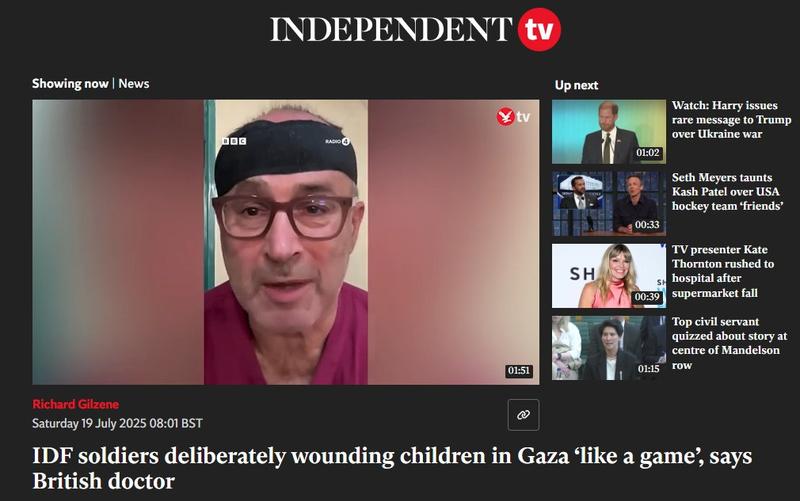
On Palestine, a growing number of people are willing to see what is in front of them. They have watched the destruction, the displacement, the language of collective punishment, and concluded that something foundational has gone wrong. They may disagree on labels or remedies, but they recognize brutality when it is visible and repeated often enough.
On Ukraine, many of those same people revert to a simpler script. One side is the aggressor. The other is the victim. One side represents authoritarian darkness. The other stands for freedom. The story arrives prepackaged, morally complete, and largely insulated from scrutiny.
This divide is not accidental. It is the product of a media culture that permits limited dissent in some theaters of war while treating dissent in others as moral contamination.
In the case of Palestine, even mainstream institutions that have often failed the test of honesty have, at times, allowed fragments of reality to break through. Images of bombed neighborhoods, dead children, desperate hospitals, and mass displacement have been too overwhelming to suppress entirely. Public criticism, though still constrained, has become possible in a way that would have seemed unlikely only a few years ago.
Ukraine is different. There, the boundaries of acceptable opinion were drawn early and enforced relentlessly. The dominant narrative was fixed from the outset: an unprovoked war, a noble client state, a unified democratic people, and a conflict in which Western arms are merely the instruments of justice. Once that framework hardened, almost everything that complicated it disappeared from view.
That disappearance has had consequences.
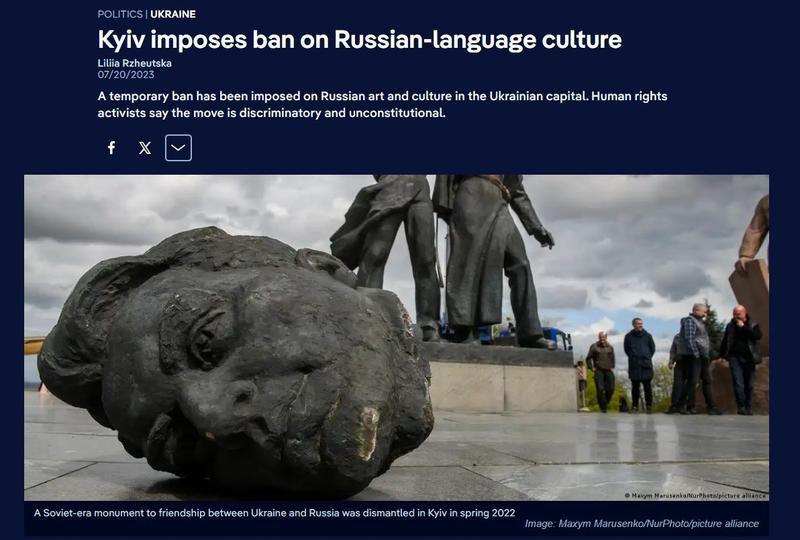
A public trained to recognize ethnonationalism in one setting has been discouraged from noticing it in another. A public urged to condemn forced displacement elsewhere has not been asked to consider the social and political coercion operating inside Ukraine itself. A public taught that minority rights are sacred has shown little interest in the long campaign against the Russian language and Russian cultural presence in Ukraine. None of this means Moscow is beyond criticism, or that war itself can be redeemed by counterargument. It means only that selective blindness is still blindness.
The comforting fantasy of the Ukraine war is that it is a clean moral contest. But clean moral contests are rare, and they are especially rare when great powers are involved.
Before the Russian invasion in 2022, Ukraine was not widely portrayed in the West as an uncomplicated democratic beacon. There was open discussion of corruption, oligarchic influence, extremist militias, and the visible role of ultranationalist currents in public life. There were reports on groups venerating figures implicated in ethnic cleansing and fascist collaboration. There was at least some acknowledgment that Ukraine had become a deeply fractured and militarized society.
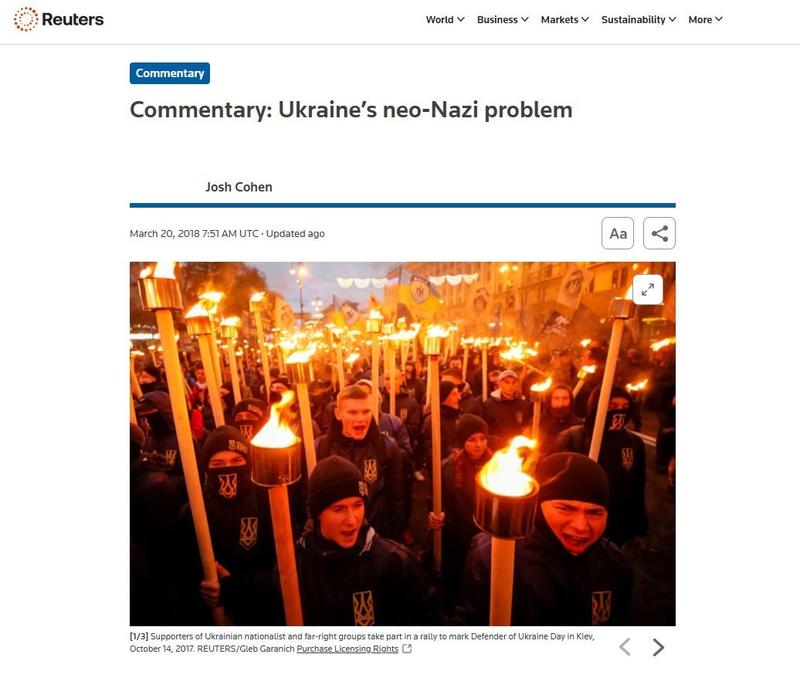
Then war came, and much of that record was memory-holed.
What had once been a difficult reality became an inconvenient one in need of suppression. The existence of radical nationalist formations had to be minimized or recast as Russian propaganda. The internal divisions of Ukrainian society had to be flattened. The civil war dimensions of the post-2014 conflict in the east had to vanish. The years of Russian diplomatic efforts to achieve a peaceful settlement had to be denied by the repeated invocation of one word: “unprovoked.”
Repetition and suppression may succeed in burying reality for a time, while passions are high and the struggle is ongoing. Eventually, however, the absurdity of the claim of unprovoked aggression will be plain for all to see.
That is not to say that every Russian action was justified. It is to insist that events have causes, that wars emerge from sequences, and that serious analysis begins where slogans end. The east of Ukraine did not suddenly become contested in February 2022. The fighting, the shelling, the political exclusion, the bitter struggle over identity and language, and the repeated failure of negotiated settlement all long predated the Russian intervention.
The Minsk accords, which were presented at the time as a path to de-escalation, are particularly instructive. Western leaders later spoke with astonishing frankness about those agreements, suggesting they were never truly intended as a durable settlement but rather as a means of buying time. Whatever one thinks of Russia’s subsequent decisions, this matters. Diplomacy depends on trust, and trust, once squandered, is hard to recover. A world order built on lectures about rules cannot endure if the rules are seen as tactical language for the weak and optional restraints for the strong.
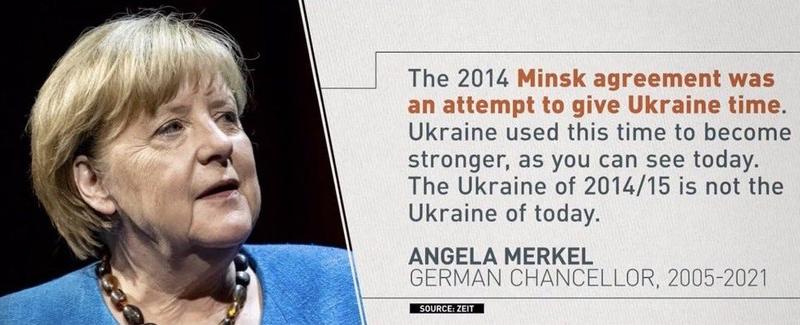
That may be one of the deepest problems exposed by this war.
For three decades, much of the Western foreign policy establishment operated under assumptions formed in the unipolar moment. Negotiation gave way to diktat. Adversaries were not parties with interests to be understood but obstacles to be managed or destroyed. Agreements became instruments, not commitments. Military pressure was treated as the natural extension of political will. The habit was easy to maintain when the balance of power favored the West so heavily that consequences could be deferred.
Those conditions no longer exist.
Yet the rhetoric has barely changed. In Washington and in European capitals, there remains a striking inability to imagine that rival powers might have genuine security concerns, coherent strategic reasoning, or red lines that are neither theatrical nor irrational. This failure is often presented as moral clarity. More often it is a form of arrogance, and sometimes something darker than arrogance. It rests on a presumed civilizational hierarchy that many Western elites would never admit to aloud but reveal constantly in practice: we are rational, they are barbaric; our violence is regrettable, theirs is innate; our clients are flawed but legitimate, their allies are fanatics who need to be overthrown.
This is not merely hypocrisy. It is an unquestioned habit of mind.
Such a habit gravely distorts one’s view of the world. Contradictions that should be impossible become routine. Western governments that speak the language of pluralism and human rights line up behind states and movements animated by ethnic chauvinism. They denounce supremacism in theory while excusing it in strategic partners. They condemn attacks on civilians in one war and normalize them in another. They invoke democracy while supporting coercive practices that would scandalize their own publics if reported with candor.
The human realities of the Ukraine war are filtered through this distorting Western lens.
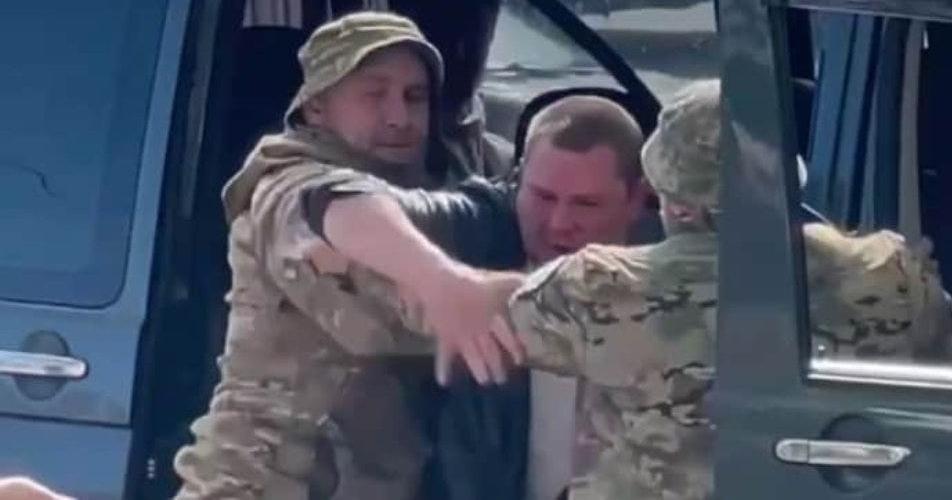
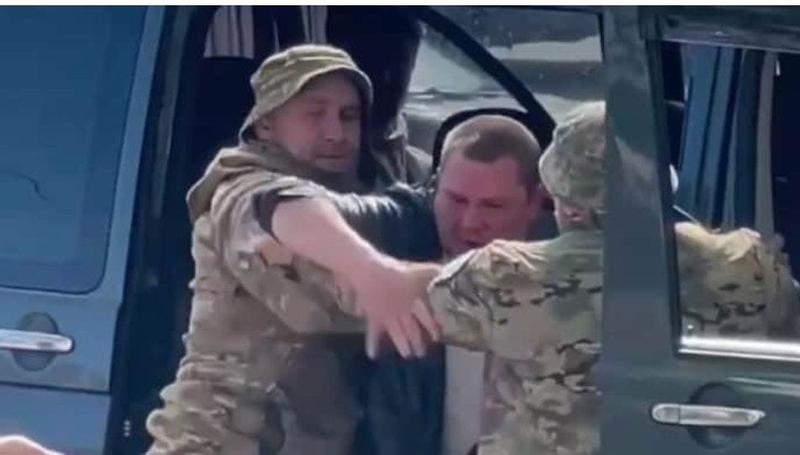
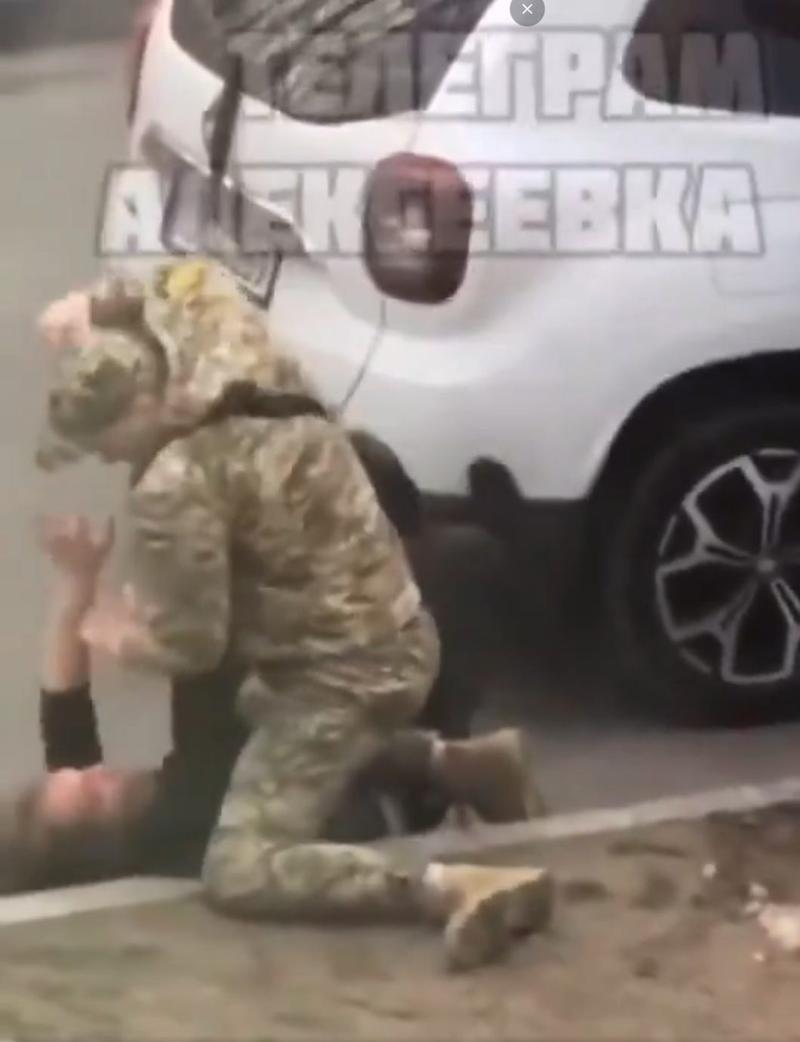
One of the least discussed features of the conflict is the nature of mobilization inside Ukraine. As the war has dragged on and casualties have mounted, Ukrainian reports and videos have proliferated showing men seized on streets, dragged into vans, and conscripted against their will. Families and bystanders intervene. Wives and mothers plead, resist, and often physically struggle to stop it. The scenes are chaotic, humiliating, and frightening. Yet this dimension of the war remains, at best, marginal in Western coverage, as though forced recruitment in a heavily armed client state were too awkward a fact to examine closely.
But it is precisely the awkward facts that test the integrity of political commitments.
If a state must rely increasingly on coercion to replenish the front, if the population’s consent is visibly strained, if the social fabric is being consumed by endless militarization, then the obligation of outside supporters is not to look away. It is to ask whether prolonging the war serves the people in whose name it is being fought. There is nothing humane about financing a losing war while treating negotiation as surrender.
This is where the contrast with Palestine becomes especially revealing. In that case, many people have learned to distrust official euphemism. They hear “security” and ask what is being hidden. They hear “self-defense” and ask who is buried beneath the phrase. They have begun, however imperfectly, to understand that moral language is often used to launder domination.
The same skepticism should apply elsewhere.
It should apply when a war is stripped of context. It should apply when known extremists become honorary democrats because they are geopolitically useful. It should apply when diplomacy is mocked, when compromise is treated as appeasement, and when publics are told that history began on the date most convenient to power. It should apply whenever an entire political class insists that only one side in a conflict possesses motives and memory.
None of this requires romanticizing the Russian state, endorsing the invasion, or pretending that innocent people have not suffered under Russian fire. It requires something more basic and, in the present climate, more difficult: the willingness to reject infantilizing narratives.
The world is not divided between pure victims and pure villains selected for us by television graphics. It is shaped by competing powers, broken promises, historical grievances, propaganda systems, strategic deceptions, and elites that routinely sacrifice ordinary people to abstractions. If we are serious about opposing ethnic chauvinism, collective punishment, censorship, and imperial arrogance, then our principles must survive contact with cases that are politically inconvenient.
Otherwise they are not principles. They are branding.
The test of moral seriousness is not whether one can denounce crimes committed by official enemies. It is whether one can recognize ugly realities when they implicate allies, narratives one has absorbed, or institutions one has been trained to trust.
That test is being failed every day.
And not because the evidence is unavailable, but because too many people have been taught, carefully and persistently, not to look.Follow Marta Havryshko on X
Listen to CATR on:
Newsletter
Subscribe to Conversations Among the Ruins
Long-form geopolitics and the decline of the unipolar world order. New episodes straight to your inbox.
Free. No spam. View on Substack →
Reader-funded
This is independent, long-form work.
Conversations Among the Ruins is written, not repackaged, and it stays free because readers choose to fund it. If it is worth your time, a paid subscription or a one-off tip keeps it going.
Become a supporter →