
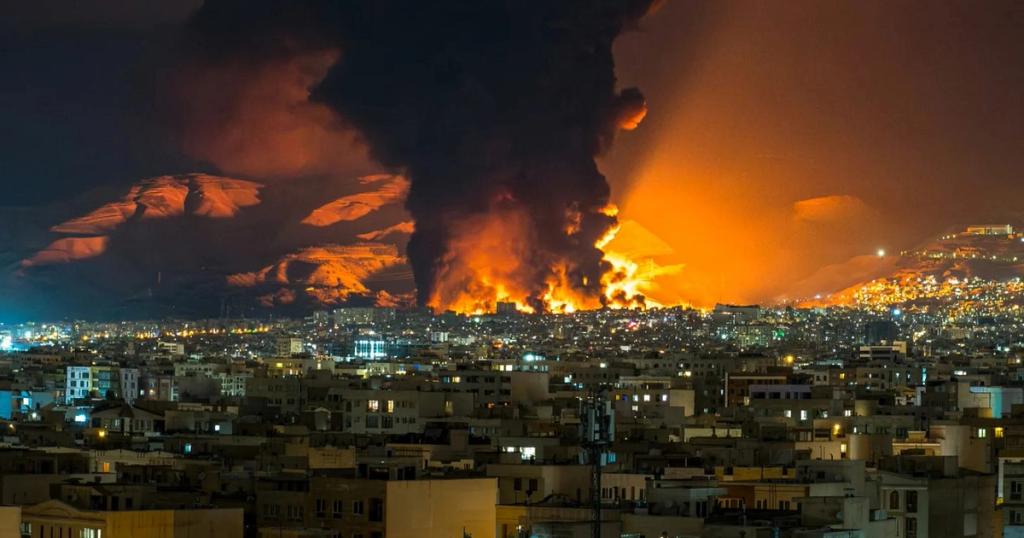
There is a crude way of judging war that has become disturbingly common in modern politics: if things are exploding, if buildings are collapsing, if dramatic footage fills the screen, then victory must be near.
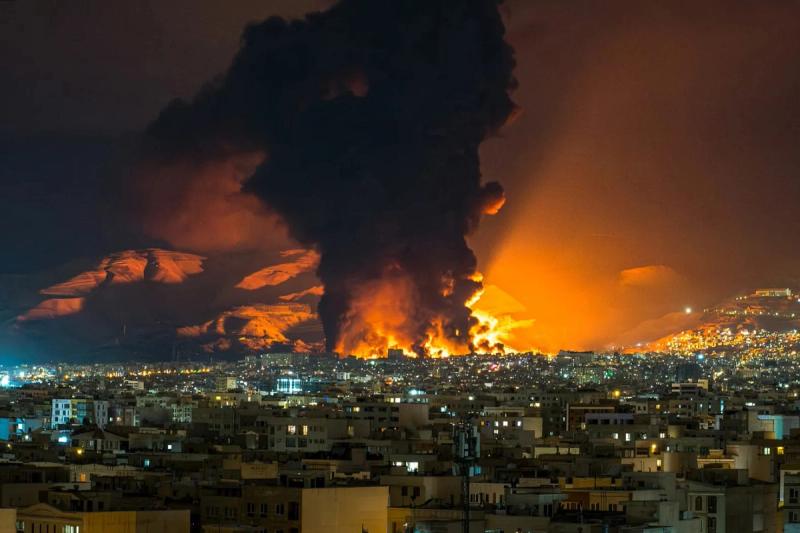
But wars are not won by the quantity of rubble they produce. They are won, if they can be said to be won at all, by whether political and military objectives are actually achieved. And by that measure, destructive force can coexist with strategic failure.
That distinction matters now more than ever.
The United States and Israel entered this confrontation with stated ambitions that were expansive, shifting, and in important respects unattainable. The language changed as events unfolded. First came the promise of denying Iran the ability to develop a nuclear weapon, something that Iran has said (and US intelligence agencies agree) it never planned to do. Then came broader claims about destroying military capabilities. Then, as those aims proved elusive, came a retreat into a vaguer formulation about weakening the adversary over time.
That is not strategy so much as improvisation after the fact.
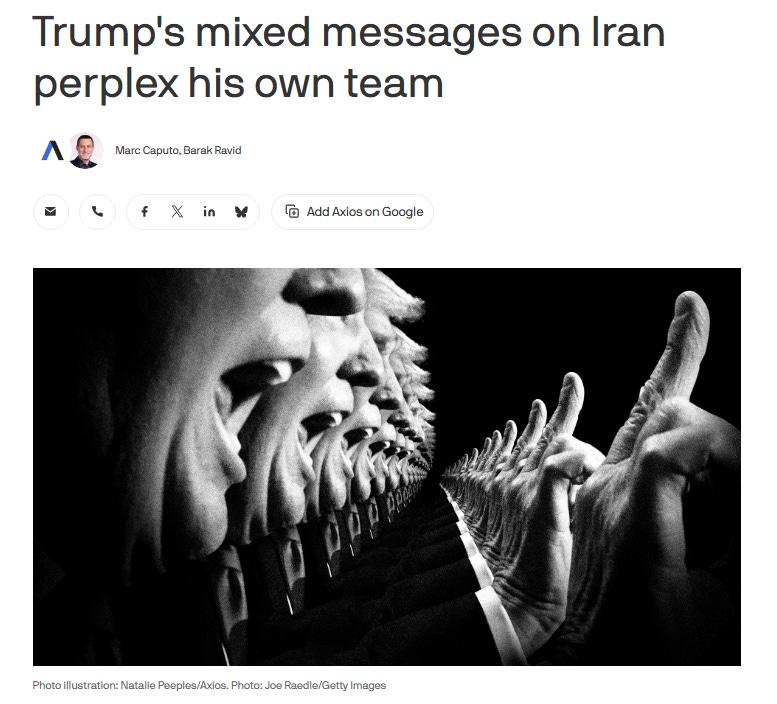
The underlying problem is simple. Military campaigns are often sold to the public as if punishment itself were a coherent objective. Blow up enough targets, inflict enough pain, circulate enough imagery of destruction, and success will somehow announce itself. Yet damage alone is not a substitute for results. A country can devastate civilian infrastructure, kill large numbers of people, and still fail to alter the strategic balance in its favor.
That appears to be the danger here.
Iran, by contrast, has approached this conflict from the position of a weaker conventional power with a clearer understanding of asymmetry. It has not tried to match the United States or Israel plane for plane or ship for ship. It has instead leaned into the logic available to states that know they cannot dominate in open conventional warfare. It has developed tools meant to impose costs where its adversaries are most vulnerable: regional bases, shipping lanes, energy infrastructure, air-defense systems, and the psychological stamina of civilian populations that had grown accustomed to the assumption of security.
The result is not that Iran looks invulnerable. It is that it appears to have prepared for the war it expected, while its adversaries prepared for the war they preferred to imagine.
That difference is consequential.
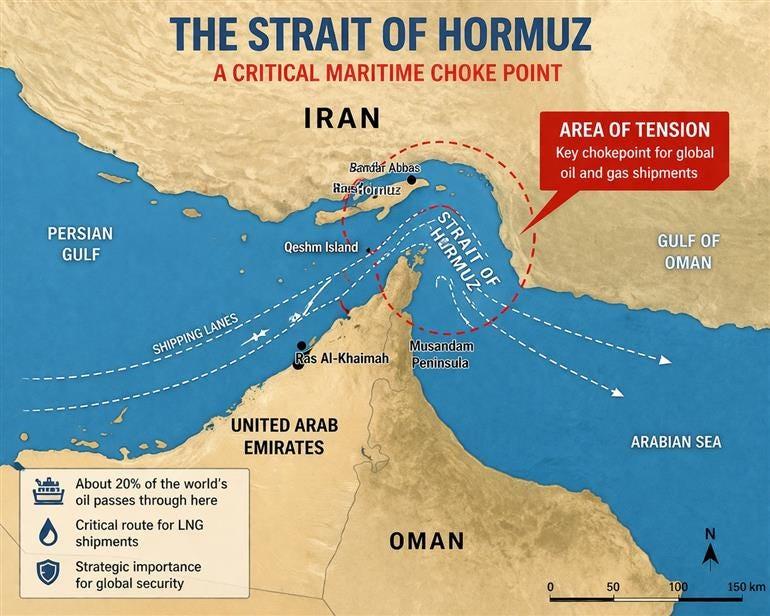
A great deal of the public discussion still treats military action as though superior firepower naturally produces strategic control. Yet one of the central facts of this conflict is that the most powerful military actors in the region can still find themselves trapped by geography, supply limits, and economic interdependence. The Strait of Hormuz is not merely a map reference. It is a choke point through which the global economy breathes. Any serious disruption there turns a regional war into an international economic emergency.
This is where the arithmetic of force gives way to the politics of consequence.
The United States may be capable of inflicting enormous destruction. No one seriously disputes that. But the question is not whether Washington can destroy. The question is whether it can destroy its way to a favorable and durable outcome. If military operations trigger wider energy shocks, rattle Gulf monarchies, strain global supply chains, and expose the weakness of American allies, then the campaign begins to consume the very order it is supposed to defend.
A war of choice becomes a crisis of self-sabotage.
That possibility is especially acute in the Gulf. For decades, the regional bargain rested on a simple promise: alignment with American power would guarantee stability and protection. If that promise now appears increasingly hollow, the consequences may extend far beyond the battlefield. Gulf states under sustained economic and strategic pressure may begin to ask whether dependence on Washington still serves their interests. Such a shift will not happen overnight. Great geopolitical realignments rarely do. But once ruling elites start quietly discussing the fact that American protection no longer protects, the old order has already begun to crack.
And as those cracks widen, the implications for the United States will be profound.
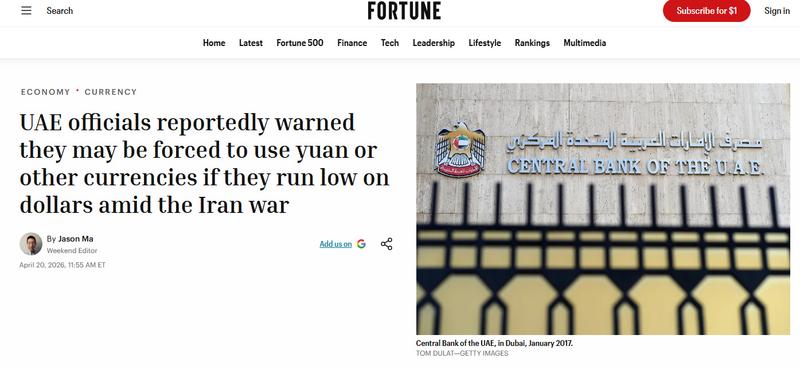
The global role of the dollar rests not only on financial architecture, but on confidence in the durability of the system behind it. If key energy producers begin hedging against American instability by diversifying reserves, conducting more trade in other currencies, or deepening their strategic arrangements with China and Russia, then what was once considered unthinkable becomes inevitable. The end of unquestioned dollar primacy will not arrive as a single dramatic event. It will begin—rather, is beginning—as a slow erosion of certainty, followed by a rush once markets conclude the old guarantees no longer hold.
History is full of systems that looked permanent until suddenly they did not.
This is one reason the current course is so dangerous. It is not only that escalation risks more death and wider war. It is that the conflict is exposing structural vulnerabilities that had long been hidden behind assumptions of American omnipotence. Stockpiles are finite. Interceptors run low. Precision munitions cannot be conjured indefinitely. And as the aura of American omnipotence dissipates, Israel begins to reveal its own red lines, its own fears, its own thresholds for panic. A civilian population once assured of safety is thrown into a daily chaos of sirens, uncertainty, and exhaustion. Even if the physical damage remains limited compared with the destruction elsewhere in the region, the psychological impact can be substantial.
Wars are contests of endurance as much as force.
And so as this war grinds on, the danger grows that leaders who cannot secure the outcomes they promised will gamble on escalation.
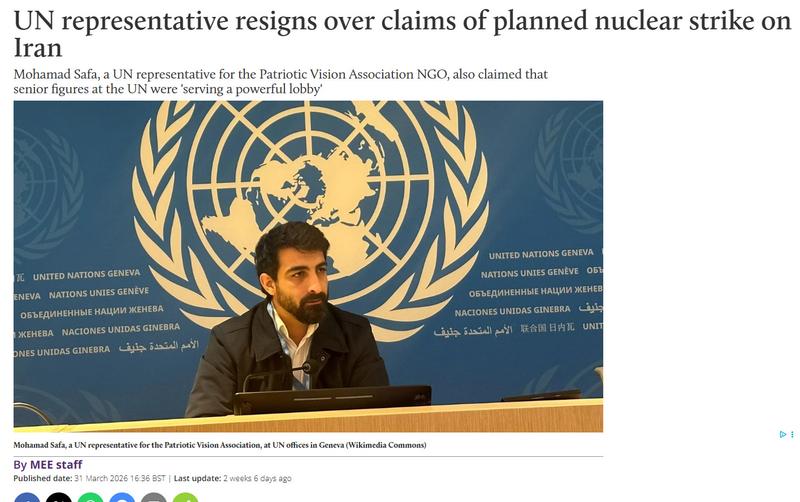
That is the darkest possibility hanging over this conflict. When conventional means fail to produce decisive political results, the temptation arises to reach for more extreme options in order to restore deterrence, prestige, or domestic credibility. It is not enough to say such actions would be irrational. History offers little comfort on that point. States under pressure do irrational things with terrifying regularity. The real question is whether there remain external constraints strong enough to stop a cornered superpower, or a reckless coalition, from believing that one final act of overwhelming force can recover what strategy has lost.
There is another path, though it is less dramatic and therefore less attractive to political classes addicted to demonstrations of strength. It begins with admitting what should have been obvious from the start: not every adversary is best handled as an enemy to be shattered. Not every regional rival presents an unavoidable threat. Not every conflict serves American interests simply because it has been folded into the rhetoric of alliance and credibility.
There was nothing inevitable about this confrontation. There is still nothing inevitable about treating permanent hostility as the only available framework.
The tragedy is not merely that this war may spiral further. It is that much of it was unnecessary to begin with. A different approach, grounded in trade, diplomacy, mutual deterrence, and sober recognition of actual interests, was available. It may yet be available again. But every day the conflict continues, the cost of returning to that reality grows higher.
In the end, the most revealing fact about wars of choice is often not how they begin, but what they expose. They expose illusions of control. They expose the fragility of systems thought to be secure. They expose the gap between what leaders say force can accomplish and what force can actually deliver.
Most of all, they expose the emptiness of confusing destruction with success.
A nation can blow up half the horizon and still find that it has lost the argument, the region, and the future.
Listen to CATR on:
Newsletter
Subscribe to Conversations Among the Ruins
Long-form geopolitics and the decline of the unipolar world order. New episodes straight to your inbox.
Free. No spam. View on Substack →
Reader-funded
This is independent, long-form work.
Conversations Among the Ruins is written, not repackaged, and it stays free because readers choose to fund it. If it is worth your time, a paid subscription or a one-off tip keeps it going.
Become a supporter →