
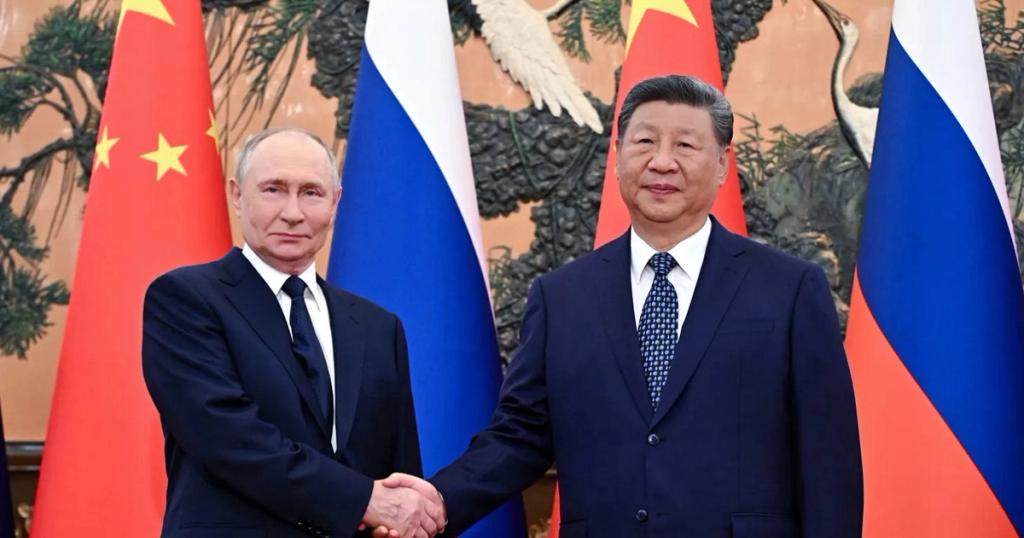
When Donald Trump leaves Beijing and Vladimir Putin announces that he is coming next, people naturally assume the timing is the message.
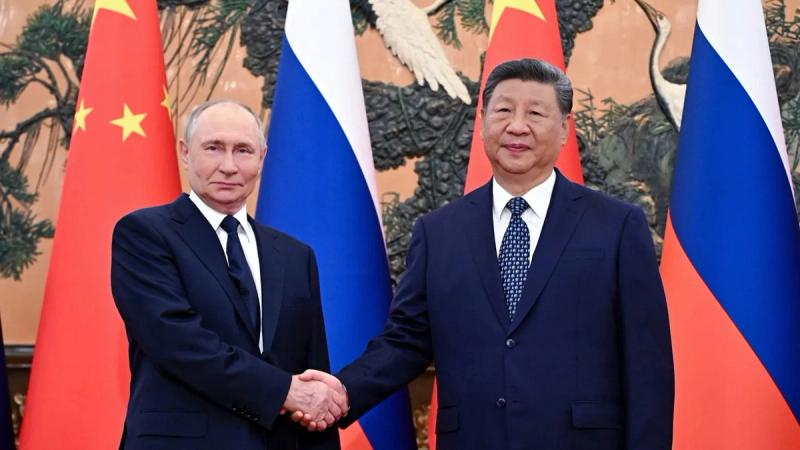
That instinct is usually right.
Thanks for reading Silk & Steel! Subscribe for free to receive new posts and support my work.
In diplomacy, sequence matters. Not just who visits, but who visits before whom, after whom, and under what regional conditions. A visit is never only a visit. It is also a signal, a hedge, a reassurance, a probe, and sometimes a warning.
What makes this moment especially interesting is not simply that Trump visited China and Putin followed. It is that this happened amid rising tension around Iran, energy routes, maritime chokepoints, and the broader question of how the world’s three most consequential powers are repositioning themselves at the same time.
The Chinese discussion around this has been lively, speculative, and at times quite sharp. Beneath the humor and exaggeration, several serious themes emerge. If we strip away the noise, Putin’s timing likely reflects at least five overlapping calculations.
1. The sequence of visits suggests a regional crisis is being managed in Beijing
One of the most striking observations in the discussion is that Putin’s visit does not stand alone.
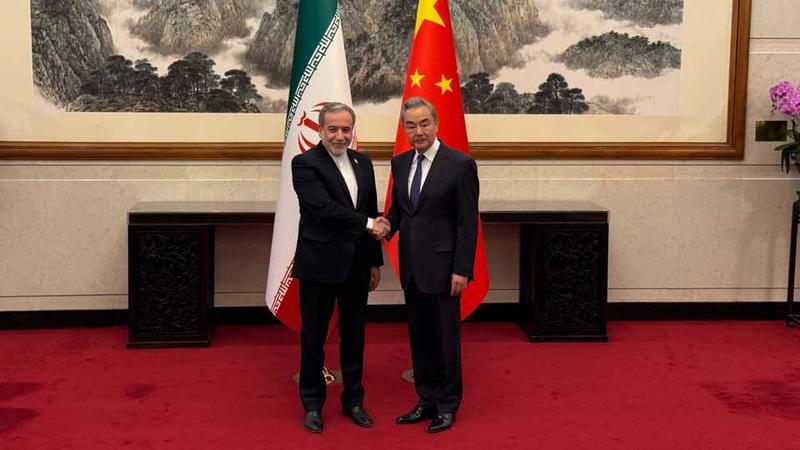
Before him came Iran’s foreign minister. Then came Trump. Then Putin’s visit was announced. Pakistan was reportedly expected as well. Put that together and the pattern starts to look less like routine bilateral diplomacy and more like a crisis consultation hub.
The central issue many Chinese commenters see behind this sequence is the Strait of Hormuz.
That makes sense. If the Gulf is unstable, if Iran is under pressure, and if the possibility of disruption to shipping remains real, then the countries with leverage over the situation, or exposure to it, all need to talk to Beijing. China is one of the world’s largest energy importers and has working relations with every major actor involved. It may not control events, but it is one of the very few capitals everyone feels they must brief.
From that perspective, Putin’s timing is meaningful. He did not rush in before Trump. He came after. That suggests he did not want to be seen as directly interfering in a possible US China conversation over the Middle East. Instead, he may be signaling two things at once.
First, Russia believes it has a voice in any serious discussion of regional energy security.
Second, Moscow is willing to let Beijing take the lead in deciding how far it wants to engage.
In other words, Putin may be coming not to force China’s hand, but to find out what hand China intends to play.
2. Russia has a direct economic stake in any disruption around Hormuz
If Hormuz becomes more dangerous, oil and gas markets tighten. That is not an abstract issue for Russia. It is a strategic opportunity.
Russia remains an energy power under sanctions pressure. Higher prices improve its fiscal position. More importantly, disruptions in Gulf supply can create openings for Russia to increase its relevance to Asian buyers, especially China, or to revive parts of its long-term energy relationship with Europe.
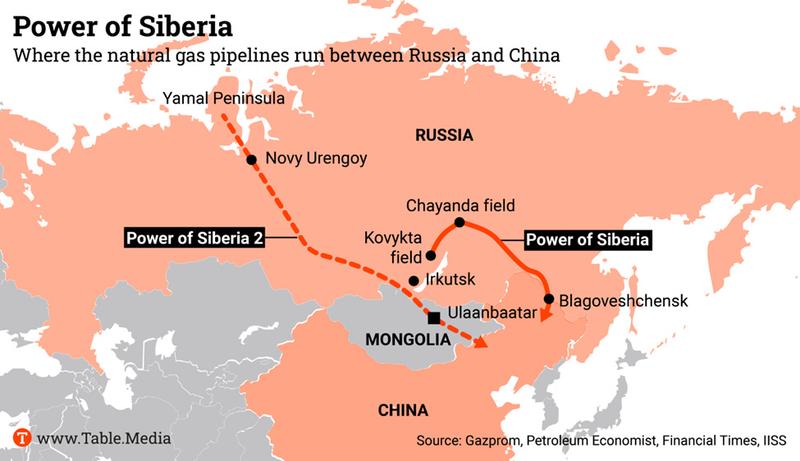
Several commenters in the Chinese thread argue that Russia is moving fast because it wants to capture any Chinese energy demand that can no longer be safely met through the Gulf. In this reading, Putin’s trip is not only political. It is commercial, urgent, and competitive.
There is logic here.
If Chinese policymakers are reviewing contingency plans for supply disruptions, Russia wants to ensure that it is central to those plans. Moscow would prefer that any emergency adjustment in Chinese imports strengthens Russian leverage rather than creates space for American or other suppliers.
That helps explain why the timing matters. Trump visited first. If China and the United States discussed energy stability, sanctions flexibility, or emergency supply arrangements, Russia would want clarity immediately. Putin’s visit could therefore be partly about eliminating uncertainty.
What exactly did Beijing and Washington discuss?
What room is China leaving itself?
And how can Russia make sure it is not left outside a deal that affects its own strategic position?
3. Moscow may be testing Beijing’s tolerance for a future Russia Europe energy thaw
One of the sharper arguments raised in the Chinese discussion is that Putin is not just thinking about China or the Middle East. He is also thinking about Europe.
There has been recurring speculation that Russia, if conditions shift on the battlefield or in diplomacy, will eventually try to reopen some form of energy trade with Europe. The mention of figures such as former German chancellor Gerhard Schroder in the debate points to that larger idea. Moscow still understands that access to European energy markets would be financially and strategically valuable, even if politically difficult.
Here is where the Hormuz issue becomes even more interesting.
If Gulf instability persists, Europe’s energy vulnerability rises again. That could make some European actors more pragmatic about Russian supply, at least in the long run. For Moscow, a tighter global energy market improves the argument that Russian energy remains indispensable.
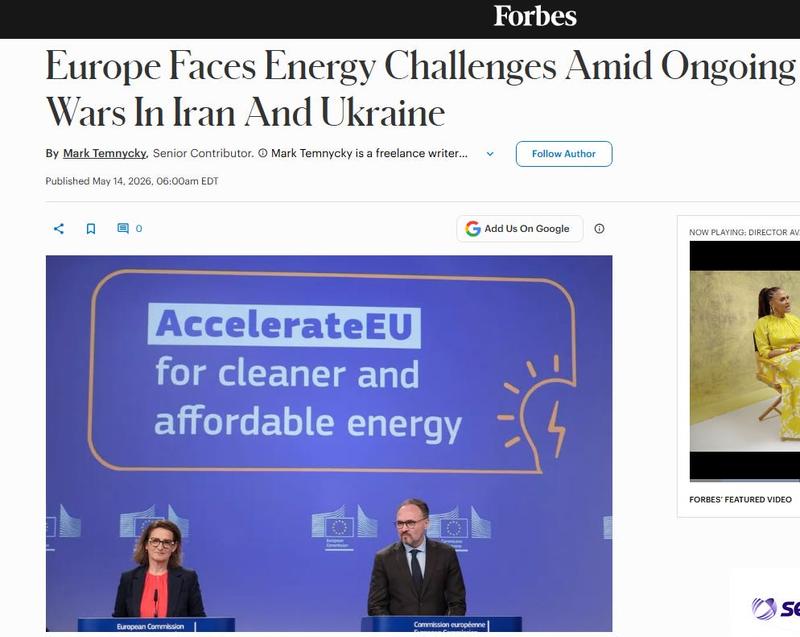
But that creates a question for Beijing.
If Russia someday restores more energy flows westward, would that weaken the priority or volume of supply available to China? Would Beijing see that as a problem? Or would it conclude that, at least for now, any such shift is too distant and uncertain to matter?
Some Chinese commenters argue that China probably would not panic. Infrastructure constraints, sanctions barriers, sabotage risks, and politics mean a rapid Russia Europe energy reset is unlikely. Even if Europe wanted Russian energy back, pipelines do not magically reappear, trust does not regenerate overnight, and Ukraine remains a decisive obstacle.
Still, Putin may want to know where China’s red lines are.
Could Russia improve ties with Europe without damaging its strategic partnership with China?
Could Moscow diversify its options without being seen in Beijing as becoming unreliable?
This is exactly the kind of question that leaders do not leave to assumption. They ask it in person.
4. Putin likely wants reassurance after any US China adjustment
Another thread running through the Chinese commentary is simpler and probably correct. Whenever there is even a small thaw, reset, or tactical adjustment in US China relations, other major powers get nervous.
That is especially true for Russia.
Even if nobody seriously expects a US China alignment against Moscow, Russia cannot afford to ignore any direct high-level talks between Washington and Beijing. The reason is structural. The United States and China are the only two powers with enough scale to reshape the environment around everyone else through even limited bargains. They have more issue areas, more leverage, and more room for cross-domain tradeoffs than any other pair.
That means a modest conversation between Beijing and Washington on trade, technology controls, sanctions enforcement, energy routing, or crisis management can have enormous second-order effects on Russia, Europe, India, Japan, and the Middle East.
From this angle, Putin’s visit may be partly about reassurance and partly about inspection.
Not because Moscow believes China is about to abandon Russia.
But because Russia needs to know whether the terms of the triangle have shifted at all.
Has Beijing offered Washington anything meaningful?
Has Washington offered Beijing anything usable?
Did Iran come up in a way that affects Russian interests?
Did Ukraine come up in any indirect way?
What signals should Moscow take from Trump’s tone, protocol, or outcomes?
States do not like ambiguity when they are fighting a major war and managing sanctions pressure. Leaders especially do not like ambiguity when another great power just had a private conversation with the one partner they rely on most.
5. The visit also says something symbolic about status
Diplomacy is substance, but it is also theater.
By arriving right after Trump, Putin avoids any image that Russia is being sidelined or that China’s top-level diplomacy is becoming too Washington-centered. The message is that China can host both, engage both, and remain central without choosing sides in the way outsiders might want.
For Moscow, that matters.
Russia wants to project that it is still one of the indispensable powers in the system, despite the war in Ukraine, Western sanctions, and periodic predictions of decline. A presidential visit to Beijing shortly after an American president’s trip visually reinforces that claim. It says that Russia still belongs in the room where consequential matters are discussed.
For Beijing, the symbolism is also useful. It highlights China’s role as a capital that all major players must engage. That does not mean China controls the global agenda. But it does suggest that on issues from war and peace to energy and shipping, no major actor can afford to ignore Beijing.
The less dramatic explanation
Not everything has to be a grand chess move.
A few Chinese commenters made the obvious point that Trump’s China trip had reportedly been delayed into May, and Putin often visits China around this period anyway, especially following Russia’s Victory Day commemorations. Bureaucratic calendars, domestic schedules, and protocol windows matter too.
That is worth remembering. Sometimes a dramatic sequence is partly coincidence.
But coincidence alone does not explain why everyone reads the timing politically. In great power diplomacy, even routine visits are absorbed into strategic narratives. The leaders know this. Their staffs know this. They plan accordingly.
So while the calendar may not have been designed entirely around Trump’s trip, once the sequence existed, it became diplomatically meaningful.
What this probably does not mean
It probably does not mean China is building a formal anti-American bloc with Russia around the Middle East.
It probably does not mean Moscow expects Beijing to openly intervene in either the Ukraine war or an Iran crisis.
It probably does not mean a sweeping Russia Europe energy reset is imminent.
And it probably does not mean Trump’s visit produced some dramatic realignment that left Russia panicked.
The more realistic interpretation is narrower.
Putin saw a moment of unusual diplomatic density in Beijing. Iran was in the picture. Trump had just been there. Energy insecurity was rising. Russia’s own wartime and sanctions calculations were becoming more urgent. Under those conditions, showing up quickly made sense.
The deeper meaning
If there is one deeper message in this episode, it is that Beijing is increasingly functioning as the intersection point for multiple crises at once.
Middle East instability, Eurasian energy flows, the future of the Russia China partnership, the residual shape of US China competition, and the strategic anxieties of secondary powers are all now being processed through the same diplomatic space.
That is the real story.
The question is not simply why Putin chose this time.
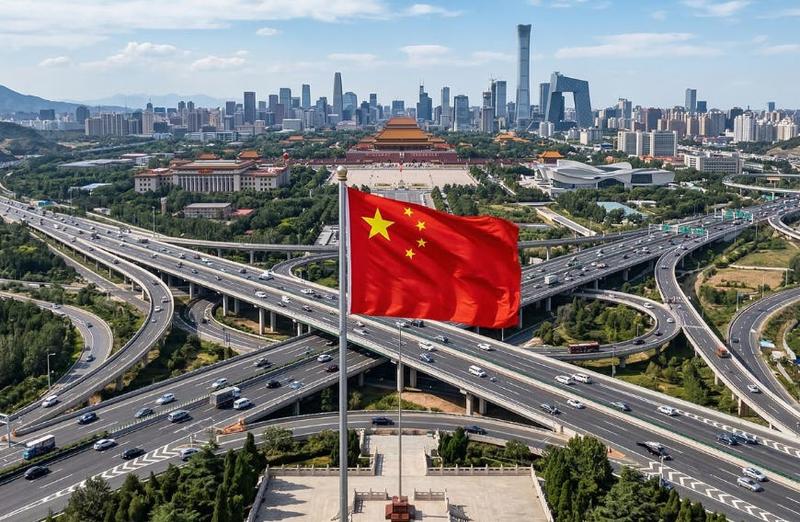
It is why so many actors now feel they need to come to Beijing when the system gets shaky.
And the answer is that, whether they like it or not, China has become one of the few places where all the relevant files now touch.
Bottom line
Putin’s post Trump China visit likely carries several messages at once:
- Russia wants to stay inside any serious discussion connected to Iran, Hormuz, and energy security.
- Moscow wants immediate clarity on what Trump and Xi may have discussed.
- Russia sees possible commercial upside in supply disruption and wants to lock in Chinese demand.
- Putin may be probing Beijing’s view on any future Russian effort to reopen energy options with Europe.
- Both sides want to publicly demonstrate that China Russia ties remain stable even when Washington is actively engaging Beijing.
The visit is best understood not as a single signal, but as a layered one.
In moments like this, timing is not everything.
But timing is rarely accidental.
Thanks for reading Silk & Steel! Subscribe for free to receive new posts and support my work.
Curated and translated from Zhihu, China's largest Q&A platform.
Newsletter
Subscribe to The Expat Edit
Chinese perspectives on global events, wars, and great power competition. Curated from Zhihu.
Free. No spam. View on Substack →