
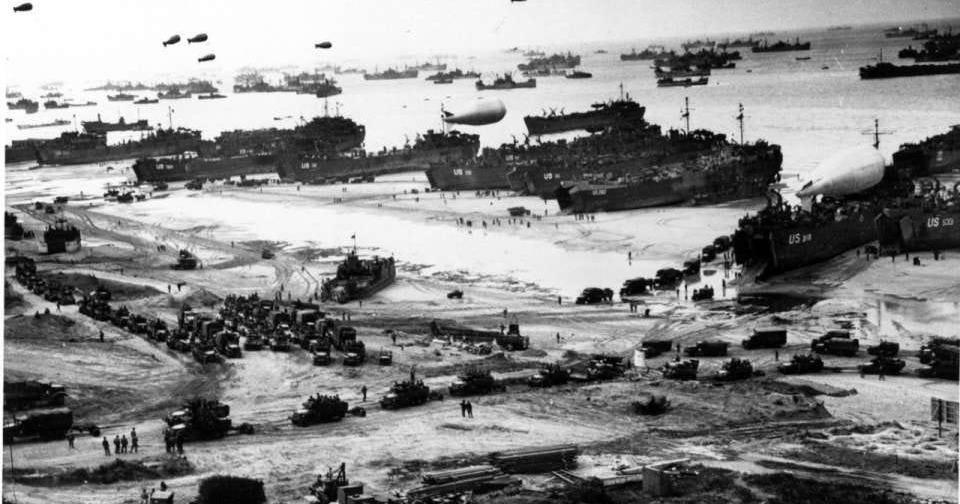
For months, perhaps years, a familiar fear has hung over political discussion: that the world is stumbling into World War III.
The phrase carries a powerful image. It summons visions of mass mobilization, industrial might, giant armies crossing borders, and populations steeled for sacrifice. It evokes 1914 and 1939, only with more advanced weapons and higher stakes.
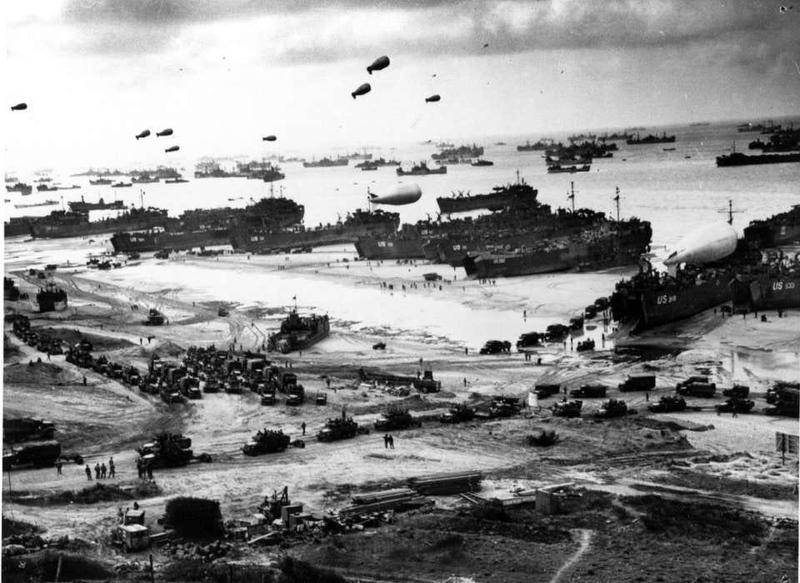
But that vision may now be less plausible than the anxiety surrounding it.
The danger is real. The instability is real. The possibility of catastrophic escalation is real. What seems increasingly unrealistic is the idea that the West is capable of fighting, or sustaining, a traditional global war in the old sense. The military, political, and social foundations required for that kind of conflict are no longer firmly in place. What remains instead is something more brittle: a hollowed-out order with a taste for escalation but a diminishing capacity for control.
This is what makes the moment so perilous. Great powers may no longer be able to wage total war as they once did. They may still be capable of producing a total disaster.
The first reason is material. For all the rhetoric of Western strength, recent conflicts have exposed a serious weakness in industrial depth. The United States and its allies possess immense wealth, sophisticated systems, and overwhelming financial influence. But war, in the end, is not fought in abstractions. It is fought with shells, missiles, drones, parts, fuel, and production lines that can replenish what battle consumes.
That is where the façade has begun to crack.
The American military industrial base, long treated as an inexhaustible arsenal, appears far less elastic than advertised. Munitions stockpiles are not bottomless. Production capacity cannot always be surged quickly. Supply chains are vulnerable. In some categories, the West is discovering that it no longer produces at the scale that modern war demands.
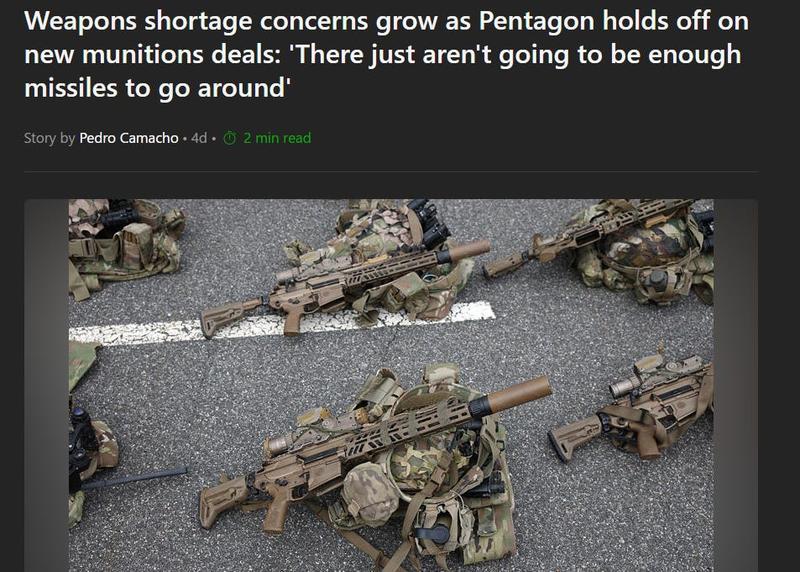
Meanwhile, wars of attrition are not disappearing. They are becoming more technologically dense. Russia’s war in Ukraine has shown that a large state with a wartime footing can continue producing and adapting over the course of several years. The lesson is uncomfortable for Washington and Europe. The West can still spend more. It is less clear that it can still make more, at least not fast enough.
This is not merely a technical problem. It points to a deeper transformation in the political economy of the Western world. Over the past few decades, much of the productive base was allowed to shrink or move abroad while finance, services, and consumption expanded. Strategic dependence was tolerated in peacetime because it was profitable. It now looks dangerous in a more fractured world.
The contrast with China is especially stark. The 21st century balance of power is not simply about who has more aircraft carriers or larger budgets. It is also about who manufactures the components, controls the supply chains, processes the rare earths, and can turn industrial ecosystems toward strategic ends. In drone warfare, especially, that matters enormously. A future conflict may not require millions of conscripts. It may require millions of drone components.
And that leads to the second reason the old image of world war no longer fits. The manpower question has changed.
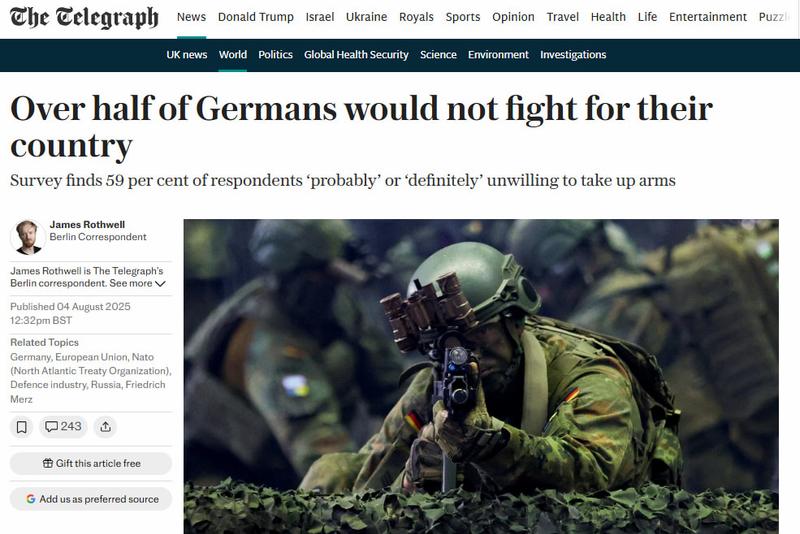
In much of the West, there is little public appetite for large-scale war. Younger generations do not appear ready to march enthusiastically into foreign conflicts. In the United States, any serious move toward conscription would almost certainly provoke a political crisis. In Europe, where leaders speak more openly of rearmament, publics remain ambivalent at best. In some countries, people appear reluctant even to take up arms for national defense, let alone for expeditionary confrontation.
Ukraine itself offers the bleakest illustration. If any society might have been expected to sustain high volunteer enthusiasm in a war of national survival, it was Ukraine. Yet over time, even there, volunteerism has eroded under the pressure of casualties, exhaustion, displacement, and fear. Coercion has increasingly filled the gap. That does not suggest a continent preparing for triumphant mass mobilization. It suggests the limits of modern democratic endurance in prolonged war.
Yet low enthusiasm does not mean low danger. It may simply mean war takes a different form.
Instead of continental armies, the future may belong to missiles, autonomous systems, cyber operations, satellite disruption, sabotage, and long-range drone swarms. Such a conflict would not look like the world wars people remember. It would still be international, still be sustained, and still carry the risk of direct confrontation between nuclear powers. The scale of human participation might shrink even as the scale of destruction widened.
That is already visible in Europe’s eastern theater. Incremental escalation has become the governing habit of the Ukraine war. What began with caution has, step by step, moved into riskier territory. Weapons once considered too provocative become acceptable. Lines once treated as dangerous become blurred. Warnings are issued, then dismissed, then tested again.
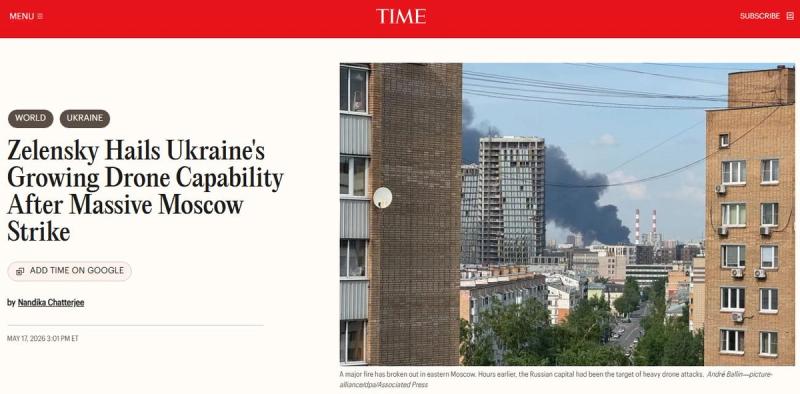
This pattern produces a terrible paradox. Because catastrophic escalation has not happened yet, decision-makers can begin to treat restraint as unnecessary. The absence of immediate disaster is misread as proof that there was never much danger to begin with.
History suggests otherwise. States often signal ambiguously, absorb provocations longer than expected, and then respond abruptly when the accumulation becomes intolerable. The fact that a red line was crossed yesterday without visible consequences does not mean a deeper line will not trigger a much sharper reaction tomorrow.
That is why scenarios once treated as remote are no longer speculative. Direct technical participation by NATO states has already entered the conflict. What remains uncertain is how and when the next threshold is crossed: a retaliatory strike on infrastructure beyond Ukraine, or a broader war that engulfs countries that long imagined themselves as auxiliary players rather than combatants. Not inevitable, but well within the realm of possibility.The Middle East presents an equally disturbing picture, though for somewhat different reasons. There, the greatest risk may lie not in public enthusiasm for war but in elite inability to accept defeat. Great powers and regional clients often find it psychologically easier to escalate than to admit that a campaign has failed. Prestige can become more dangerous than strategy. The demand to remain “number one” has a logic of its own, especially when fused with panic, ideology, and domestic political weakness.
That is where the nuclear question returns.
Much of modern strategic thinking assumes that nuclear weapons are constrained by doctrine, deterrence, and process. Usually, that is true. But systems are only as stable as the people operating them. In moments of humiliation, unpredictability becomes a strategic variable in its own right. A reckless leader does not need a carefully prepared public narrative before making a catastrophic decision. He may act first and improvise the justification later.
That possibility is what makes the present so unnerving. The public often imagines nuclear use as the endpoint of a long, recognizable road: mobilization, speeches, emergency measures, dramatic ultimatums. But what if a leader of a superpower (do I need to name him?) has shown a preference for improvisation over preparation? If such a figure confronts failure abroad, dwindling options, and an inability to retreat without appearing weak, the fear is not only of miscalculation, but of impulse.
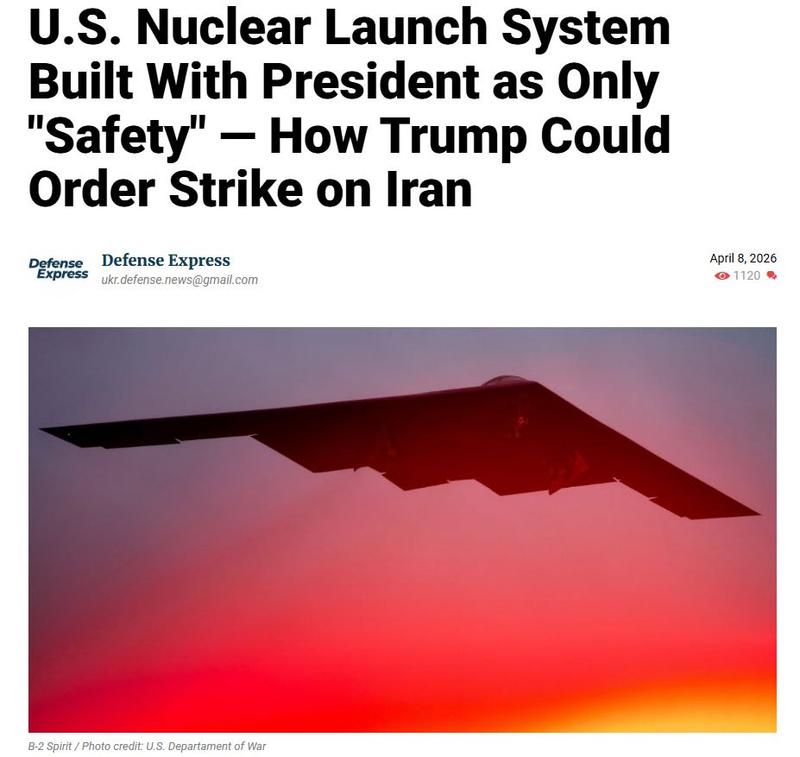
None of this means nuclear war is likely in a statistical sense. It means it remains one of the few imaginable outcomes in crises where conventional victory is no longer available, and political retreat feels unbearable to those in command.
There is another path, of course, and it may be the more probable one. Not a full-blow world war, but a war ending in systemic breakdown.
An empire can fail not only by losing battles but by exhausting the machinery that made its power possible. Financial supremacy can persist long after industrial resilience has waned, but not forever. Reserve currency status, alliance systems, forward deployments, sanctions architecture, and military guarantees all depend in the final instance on credibility. Once a state appears unable to impose outcomes, unable to replenish its means, and unable to command domestic consent, its authority begins to fray.
In such a moment, the danger is less a coordinated global war than a chaotic unraveling. Allies hedge. Rivals probe. Markets seize. Energy shocks ripple outward. Political legitimacy collapses at home. The ruling class, unable to restore the old order, insists more loudly that the public has no alternative.
That may be the most striking feature of this era: the widening gap between what populations want and what their governments continue to do. Across the Western world, leaders invoke democracy while acting with remarkable insulation from democratic constraint. Voters are told they have choices, yet on many of the most consequential questions, especially war, strategic alignment, and economic sacrifice, the range of acceptable policy appears strangely narrow.
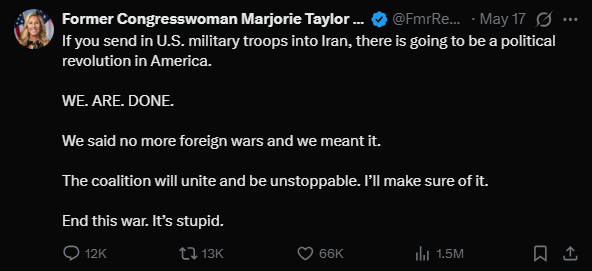
This has produced not only anger but a legitimacy crisis. Citizens increasingly sense that they are being carried along by institutions they do not control toward outcomes they did not choose. In such conditions, cynicism becomes rational. Electoral punishment may come, but many people no longer believe that replacing one party with another will alter the underlying trajectory.
And they may be right.
The real alternative to escalation may not come from a routine transfer of power between discredited factions. It may come only through a more profound political rupture: a reassertion of public control over systems that have become dangerously autonomous. That would be the best outcome available, not because it promises harmony, but because it offers at least the possibility of restraint.
The fact that the old model of world war has become harder to sustain does not make the world safe. It may be less safe precisely because states still possess enormous destructive power while lacking the industrial discipline, political legitimacy, and social cohesion that once allowed power to be channeled with some predictability.
That is the shape of the danger now. Not the march of disciplined nations into a familiar global conflict, but the lurch of brittle powers through serial escalations, technological improvisation, economic fragility, and leaders who may discover too late that they can no longer control the forces they have unleashed.
What lies ahead could either be more or less destructive than the previous World Wars. In any case, “World War III,” when it comes, will not be the World War that most people imagine.
Listen to CATR on:
Newsletter
Subscribe to Conversations Among the Ruins
Long-form geopolitics and the decline of the unipolar world order. New episodes straight to your inbox.
Free. No spam. View on Substack →
Reader-funded
This is independent, long-form work.
Conversations Among the Ruins is written, not repackaged, and it stays free because readers choose to fund it. If it is worth your time, a paid subscription or a one-off tip keeps it going.
Become a supporter →