
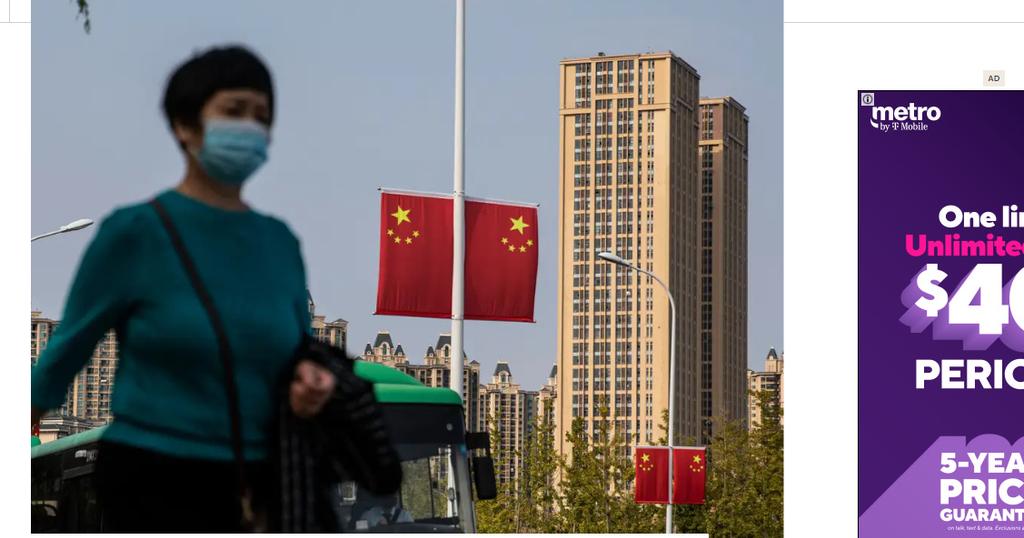
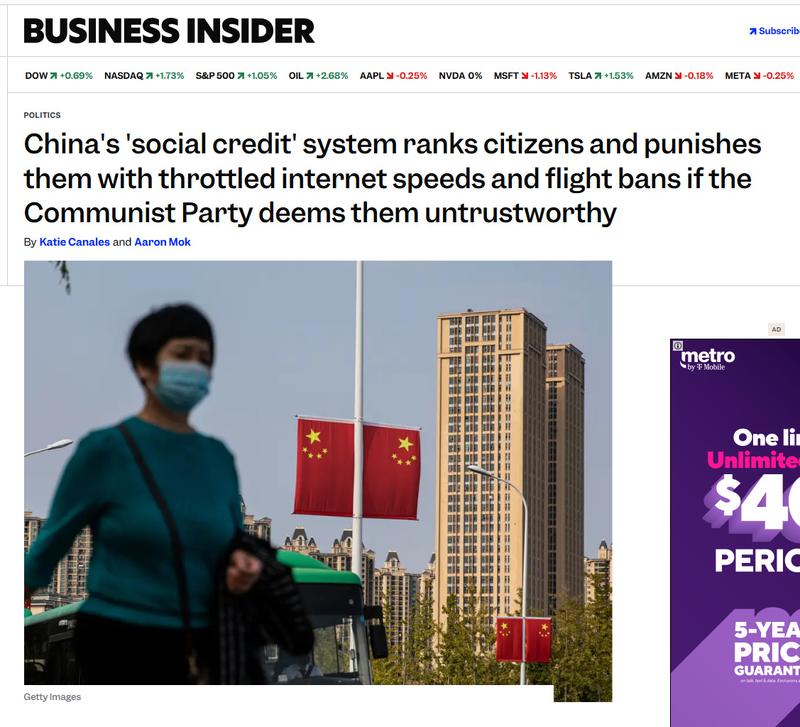
Ask many people in the English-speaking internet what “social credit” in China means, and you will often hear the same dystopian story. Every citizen supposedly has a live score. Cameras track your every move. Praise the government and your score rises. Jaywalk, criticize officials, or say the wrong thing online and your score falls. Fall too low, and your life is ruined. It sounds like Black Mirror with Chinese characteristics. There is just one problem. That system, as popularly described, does not actually exist.
The Myth That Became “Common Knowledge”
The strangest part of the China “social credit score” story is not that random internet users believe it. The strangest part is how deeply it has spread into mainstream commentary, think tank panels, newspaper columns, political speeches, and meme culture. Over the past decade, an exaggerated and often completely fictional version of China’s social credit system has been repeated so often that many people now treat it as settled fact.
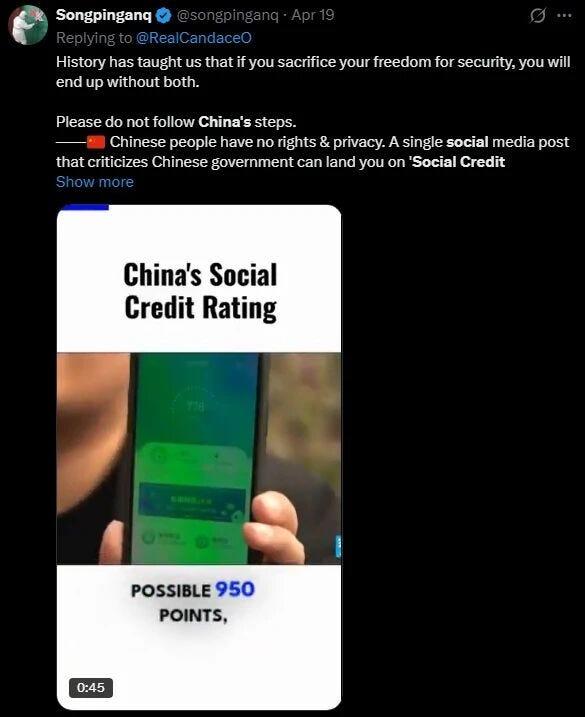
In the most viral version of the story, the Chinese state uses AI, facial recognition, and a unified national database to score each citizen in real time. Your reading habits, social circle, online speech, and daily behavior are all supposedly measured and translated into a number. That number then supposedly determines whether you can travel, get a job, rent a home, or participate in society normally.
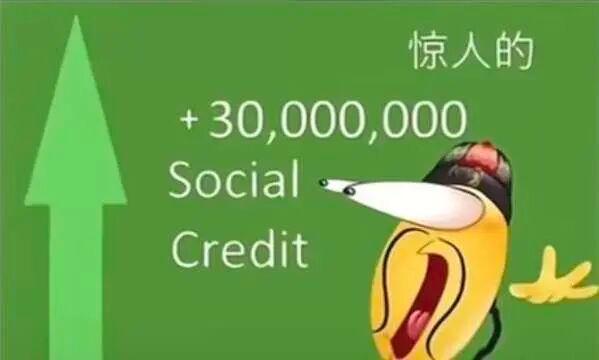
This is the version repeated in headlines, in viral tweets, in YouTube explainers, and in endless “+1000 social credit” jokes under videos of China. It is also the version that keeps collapsing under scrutiny.
What China’s “Social Credit” Actually Is
China does have something called a social credit system, but it is not the science fiction scorecard that foreign internet culture imagines. In practice, it has been a loose, evolving administrative framework aimed at improving compliance, reducing fraud, punishing specific forms of dishonesty, and coordinating data across departments. Much of it has focused on companies, court judgment defaulters, procurement violations, tax issues, product safety, and sector regulation.
In other words, it is closer to a patchwork of blacklists, redlists, compliance records, and regulatory enforcement tools than to a single nationwide citizen score. There is no universal number assigned to every Chinese person that rises when you help an old lady cross the street and falls when you post something rude on Weibo.
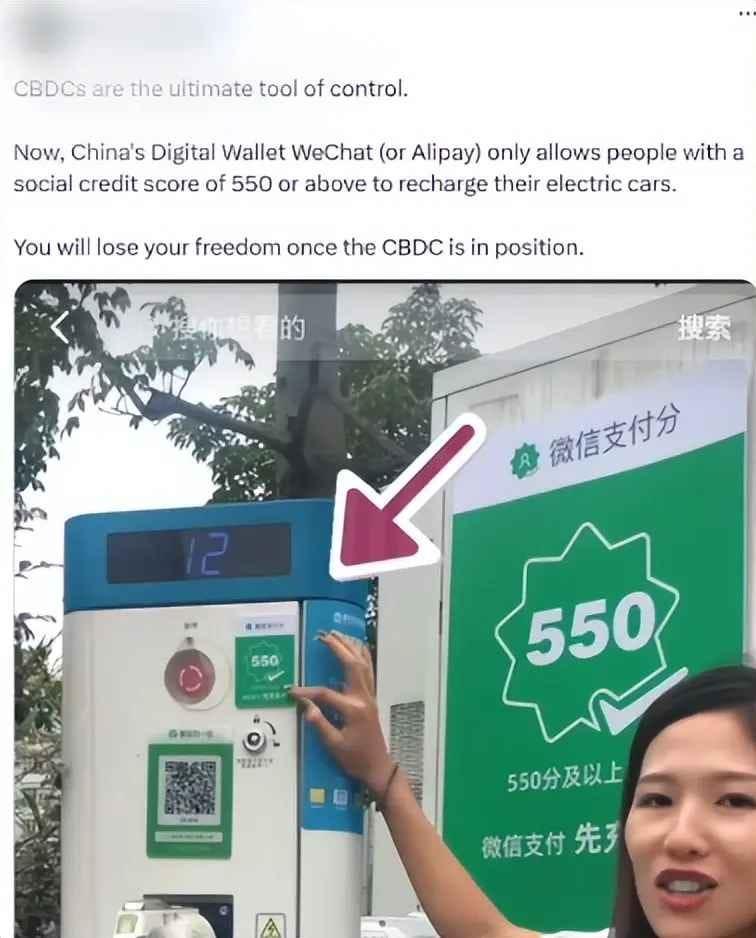
Part of the confusion comes from mixing together totally different things. Corporate platforms such as Sesame Credit from Ant Group, or WeChat Pay Score, are private or quasi-commercial scoring tools used for consumer services. They are not a master state score governing all of life. Yet these systems were repeatedly presented abroad as proof that China had already built a giant national obedience calculator.
How the Confusion Started
The roots of the myth go back to the mid-2010s, when China issued planning documents on building a “social credit system.” In Chinese policy language, that phrase referred broadly to trustworthiness, compliance, information sharing, and institutional governance. In English, however, “social credit” sounded sinister from the start. It was easy to mistranslate, easy to flatten, and even easier to sensationalize.
One early error involved confusion over the “unified social credit code,” which is essentially an identification number for organizations and businesses. Some overseas reporting distorted this into the idea of a personal citizen score. From there, blog posts, activist commentary, and think pieces began building a more dramatic narrative. Corrections came later, but by then the original story had already spread much further.
Then pop culture poured gasoline on the fire. In 2016, Black Mirror aired “Nosedive,” an episode about social ratings controlling life chances. For many Western viewers, China’s policy jargon and Black Mirror’s fictional dystopia fused into a single mental image. After that, the myth stopped being just a media misunderstanding. It became emotionally intuitive.
“The myth survives because it is simple, visual, and emotionally satisfying. The truth is messier, more bureaucratic, and far less cinematic.”
Why So Many Foreigners Find It Plausible
One reason the myth works so well is projection. In countries like the United States, people already live with real credit scoring systems that shape major life outcomes. Credit scores affect loans, mortgages, renting, insurance, and sometimes even employment decisions. Utilities, phone plans, deposits, and financial access can all hinge on a person’s record. For many Western audiences, the idea that a score can govern daily life does not sound bizarre at all. It sounds familiar.
So when they hear that China has a “social credit” system, many instinctively map their own experience onto it. Then they add one more ingredient: the belief that China must be doing it in a more authoritarian, more technologically intrusive, and more absolute way. A familiar system plus a geopolitical villain image equals a perfect rumor.
This helps explain why even well educated observers have repeated wildly inaccurate descriptions. The myth does not survive because it is well evidenced. It survives because it feels believable inside an existing worldview.
Even Experts Got It Wrong
This was never just a problem of random meme pages. The myth entered elite discourse too. At a Nexus conference years ago, a Western moderator described the Chinese system as if every citizen had a personal score built from books read, social networks, and various personal behaviors. Chinese scholar Zhang Weiwei reportedly responded on the spot that this was the first time he had heard such a description, and he was hearing it from the moderator himself.
That exchange is revealing. It shows how a distorted media narrative can climb the ladder from viral article, to op-ed, to conference stage, to expert consensus, without ever being firmly grounded in reality. Once a false concept becomes embedded in elite discussion, ordinary readers assume the debate is about implications, not about whether the premise itself is false.
And once politicians start citing it, the myth gains a second life as rhetoric.

Why the Meme Is So Hard to Kill
“Social credit” has now become more than a misunderstanding. It is a meme format. Under videos showing modern Chinese cities, high-speed rail, clean streets, advanced manufacturing, or ordinary daily life, you can predict the comments. “+500 social credit.” “You posted this for points.” “The CCP gave you extra score.” These jokes are often presented as harmless humor, but they do real work. They frame any positive image of China as fake, coerced, or staged.
That is why the meme is so effective. It is not really about policy anymore. It is a shortcut for dismissing anything that complicates a preferred picture of China. A travel video, a street interview, a food clip, a technological success, a human moment, all can be neutralized instantly with one repeated line.
Once a falsehood becomes funny, it becomes much more durable. People who would hesitate to repeat a serious accusation may still repeat it as a joke.
Why Corrections Rarely Catch Up
Fact-checking this topic is harder than it looks. China’s actual governance and regulatory systems are complex, fragmented, and often poorly understood even by people inside China. Different local pilots existed at different times. Commercial credit products and government programs sometimes appeared adjacent to each other. Official language could be broad and abstract. All of this gave outsiders plenty of room to blend separate things into one giant narrative.
Meanwhile, the false version is beautifully simple. It has a villain, a machine, a score, and a punishment. It fits on a tweet, in a meme, or in a dramatic headline. The real version needs context, distinctions, translation, and patience. That is a bad matchup in the age of algorithmic attention.
Add geopolitics, media incentives, ideological bias, and cultural distance, and you get a rumor with remarkable staying power.
So What Should Readers Actually Remember?
The first thing to remember is that China is not running a single universal citizen score that updates in real time based on all behavior. That popular image is false. The second is that there are real systems in China involving regulation, blacklists, court enforcement, anti-fraud tools, and commercial scoring products, but these are not the same thing as the meme version repeated abroad. The third is that the myth tells us as much about Western anxieties, media habits, and narrative desires as it does about China itself.
In short, the legend of “China’s social credit score” survives not because it is accurate, but because it is useful. Useful for headlines. Useful for politicians. Useful for internet dunking. Useful for anyone who wants a neat dystopian morality play instead of a messy administrative reality.

Curated and translated from Zhihu, China's largest Q&A platform.
Newsletter
Subscribe to The Expat Edit
Chinese perspectives on global events, wars, and great power competition. Curated from Zhihu.
Free. No spam. View on Substack →