
Two tests of American leverage were run in the same twenty-four hours, one in the Persian Gulf and one in Moscow, and the analysts we track read both as returning the same result. In the Gulf, Iran's newest ballistic missiles have turned the aircraft carrier from a threat into an exposure. In Moscow, Steve Witkoff and Jared Kushner arrived with pressure in one hand and money in the other, and by every account in today's material Russia declined both. What connects the two is a judgment, now shared across most of the roster, that Washington's instruments of coercion have been applied at full strength and found short.
No good military options
Larry Johnson, on Dialogue Works, described Washington's approach as an attempt to use economic pressure, tanker strikes included, to compel Iran to surrender, and said it will not work: "the United States does not have any good military options and Iran has now called their bluff."¹ The reason is the missile. Iranian ballistic missiles, he argued, are making the US carrier presence in the Gulf untenable, and we may be "on the verge of a new era where the carriers are absolutely obsolete."²
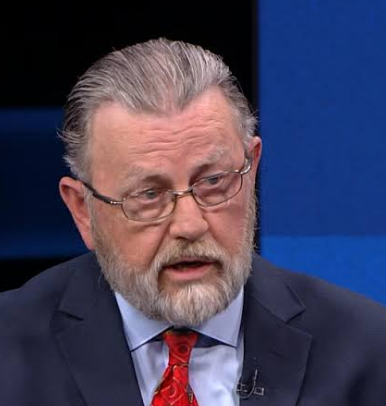
“the United States does not have any good military options and Iran has now called their bluff”
Matt Bracken, on Daniel Davis's Deep Dive, used the same phrase, and went further on what the weapon can do. Iran's steerable ballistic missiles can now hit high-value moving targets, proven out to Jordan range, and "they can hit a bullseye in Tel Aviv" if ordered.³ Tehran, in his reading, is deliberately pulling its punches, firing called shots rather than seeking a mass-casualty event.³ Jacques Baud, also on Dialogue Works, put it more simply: "Iran is not losing the war."⁴ He described a new maneuvering missile able to threaten moving warships, and a standing warning that the next American attack will draw a disproportionate reply.⁵
Nima Alkhorshid framed the asymmetry as geography: "Iran is fighting at home. It's defending itself. The United States is coming from the other side of the planet."⁶ His verdict on Washington was that "Donald Trump has shown over and over that he has no plan in West Asia. No plan."⁷ Johnson set a clock on the standoff, predicting that Iran will hit a US warship in the Gulf of Oman or the Arabian Sea within the next week or two, forcing the United States out.⁸


The tanker war and the trap behind it
Alkhorshid described the Gulf as two sides doubling down, and called the tanker war a losing proposition for both: attacks on tankers will continue again and again, but neither Iran nor the United States can sustain the exchange.⁹ Nate of Canadian Prepper read Washington's target selection as a symptom. The United States has run out of high-value military targets inside Iran and is hitting tankers and civilian navigation infrastructure because it cannot reach the missile silos without nuclear weapons.¹⁰ He went further than anyone else on the roster: "Trump is actively trying to provoke Iran into attacking a US warship and killing US soldiers" to manufacture the justification for a larger strike.¹⁰
Ryan Perkins, on The Duran, offered the most ambitious account of why the war is being fought at all. Regime change was never a realistic expectation, he argued; the achieved outcome was Iran's closure of the Strait of Hormuz, and that may have been the objective. "I think the primary purpose of the Iran war is to shape the economic landscape in a way that facilitates this trap," he said, and "the primary target is China."¹¹ ¹² The mechanism is a synchronized energy and food price shock aimed at the offshore renminbi and China's manufacturers, peaking around September and October and running for up to two years.¹³ India, he noted, "has effectively just taken the economic shock from the Strait of Hormuz and simply just moved it straight onto the government balance sheet."¹⁴
That is a genuine split: the rest of the roster sees improvisation where Perkins sees design.
Moscow was not buying
Alexander Mercouris, on his own channel, delivered the plainest summary of the Witkoff-Kushner visit: the Russians were interested in neither the threats nor the bribes. "They believe that they are winning the war. They are in fact winning the war."¹⁵ Johnson explained the refusal as a matter of trust. Russia does not believe Trump after he broke the Anchorage agreement and will not cooperate regardless of what is promised; Trump, in Johnson's phrase, is a "loose cannon and he can't be trusted."¹⁶
John Helmer, also on Dialogue Works, described what the bribe actually was. In his account the proposed deal splits Russia's frozen $300 billion in central bank reserves so that $100 billion would be managed by funds connected to Witkoff, Kushner and the Trump family, with arranging fees of up to five percent, in exchange for sanctions relief tied to a snapback mechanism. "5% of a hundred billion is $5 billion," he observed,¹⁷ and suggested the right analytical tool is to "apply criminal forensics to the way criminal gangs divide turf and divide shares of money."¹⁸ Helmer expects no Trump-Zelensky-Putin trilateral at the BRICS summit in Delhi, because the Russian side will not attend a meeting where nothing concrete has been settled.¹⁹ He also relayed Lavrov's position on relations with the West: "Such relations will never happen again."²⁰
Patrick Henningsen, on Dialogue Works, called the Moscow diplomacy performative theater, a signal to markets rather than a path to a deal, and does not expect Witkoff and Kushner to come home with anything.²¹ Baud reduced the stakes to a single proposition: the less the West accepts that Russia now controls the battlefield, the more likely Ukraine disappears entirely.²²
The front, and the winter behind it
Davis, in a solo episode, said what the diplomacy is failing to conceal: "we have already lost the war."²³ Russia is winning in the air and on the ground around Sumy, Kharkov and Zaporozhye; only the scale of the defeat is still open.²³ He expects Ukrainian forces in the northern Sumy-Kharkov pocket to choose between fighting to the death and withdrawing before it closes.²⁴
Stanislav Krapivnik, with Glenn Diesen, located the decision in production rather than tactics. "Amateurs debate weapons and tactics. Experts debate supply chain."²⁵ Russia, by his count, has produced 1,200 new battle tanks a year for three years running.²⁶ He describes the Kramatorsk-Slavyansk-Dobropolye pocket as already cut off, its bridges and roads destroyed, with nothing moving in or out by vehicle, and expects the autumn rains within two weeks to close off what movement is left.²⁷ Mercouris tracked the same deterioration and refused to credit Kiev's claimed counteroffensive near Krasny Liman: "I am going to maintain skepticism about this offensive until the moment comes when I see some video footage which actually corroborates that it has actually happened."²⁸
Behind the front is the winter. Mercouris warned that Ukraine is running out of money as well as men and Patriot interceptors, and that without billions of euros in new Western funds within months there is a real possibility of a fiscal crash, though he expects Western governments will keep the money flowing and produce higher inflation rather than outright hyperinflation.²⁹ Helmer reached the same season from a different direction: damaged power systems and the end of the Odessa export and import route will mean extremely severe damage to the Ukrainian public and economy this winter.³⁰
What the Gulf will remember
Bracken's most consequential claim was not about the missile but about what follows it. Gulf and Asian states are hedging away from Washington through the Mecca Accords, BRICS and the Shanghai Cooperation Organization, and he predicts the Gulf states will not welcome the US Navy back once this war ends.³¹ He was equally dismissive of Saudi Arabia's stated goal of taking the Houthi capital: "It's just not going to happen."³² Henningsen's view of the kingdom's position was blunter still: "Saudi Arabia is military occupied."³³
Paul Craig Roberts, with Diesen, saw the whole enterprise as borrowed: "Israel has succeeded in having the United States its proxy to fight Iran for Israel."³⁴ The bill, in his account, is being presented in the bond market, where "we are experiencing a decline in the willingness of foreign central banks to hold US treasury debt."³⁵ Henningsen's summary was that "The US has no more grand strategy," only piracy, sabotage and subterfuge.³⁶ Baud's was that the erosion ends with the United States and Europe "obliged to beg to China."³⁷ Davis's was shorter: "our allies, nobody can trust us."³⁸
Little of this is new as forecast. What changed in the last day is that the tests were run. In the analysts' reading, the carriers have been made to keep their distance and the envoys sent home with nothing. The roster disagrees about whether Washington is adrift or executing a design that only resembles drift. It does not disagree about what Tehran and Moscow concluded.
Sources
- Larry Johnson, *Dialogue Works* · US economic pressure and tanker strikes are meant to force Iran's surrender and will not; Washington has no good military options and Iran has called its bluff watch ▶ 38:37
- Larry Johnson, *Dialogue Works* · Iranian ballistic missiles are making US carriers untenable in the Gulf, possibly opening an era where carriers are obsolete watch ▶ 23:02
- Matt Bracken, *Deep Dive* · Iran's steerable ballistic missiles can hit moving high-value targets and could reach Tel Aviv; Tehran is firing called shots rather than seeking mass casualties watch ▶ 2:00
- Jacques Baud, *Dialogue Works* · Iran is not losing the war against the US and Israel in the Gulf watch ▶ 50:58
- Jacques Baud, *Dialogue Works* · If the US attacks Iran again, the response will be disproportionate and use Iran's new maneuvering missile against moving warships watch ▶ 1:22
- Nima Alkhorshid, *Dialogue Works* · Iran is fighting at home while the United States fights from the other side of the planet watch ▶ 33:59
- Nima Alkhorshid, *Dialogue Works* · Trump has shown repeatedly that he has no plan in West Asia watch ▶ 16:47
- Larry Johnson, *Dialogue Works* · Predicts Iran will hit a US warship in the Gulf of Oman or Arabian Sea within a week or two, forcing the United States out watch ▶ 35:02
- Nima Alkhorshid, *Dialogue Works* · Tanker attacks will continue, but the tanker war is unsustainable for both Iran and the United States watch ▶ 10:50
- Nate, *Canadian Prepper* · Trump is actively trying to provoke Iran into striking a US warship; the US has run out of high-value targets and is hitting tankers and civilian infrastructure instead watch ▶ 6:21
- Ryan Perkins, *The Duran* · The primary purpose of the Iran war is to shape the economic landscape to facilitate a trap watch ▶ 7:34
- Ryan Perkins, *The Duran* · The primary target of the campaign is China watch ▶ 11:38
- Ryan Perkins, *The Duran* · The fertilizer shortage and energy price shock will synchronize for maximum impact around September-October watch ▶ 5:25
- Ryan Perkins, *The Duran* · India has taken the Hormuz shock and moved it straight onto the government balance sheet watch ▶ 45:16
- Alexander Mercouris, *Alexander Mercouris* · The Russians were interested in neither the threats nor the bribes; they believe they are winning the war, and they are watch ▶ 72:52
- Larry Johnson, *Dialogue Works* · Russia does not trust Trump after he broke the Anchorage agreement; he is a loose cannon who cannot be trusted watch ▶ 41:12
- John Helmer, *Dialogue Works* · The proposed deal puts $100 billion of Russia's frozen reserves under Witkoff, Kushner and Trump family funds with fees up to 5 percent; 5 percent of $100 billion is $5 billion watch ▶ 25:51
- John Helmer, *Dialogue Works* · Apply criminal forensics to the way gangs divide turf and shares of money watch ▶ 27:26
- John Helmer, *Dialogue Works* · The Russian side is extremely reluctant to attend a trilateral where nothing concrete is settled, so no Trump-Zelensky-Putin meeting at the Delhi BRICS summit watch ▶ 22:50
- John Helmer, *Dialogue Works* · Per Lavrov, pre-2022 relations with the West will never happen again watch ▶ 37:25
- Patrick Henningsen, *Dialogue Works* · The Witkoff-Kushner Moscow diplomacy is performative theater aimed at markets; they will not come home with a deal watch
- Jacques Baud, *Dialogue Works* · The less the West accepts that Russia controls the battlefield, the more likely Ukraine disappears completely watch ▶ 0:38
- Daniel Davis, *Deep Dive* · Russia is winning in the air and on the ground, and the war for Ukraine is already lost watch ▶ 34:01
- Daniel Davis, *Deep Dive* · Ukrainian forces in the northern Sumy-Kharkov pocket will have to choose between fighting to the death and withdrawing before it closes watch ▶ 12:10
- Stanislav Krapivnik, *Glenn Diesen* · Amateurs debate weapons and tactics; experts debate supply chain watch ▶ 28:30
- Stanislav Krapivnik, *Glenn Diesen* · Russia has produced 1,200 new battle tanks a year for the last three years watch ▶ 36:02
- Stanislav Krapivnik, *Glenn Diesen* · The Kramatorsk-Slavyansk-Dobropolye pocket is already cut off, its bridges and roads destroyed, with the autumn rains due within two weeks to further restrict movement watch ▶ 19:26
- Alexander Mercouris, *Alexander Mercouris* · Front lines deteriorating almost everywhere; skeptical of Kiev's claimed Krasny Liman counteroffensive until video corroborates it watch ▶ 63:29
- Alexander Mercouris, *Alexander Mercouris* · Ukraine faces a fiscal crash without billions of euros in new Western funds, but he expects the money to keep coming and higher inflation rather than hyperinflation watch ▶ 38:54
- John Helmer, *Dialogue Works* · Damaged electricity systems and the end of the Odessa Black Sea route will mean severe damage to Ukraine's public and economy this winter watch ▶ 2:10
- Matt Bracken, *Deep Dive* · Gulf and Asian states are hedging toward the Mecca Accords, BRICS and the SCO; Gulf states will not welcome the US Navy back after the war watch ▶ 14:32
- Matt Bracken, *Deep Dive* · Saudi Arabia's mercenary-reliant army cannot take the Houthi capital; it is just not going to happen watch ▶ 40:25
- Patrick Henningsen, *Dialogue Works* · Saudi Arabia is militarily occupied watch ▶ 53:18
- Paul Craig Roberts, *Glenn Diesen* · Israel has succeeded in making the United States its proxy to fight Iran watch ▶ 19:21
- Paul Craig Roberts, *Glenn Diesen* · Freezing foreign central bank reserves is eroding the willingness of foreign central banks to hold US Treasury debt watch ▶ 8:39
- Patrick Henningsen, *Dialogue Works* · The US has no more grand strategy and has resigned itself to piracy, sabotage and subterfuge watch ▶ 14:33
- Jacques Baud, *Dialogue Works* · As Western leverage erodes, the US and Europe will be obliged to beg China for solutions watch ▶ 61:08
- Daniel Davis, *Deep Dive* · American credibility is destroyed by policy flip-flops; allies can no longer trust the United States watch ▶ 30:41
By Ruins Report, a daily synthesis of what our tracked analysts said, not original reporting. Every numbered claim is sourced, dated, and timestamped above.
Newsletter
Get the Daily Debrief
One email each morning: what the analysts we track actually said, and every call timestamped to its source. Free.
Free. No spam. View on Substack →
Support the Report
Free to read, every day.
The Debrief is compiled each morning from what the analysts we track actually said, sourced and timestamped. No paywall, no ads, no investors. If it earns a place in your inbox, you can help keep it independent.
Support the report →