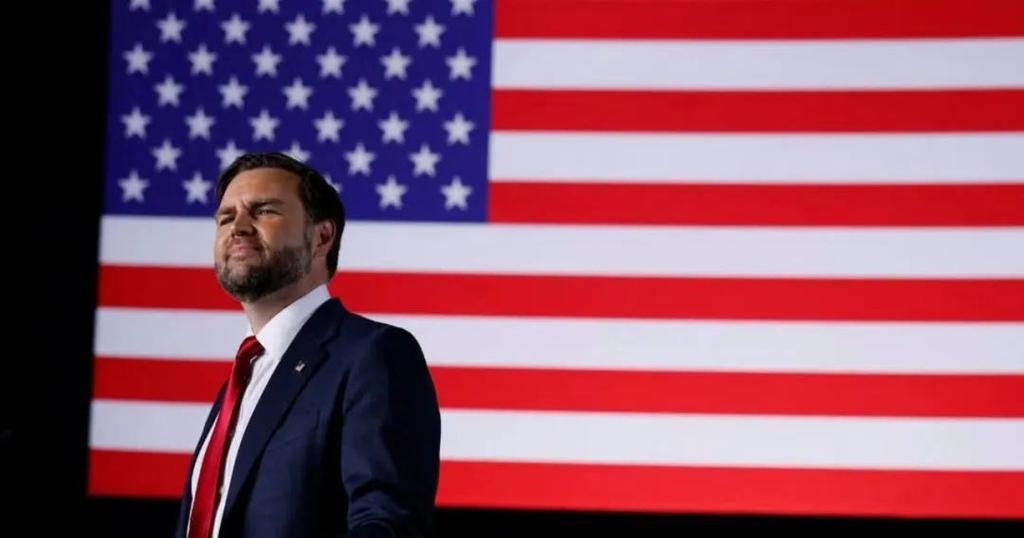
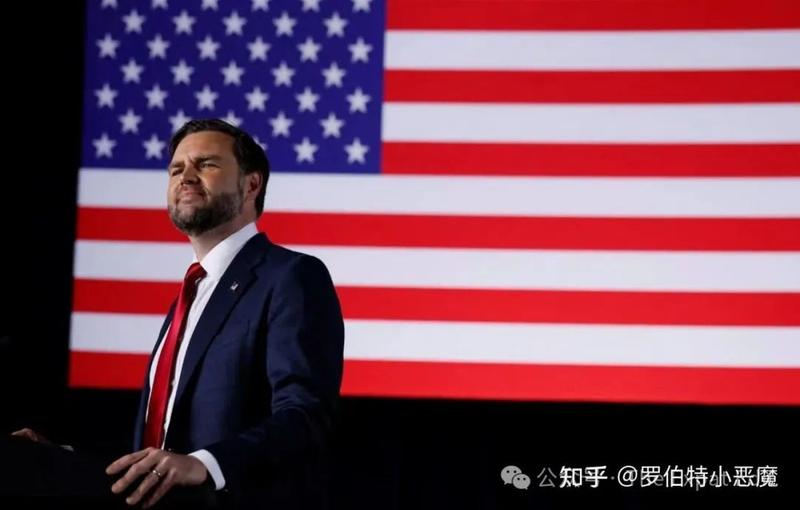
The day after Republicans lost control of both houses of Congress in the American midterms, Vice President JD Vance posted a long message blaming the war with Iran. President Donald Trump called the post good and said he knew how Vance felt about it. Whether that exchange was a rift or a rehearsal depends on whom you ask.
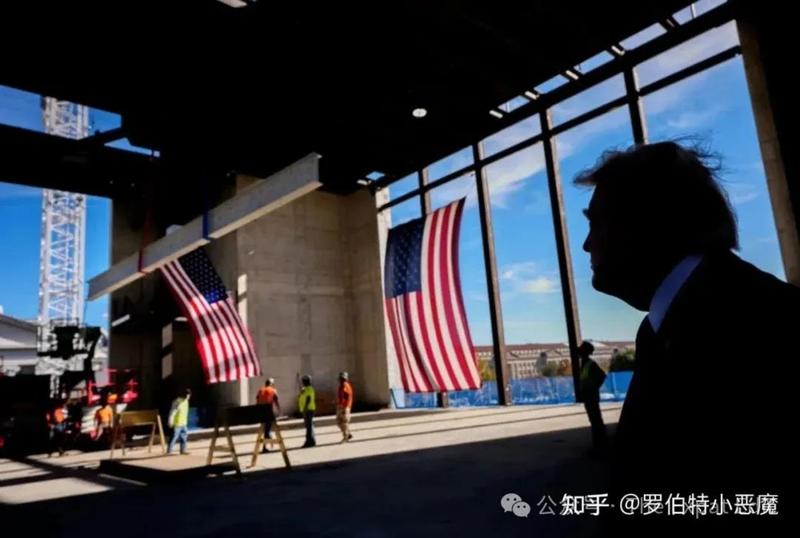
Vance did not soften it. “The reason we lost is the war. The president himself said so last night,” he wrote on X on Wednesday. He went on to cite a pollster’s survey of people who had voted for Trump in 2024 and for Democrats this week. They said they wanted four things: an end to the war, a focus on the cost of living and inflation, putting America first, and a change in America’s relationship with Israel. That afternoon, giving reporters a tour of his White House ballroom construction site, Trump agreed the war had cost votes because gasoline prices rose. He also said he would have done nothing differently, and that Iran could not be allowed a nuclear weapon.
In China, the episode quickly became one of the top questions on Zhihu, the long-form question-and-answer platform where users argue world affairs at length. The question was blunt: is Vance cutting ties with Trump? The verb it used, qiege, literally “to cut,” is the word Chinese social media uses when a brand drops a disgraced spokesperson or a celebrity distances himself from a scandal-hit friend. Most of the answers took the word seriously, and almost none took it at face value.
What readers brought instead was a frame every Chinese television viewer knows: the palace drama, or gongdou, in which heirs, ministers and consorts maneuver around an aging ruler. Trump appears throughout under his Chinese internet nickname, Dong Wang, roughly “the King Who Knows Everything,” a teasing epithet dating from his first term. Vance is cast as the crown prince. One user wrote out the script. Vance would not break with Trump, he predicted, but would play a tragic role: the emperor is surrounded by treacherous ministers, the crown prince pleaded and was ignored, and the faithful should not lose heart but rally in 2028.
The thread’s leading answer took the long view. It traced Vance’s distance back to February, when, as American outlets reported, he was skeptical behind closed doors about the strikes on Iran that Trump and Israel launched late that month. The author leaned on a New York Times account, citing anonymous officials, that Vance was the lone strong voice against the war in Trump’s inner circle. From there the answer moved well past the reporting. It argued that Vance had been pushed to front the diplomacy with Iran this summer and had quietly dragged his feet, and that his objections really spoke for unhappy factions in the party and the Pentagon. Those are the author’s readings, not established facts. He was also, in the style of Chinese political commentary, merciless about Vance personally.
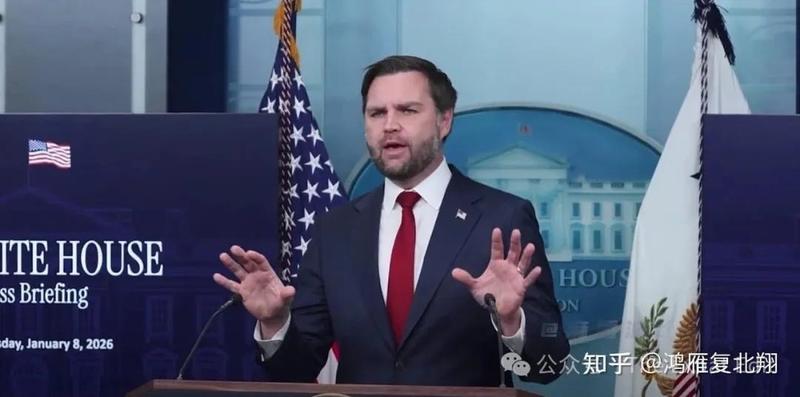
The most systematic answer came from Xinghua Dabai, a commentator who posts political analysis on Zhihu and video platforms. He argued that the war had split Trump’s movement in two. “Religious MAGA,” in his telling, is the evangelical wing, devoted to Israel and to Trump personally, which he credits with keeping Trump’s approval above 30 percent no matter what. “Secular MAGA,” the America First wing he associates with Vance and the broadcaster Tucker Carlson, is not antiwar so much as anti-losing, and turned on the war once it dragged on and pushed up prices. By that logic, he wrote, Vance is not betraying anyone. He is cashing in on a position he held all along.
He also offered a historical comparison. In 2021, Trump broke with his first vice president, Mike Pence, after Pence refused to block certification of the 2020 election. Vance’s case is different, he argued, because the disagreement is about one policy rather than about Trump himself, and because a president cannot fire a vice president. He described Vance’s style with a phrase from classical court politics, si fan shi zhong: appearing to oppose while remaining truly loyal. As evidence, he pointed to the leaked 2025 group chat in which Vance objected to strikes on Yemen’s Houthis, then deferred to the president in the same breath.
“The emperor is surrounded by bad ministers; the crown prince pleaded and the emperor would not listen.”
Not everyone accepted the premise. One user argued from the hawkish side that the war cost Republicans not because it was started but because, in his view, Trump never fought it to win. Another was skeptical of the whole Iran explanation. He noted that plenty of commentators on the Chinese internet were pushing the same conclusion, and suggested they check last year’s polling on prices before deciding. Experienced politicians always disappoint their base, he wrote. The trick is convincing it that anyone else would treat it worse. In his view, the United States is not going to elect a truly isolationist president.
Much of the thread, inevitably, was about 2028, and nearly all of it was speculation. Vance has said he would decide after the midterms whether to run. Several users were convinced Republicans could not win in 2028 and that Vance was really playing for 2032 or 2036. One compared him to Kamala Harris in 2024. If he campaigns on ending the war, he suggested, voters will ask why he did not end it while he was vice president.
What made the story travel in China was less Iran than the shape of the relationship: a deputy who disagrees in public, a leader who shrugs, and nobody quite saying what everyone suspects. Trump’s own response may have been the most palace-drama line of the week, and it was the first thing the thread’s top answer quoted. Asked about his vice president’s post, he did not rebuke him or defend himself. He said, simply, that he knew how Vance felt about it.
Read the original Zhihu thread: https://www.zhihu.com/question/2101610363875768152
Curated and translated from Zhihu, China's largest Q&A platform.
Newsletter
Subscribe to The Expat Edit
Chinese perspectives on global events, wars, and great power competition. Curated from Zhihu.
Free. No spam. View on Substack →