

All twelve B-1B bombers based at RAF Fairford left for the United States on 4 October. The New York Times and the Wall Street Journal, as Mario Nawfal read them on his show, reported that "the US has withdrawn all 12 B1 bombers from RAF Fairford in the UK following security concerns over a suspected Iran linked terror plot targeting the base."¹ The Journal added that American officials believe a branch of the Islamic Revolutionary Guard Corps recruited British nationals to target the aircraft,² a week after five British men arrested near the base were released on bail and their vans were found to hold petrol. Aaron David Miller, the former State Department negotiator, said on the same programme that three or four of the bombers had already left for their home base in South Dakota.³ He took the threat as genuine: "they're working on real time operational security intel which suggests a serious effort to get at those aircraft,"⁴ he said, noting that the British had separately arrested an Iranian national who appears unconnected to the Fairford five.⁵
In a separate programme, with Malcolm Nance as his guest, Nawfal read a statement from Iran's army spokesman: "in this war we came to the conclusion we definitely need to increase the range of our missiles and we have now moved in that direction."⁶ The reason given was that the enemy now sits as far as a thousand kilometres from Iran's shores. Set side by side, the two announcements pose the day's question. Either Washington is putting its aircraft beyond a threat it takes seriously, or it is clearing the board for a round it has already decided on, and the analysts who addressed it divided on which, and on when.
Anthony Aguilar, the retired Special Forces lieutenant colonel, dismissed the stated reason outright. On Nawfal's show, with Brandon Weichert hosting, he said that "the reason the United States is actually taking these bombers away from the UK is not because of the threat from this false flag."⁷ His evidence was what had not moved: the F-22s, F-35s, F-16s and strategic tankers in Qatar, a skip across the pond from Iran, were staying put, which a genuine terror threat would not explain.⁸ What explains it, in his reading, is range. He put Iran's missile reach at 2,000 to 2,500 kilometres and said the Caspian Sea, from container ships or Iran's own Caspian fleet, is a very possible launch option,⁹ so that "it almost looks like Iran is a dagger pointed at the heart of Europe."¹⁰ Nor was the move a few airframes: "It's the entire wing."¹¹ He placed the withdrawal alongside the Camp David meeting, where in his account "they were laying out plans for escalation and what that's going to look like,"¹² and concluded: "We're going to escalate again. This time it's going to be more than we've ever seen."¹³ For Aguilar the bombers are being moved out of a reach Iran is extending precisely because of the round that is coming.
Karen Kwiatkowski, the retired Air Force lieutenant colonel, reached the same verdict on the Fairford arrests by a different route. On the same show, with Weichert again co-hosting, she said that "either that was a false flag for some purpose,"¹⁴ or else the response made no sense: "if it was real, we would have taken it seriously and we wouldn't have moved our high value aircraft."¹⁵ Where Aguilar saw a wing being staged for a larger war, Kwiatkowski saw a military pulling back because it must. She said that "all our carriers are overextended. They're past their repair cycles,"¹⁶ and on munitions, "we're out of weapons, we're harboring and husbanding our weaponry."¹⁷ None of that made her trust the stated calendar. Of Trump's talk of acting after the elections, she said that "when he telegraphs something he's going to do at some point, he's usually lying,"¹⁸ and she thought a strike before the vote remained possible. Weichert agreed on the premise and parted on the date. "I don't actually believe that the deescalation is real. I think we're just repositioning to buy time,"¹⁹ he said, and then: "as soon as the election is over, Trump's got the carriers coming in. He'll send the bombers in if he needs to."²⁰
Alexander Mercouris, on The Duran, came at the question from the Strait of Hormuz. Oil is moving again, he said, but not because Washington controls the waterway: "some tankers have been able to pass through the Strait of Hormuz because the Iranians are letting them do so,"²¹ following deals Tehran struck with some of the Gulf states,²² brokered with Chinese and Russian help. The danger is how that traffic is being read. Washington and Israel take the returning tankers as a sign that Iran is buckling, and "this assumption that Iran is really weakening is wrong."²³ A Washington that believes it is winning is more likely to move, and he attached a date: "I think there's a fairly good chance it will happen before the midterms actually."²⁴ He read the announced departure of American troops from Iraq as positioning for that, "the United States broadcasting the fact that its troops in Iraq are no longer there and therefore that they're not any longer in the crosshairs,"²⁵ a step hard to separate from the third carrier ordered toward the Gulf last week.
Miller is the dissent, and a considered one. Seven months in, he called the war a stalemate with no urgency on either side: "I don't anticipate any major American military action over the next 30 days. I think Trump does not want to escalate."²⁶ Before the midterms he expects episodic strikes, not a regional war, and his explanation was about pain. "People settle when the pain of continuing becomes too much. But there isn't enough pain,"²⁷ he said, then listed what has not happened: "You don't have oil at $150 or $200 a barrel. You don't have a global recession."²⁸ Oil near $100 is tolerable in Washington, and so is the stalemate. "You and I could be talking about this in January of 2027,"²⁹ he told Nawfal.
Trita Parsi of the Quincy Institute, speaking with Tom Switzer, started from the pain on the other side. The New York Times reported on 4 October that Mohsen Rezaei had warned of a dire economic crisis under the tightened blockade, and Parsi did not dispute that Iran is hurting. "I don't think however we are seeing signs that this is in any way shape or form leading to the collapse of the theocracy,"³⁰ he said. The reason is the one Miller named, pain, borne differently by the two sides.³¹
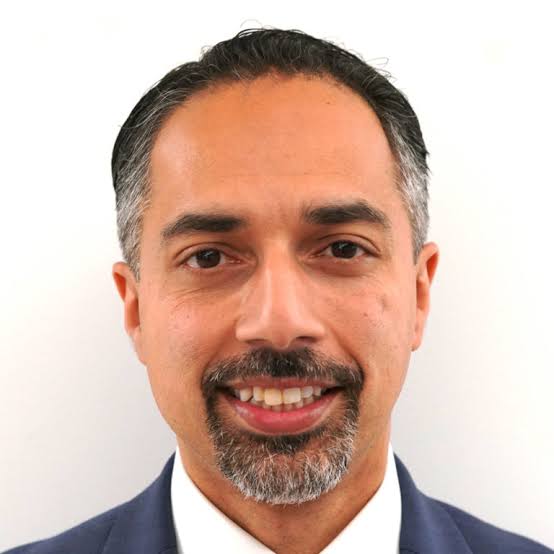
“The tolerance on the Iranian side is higher for a very simple reason. They believe they're fighting an existential fight.”
"That type of a capitulation, which is what Trump is looking for, is simply not in the cards,"³² Parsi said, and so "my baseline prediction is that the most likely outcome is a third round of the war."³³ Where he differed from everyone else was on who starts it. "I do think that the Iranians are going to likely preempt the US a week or so before the midterms,"³⁴ he said, adding a warning about the vote itself: "A wounded Trump may actually become a far more reckless Trump."³⁵
The split on the withdrawal itself is real. Miller reads it as a security response to intelligence he considers serious; Aguilar, Kwiatkowski and Weichert reject the stated reason, though they differ on whether the wing is being staged for a larger war or husbanded by a force running short. On timing the division is three ways. Weichert takes Trump's post-election timetable at face value; Kwiatkowski and Mercouris expect the date to move forward, she because Trump telegraphs what he does not intend, he because Washington is misreading Hormuz as weakness; Parsi expects Tehran to move first. Only Miller expects the next month to pass quietly, and even he expects no settlement, because neither side has yet suffered enough to want one.
Kiev's load limits, Azov's two corps and the Saudi petrodollar
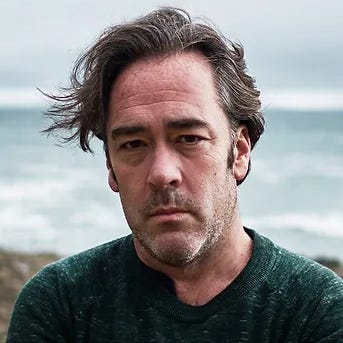
Alexander Mercouris, on his own channel, took up the Russian Defence Ministry's promise to intensify strikes after Zelensky's threats against Russian refineries, and placed it beside Sunday's drone strikes on two of Kiev's bridges across the Dnieper. The purpose, as he reads it, is not to drop the spans but to weaken them until they can no longer carry heavy loads, and no replacement will do the same work. "I think it is all but inconceivable that whatever bridges the Ukrainians are able to create over the next few weeks will be able to carry"³⁶ the heavy traffic the permanent bridges carried, he said.
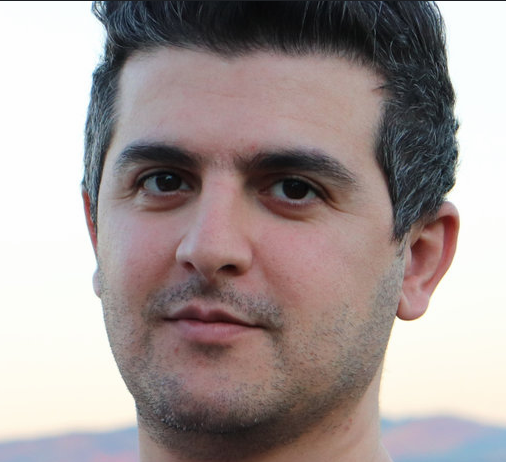
Gordon Hahn, on the Scott Horton Show, described Azov as now fielding two corps of roughly 50,000 men each, one of them under Andriy Biletsky and leading the Lyman offensive, a state within a state that any peace settlement would have to get past. "The difference is that the Azov people have the guns. That's the problem,"³⁷ he said.
Jiang Xueqin, on Glenn Diesen's show, argued that the flashpoint to watch is not Hormuz but a Saudi war with the Houthis, which he thinks could draw in Pakistan and the United States and put the dollar's oil backing at risk. "Saudi Arabia is the big basis of the petro dollar. If Saudi Arabia falls, so does the petro dollar,"³⁸ he said.
Sources
- Mario Nawfal, Mario Nawfal · reading the New York Times and Wall Street Journal: "the US has withdrawn all 12 B1 bombers from RAF Fairford in the UK following security concerns over a suspected Iran linked terror plot targeting the base" · watch ▶ 6:42
- Mario Nawfal, Mario Nawfal · reading the Wall Street Journal: US officials believe a branch of the IRGC recruited UK nationals to target the bombers · watch ▶ 6:56
- Aaron David Miller, Mario Nawfal · three or four of the bombers had already taken off for their home base in South Dakota · watch ▶ 0:52
- Aaron David Miller, Mario Nawfal · "they're working on real time operational security intel which suggests a serious effort to get at those aircraft" · watch ▶ 0:36
- Aaron David Miller, Mario Nawfal · the British arrested an Iranian national apparently unrelated to the five Fairford suspects · watch ▶ 1:43
- Mario Nawfal, Mario Nawfal · reading Iran's army spokesman: "in this war we came to the conclusion we definitely need to increase the range of our missiles and we have now moved in that direction" · watch ▶ 30:34
- Anthony Aguilar, Mario Nawfal · "the reason the United States is actually taking these bombers away from the UK is not because of the threat from this false flag" · watch ▶ 10:40
- Anthony Aguilar, Mario Nawfal · F-22s, F-35s, F-16s and strategic tankers remain a skip across the pond in Qatar, so the terror-threat rationale does not hold · watch ▶ 3:45
- Anthony Aguilar, Mario Nawfal · the Caspian Sea, from container ships or Iran's Caspian fleet, is a very possible launch option · watch ▶ 10:26
- Anthony Aguilar, Mario Nawfal · "it almost looks like Iran is a dagger pointed at the heart of Europe" · watch ▶ 13:01
- Anthony Aguilar, Mario Nawfal · "It's the entire wing" · watch ▶ 16:41
- Anthony Aguilar, Mario Nawfal · on the Camp David meeting: "they were laying out plans for escalation and what that's going to look like" · watch ▶ 3:28
- Anthony Aguilar, Mario Nawfal · "We're going to escalate again. This time it's going to be more than we've ever seen" · watch ▶ 18:04
- Karen Kwiatkowski, Mario Nawfal · on the Fairford arrests: "either that was a false flag for some purpose" · watch ▶ 17:52
- Karen Kwiatkowski, Mario Nawfal · "if it was real, we would have taken it seriously and we wouldn't have moved our high value aircraft" · watch ▶ 18:48
- Karen Kwiatkowski, Mario Nawfal · "all our carriers are overextended. They're past their repair cycles" · watch ▶ 10:30
- Karen Kwiatkowski, Mario Nawfal · "we're out of weapons, we're harboring and husbanding our weaponry" · watch ▶ 16:20
- Karen Kwiatkowski, Mario Nawfal · on Trump's after-the-election timetable: "when he telegraphs something he's going to do at some point, he's usually lying" · watch ▶ 21:05
- Brandon Weichert, Mario Nawfal · "I don't actually believe that the deescalation is real. I think we're just repositioning to buy time" · watch ▶ 27:05
- Brandon Weichert, Mario Nawfal · "as soon as the election is over, Trump's got the carriers coming in. He'll send the bombers in if he needs to" · watch ▶ 27:15
- Alexander Mercouris, The Duran · "some tankers have been able to pass through the Strait of Hormuz because the Iranians are letting them do so" · watch ▶ 6:35
- Alexander Mercouris, The Duran · the uptick in oil exports through Hormuz follows deals the Iranians did with some of the Persian Gulf states · watch ▶ 4:28
- Alexander Mercouris, The Duran · "this assumption that Iran is really weakening is wrong" · watch ▶ 18:04
- Alexander Mercouris, The Duran · "I think there's a fairly good chance it will happen before the midterms actually" · watch ▶ 14:45
- Alexander Mercouris, The Duran · "the United States broadcasting the fact that its troops in Iraq are no longer there and therefore that they're not any longer in the crosshairs" · watch ▶ 15:45
- Aaron David Miller, Mario Nawfal · "I don't anticipate any major American military action over the next 30 days. I think Trump does not want to escalate" · watch ▶ 7:35
- Aaron David Miller, Mario Nawfal · "People settle when the pain of continuing becomes too much. But there isn't enough pain" · watch ▶ 10:49
- Aaron David Miller, Mario Nawfal · "You don't have oil at $150 or $200 a barrel. You don't have a global recession" · watch ▶ 25:04
- Aaron David Miller, Mario Nawfal · "You and I could be talking about this in January of 2027" · watch ▶ 25:28
- Trita Parsi, Tom Switzer · "I don't think however we are seeing signs that this is in any way shape or form leading to the collapse of the theocracy" · watch ▶ 1:48
- Trita Parsi, Tom Switzer · "The tolerance on the Iranian side is higher for a very simple reason. They believe they're fighting an existential fight" · watch ▶ 7:22
- Trita Parsi, Tom Switzer · "That type of a capitulation, which is what Trump is looking for, is simply not in the cards" · watch ▶ 12:09
- Trita Parsi, Tom Switzer · "my baseline prediction is that the most likely outcome is a third round of the war" · watch ▶ 4:25
- Trita Parsi, Tom Switzer · "I do think that the Iranians are going to likely preempt the US a week or so before the midterms" · watch ▶ 25:03
- Trita Parsi, Tom Switzer · "A wounded Trump may actually become a far more reckless Trump" · watch ▶ 39:38
- Alexander Mercouris, Alexander Mercouris · "I think it is all but inconceivable that whatever bridges the Ukrainians are able to create over the next few weeks will be able to carry" the heavy traffic the permanent bridges carried · watch ▶ 38:16
- Gordon Hahn, Scott Horton Show · "The difference is that the Azov people have the guns. That's the problem" · watch ▶ 33:07
- Jiang Xueqin, Glenn Diesen · "Saudi Arabia is the big basis of the petro dollar. If Saudi Arabia falls, so does the petro dollar" · watch ▶ 28:18
By Ruins Report, a daily synthesis of what our tracked analysts said, not original reporting. Every numbered claim is sourced, dated, and timestamped above.
Newsletter
Get the Daily Debrief
One email each morning: what the analysts we track actually said, and every call timestamped to its source. Free.
Free. No spam. View on Substack →
Support the Report
Free to read, every day.
The Debrief is compiled each morning from what the analysts we track actually said, sourced and timestamped. No paywall, no ads, no investors. If it earns a place in your inbox, you can help keep it independent.
Support the report →