
At some point in the collapse of Yemen's Red Sea coast, the crown prince of Saudi Arabia asked the United States to bomb the Houthis and was told no. He asked a second time and heard the same answer. While the calls were being made and declined, Ansarallah took Mocha, moved onto the approaches to Perim Island, and settled in above the Bab el-Mandeb, the strait every ship leaving the Red Sea for the Indian Ocean has to pass. The question the analysts we track spent the day working through was not whether Riyadh was refused. It was what the refusal tells Riyadh, and what it tells every other government that built its security on the same American promise.
Nima Alkhorshid put the offensive that began on September 3 at roughly 5,400 square kilometers of captured ground, including the routes to Perim Island, the point that commands shipping through the strait. The forces Saudi Arabia and the United Arab Emirates had sponsored on that coast did not hold and, in his account, ended up fighting each other.¹ Then came the calls. Mohammed bin Salman asked Donald Trump twice to intervene militarily, Alkhorshid said, and the answer did not change: "Donald Trump said no. He has his own problems right now."² He connected the refusal to the failed American bombing campaign against Ansarallah in 2025 and to a president whose attention has narrowed to the midterms, and concluded that Washington has written off the Red Sea.
Chas Freeman, in a separate conversation with Alkhorshid, framed the same refusal from the Saudi side of the table. A kingdom that counts on the United States for protection now finds that protection unavailable against Israel, against Iran, and against Ansarallah, and Freeman's verdict on what remains of the military partnership was two words: not very much.³ Washington, in his telling, is unwilling to defend Saudi Arabia and also unable to, and he placed both words in the same sentence.
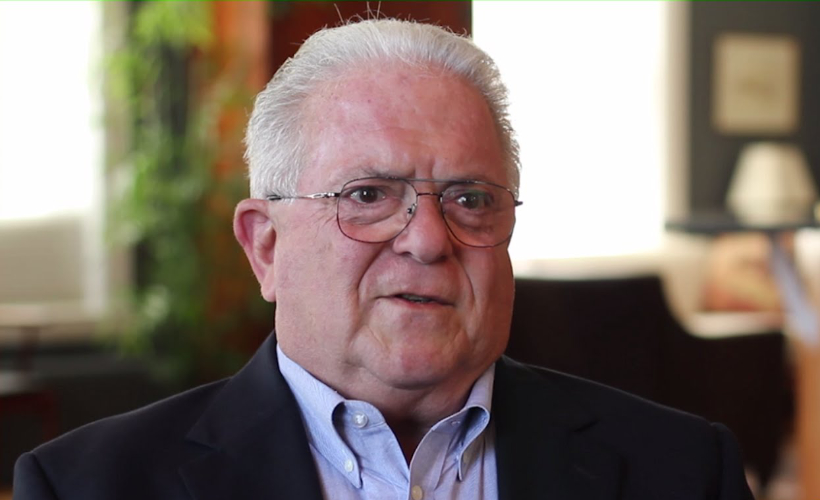
“If you are Saudi and you count on the United States for protection and the United States is unwilling as well as unable to provide it, either against Israel or against Iran or now against Ansar Allah, then what is left of the US Saudi military partnership? Not very much.”
Alexander Mercouris reached for the longest yardstick available. "This is the biggest crisis that Saudi Arabia has faced since the foundation of the kingdom in the 1920s, in my opinion."⁴ Renewed Saudi bombing, he argued, has not altered the fact that the Houthis now dominate Yemen and the Red Sea, and oil has moved back above $100 a barrel while they do.⁴
Trita Parsi, in conversation with Glenn Diesen, ranked the Red Sea above the Strait of Hormuz as the strategic development of the moment. A Yemen that holds Perim Island can counter-blockade Saudi Arabia, and with two chokepoints in play something like a third of global oil flow sits under threat. That is why he objected to the way the partial reopening of Hormuz was received: "the Western media once again confused a tactical step forward for the US with a magnificent decisive strategic victory. And clearly it was not."⁵ His larger judgment was blunter. "In my view, the United States lost control of this war on day one."⁶ The American military is overstretched, in his reading, and the Gulf logistics it depends on have been largely destroyed by Iran.
Riyadh's options, as the analysts describe them, are narrow. Alkhorshid reported that Saudi Arabia is preparing to send more ground forces into Yemen to push Ansarallah out of the territory it now holds.⁷ He does not expect it to work. "Saudi Arabia is not going to be able to continue this war, and this war is not going to benefit Saudi Arabia."⁸
Joe Kent, talking with Daniel Davis, brought the view from the ground. He trained Yemeni forces earlier in his career, and what he sees now is Yemen's tribes rallying to the Houthis, not as anyone's proxy but as defenders against America and Israel, which is precisely the enemy Washington's framing had declared them to be. "We have a heck of a way of making self-fulfilling prophecies, don't we?"⁹ The pattern, in his account, runs from Iraq's collapse in 2014 to Yemen today: terrain, tribal dynamics, and second-order effects ignored every time. America's claim to be the region's security guarantor, he said, has been shattered, and the war is being continued for zero strategic gain to the American people.
On this point Freeman, Alkhorshid, Mercouris, Parsi and Kent converge, and the convergence is the story. The refusal to bomb the Houthis is not a lapse in an otherwise functioning guarantee. It is a disclosure of what the guarantee had already become. The Gulf order rested on a proposition that an attack on Saudi oil, Saudi shipping, or Saudi territory would summon American power. Riyadh has now tested that proposition directly, twice, at the moment of greatest need, and the answer was that the president has his own problems. Freeman's word "unable" is doing more work than his word "unwilling". A United States that has lost effective control of Hormuz and the Bab el-Mandeb, whose Gulf logistics Parsi describes as largely destroyed, and whose earlier campaign against this same enemy failed, could not easily have said yes even had it wished to.
Where they part is on what Washington does next, and when. Parsi puts the odds of a third round of the war at no less than 80 percent unless something changes in the next six to seven weeks, timed in his estimate around the midterms and with Israel going much further than it did last time.¹⁰ Freeman measures in years rather than weeks: "the war could go on until the end of Trump's term."¹¹ Kent sees the same fork Parsi does but leaves the second branch open: "that's either going to be a bigger bomb or he's waiting till after the midterms to just walk away."¹²
Alkhorshid is the one who points somewhere other than Washington. He noted that the foreign ministers of the Gulf Cooperation Council are due to meet their Iranian counterparts in Oman to discuss the region's security architecture, a conversation that would not have needed to happen while the American guarantee still held.¹³ His conclusion was the plainest sentence of the day. "The solution is not in Washington. The solution is not in Tel Aviv, is not in Israel. The solution is Mecca."¹⁴ Whether Riyadh hears the second no as a humiliation or as permission may decide more than the next round of the war.
Elsewhere on the day
Ukraine's air defense is coming apart. Ted Postol, the MIT physicist, told Nima Alkhorshid that Russian Iskander strikes have wiped out Ukrainian air-defense radars and that Russia is now putting thousands of guided glide bombs a month through the gap. "It looks to me like things are going to collapse very fast for Ukraine now and the Russians want that to happen."¹⁵ Mercouris, in the same broadcast that carried his Saudi remarks, described Russia's round-the-clock drone-and-bomb offensive as "a fundamental change from the war in the sky as it was previously conducted in 2022, 2023, 2024, 2025, and for the first half of 2026."¹⁶
Moscow's read of Washington has not softened. Larry Johnson, reporting to Andrew Napolitano on Judging Freedom from a dinner with Sergey Lavrov in St. Petersburg, said Russian officials still do not trust the American president. "Trump is agreement incapable."¹⁷ Moscow, in his account, is holding to the terms Putin set out in 2024, no NATO membership for Ukraine and recognition of the annexed territories, and expects the war to continue.¹⁷
The American oil cushion is nearly gone. David Pyne, a national security analyst, told Nate of Canadian Prepper that the Strategic Petroleum Reserve is within seven to ten days of the minimum level Congress authorizes, and that significant increases in oil prices should follow.¹⁸ Set beside Parsi's third of global oil flow under threat at two chokepoints, it is the number that turns a Gulf crisis into an American one.
Sources
- Nima Alkhorshid, *Dialogue Works* · Yemen's offensive since September 3 has taken roughly 5,400 square kilometers, including the routes to Perim Island, with Saudi- and UAE-backed forces collapsing watch ▶ 1:38
- Nima Alkhorshid, *Dialogue Works* · Mohammed bin Salman twice asked Trump to intervene in Yemen and was refused watch ▶ 7:30
- Chas Freeman, *Dialogue Works* · With Washington unwilling and unable to protect it, not much is left of the US-Saudi military partnership watch ▶ 7:27
- Alexander Mercouris, *Alexander Mercouris* · Saudi Arabia faces its biggest crisis since the founding of the kingdom, with oil above $100 a barrel watch ▶ 83:22
- Trita Parsi, *Glenn Diesen* · The partial reopening of Hormuz was a tactical step mistaken for a decisive strategic victory watch ▶ 2:18
- Trita Parsi, *Glenn Diesen* · The United States lost control of the war on day one and never regained it watch ▶ 25:50
- Nima Alkhorshid, *Dialogue Works* · Saudi Arabia is preparing to send more ground forces into Yemen to push Ansarallah back watch ▶ 12:48
- Nima Alkhorshid, *Dialogue Works* · Saudi Arabia cannot sustain the war and will not benefit from it watch ▶ 17:02
- Joe Kent, *Daniel Davis / Deep Dive* · Yemeni tribes are rallying to the Houthis as anti-American defenders, a self-fulfilling prophecy of US policy watch ▶ 17:04
- Trita Parsi, *Glenn Diesen* · At least an 80 percent chance of a third round of war within six to seven weeks watch ▶ 35:53
- Chas Freeman, *Dialogue Works* · The war could go on until the end of Trump's term watch ▶ 20:49
- Joe Kent, *Daniel Davis / Deep Dive* · Trump is headed either for a bigger bomb or a walk-away after the midterms watch ▶ 40:48
- Nima Alkhorshid, *Dialogue Works* · GCC foreign ministers will meet Iranian counterparts in Oman to discuss the region's security architecture watch ▶ 17:33
- Nima Alkhorshid, *Dialogue Works* · The solution is not in Washington or Tel Aviv; the solution is Mecca watch ▶ 27:28
- Ted Postol, *Dialogue Works* · Ukraine's front is likely to collapse very fast, and Russia wants that to happen watch ▶ 40:13
- Alexander Mercouris, *Alexander Mercouris* · Russia's continuous air offensive is a fundamental change in how the war in the sky is fought watch ▶ 3:13
- Larry Johnson, *Judging Freedom* · Russian officials call Trump agreement incapable, hold to the 2024 terms, and expect the war to continue watch ▶ 2:40
- David Pyne, *Canadian Prepper* · The Strategic Petroleum Reserve is within 7 to 10 days of its congressionally authorized minimum, with oil price hikes to follow watch ▶ 4:37
By Ruins Report, a daily synthesis of what our tracked analysts said, not original reporting. Every numbered claim is sourced, dated, and timestamped above.
Newsletter
Get the Daily Debrief
One email each morning: what the analysts we track actually said, and every call timestamped to its source. Free.
Free. No spam. View on Substack →
Support the Report
Free to read, every day.
The Debrief is compiled each morning from what the analysts we track actually said, sourced and timestamped. No paywall, no ads, no investors. If it earns a place in your inbox, you can help keep it independent.
Support the report →