
A war is supposed to have an author. When Washington and Israel opened their campaign against Iran, and then widened it to Yemen and the Houthis, the working assumption was that the United States would set the tempo and its partners in the Gulf would shelter behind it. The question the analysts we track kept returning to today is whether that assumption still holds, or whether the war has escaped its authors and begun to damage the two allies it was meant to protect, Israel and Saudi Arabia.
John Mearsheimer, on Judging Freedom, gave the bluntest version of the case. The war, he said, was a fundamental strategic mistake that is reshaping the region against American and Israeli interests, and the reshaping is being done by the other side: "it's the Iranians and the Houthis who are reconfiguring the Middle East, not the Americans who are retreating."¹ The sanctions and blockade approach has failed outright in his reading, and Iran now holds a military edge over both the United States and Saudi Arabia that he compressed into a single image: "Iran versus Saudi Arabia is Bambi versus Godzilla."² Washington, unable to secure the Gulf states it has promised to defend, is left looking, in his phrase, "like a toothless ally."³
Chas Freeman reached the same conclusion from the diplomatic record. Riyadh has twice asked the Trump administration for military help against the Houthis and has twice been turned down, and Freeman, a former ambassador to Saudi Arabia, treats the alliance as effectively broken as a result. "What use is an ally if the ally ignores your pleas for support when you're desperate?"⁴ He attributes the failure less to a decision than to the absence of any process for making one. The government that "used to be a symphony conducted by the president" is "now a one-man band, Donald J. Trump."⁵ Aaron Maté, on the same program, pushed the point to its limit, asking whether the United States "is still an ally of anybody except for Israel," the one country he says the whole enterprise has benefited.⁶
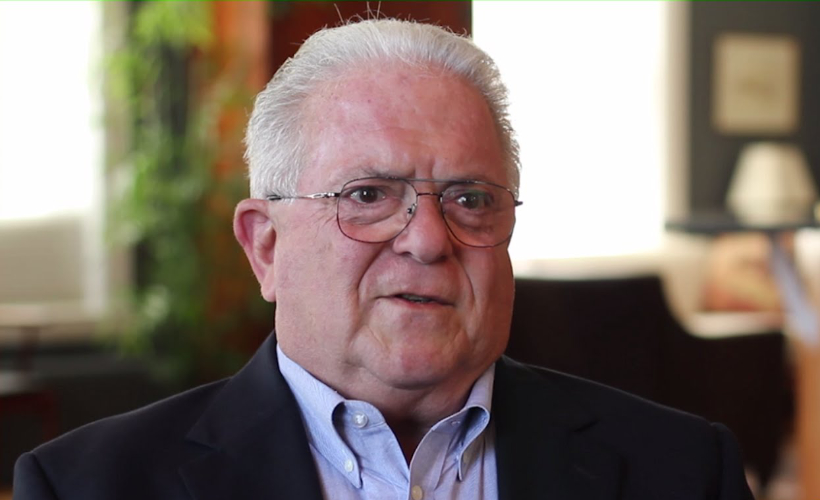
“What use is an ally if the ally ignores your pleas for support when you're desperate?”
Lawrence Wilkerson, speaking with Glenn Diesen, went further than either. He put the odds of Saudi Arabia surviving the war intact at even money: "I would say there's a 50/50 chance we're going to see Saudi Arabia disappear as a nation state."⁷ He does not expect American ground forces to remain in the region to speak of once the fighting ends, not even in Egypt.⁸ And he located the source of the instability not in Tehran but in the ally around which Washington has organized its entire policy: "The real problem in the Persian Gulf is not Iran, it's Israel."⁹
This is where the argument turns on Israel itself. Douglas Macgregor described an administration that gives Israel and its lobby whatever they demand, "the Israel first administration," in his words, even as Israel struggles to protect its own territory.¹⁰ The strategy of concentrating American forces there, he argued, makes them more exposed rather than less: "If they can herd all of us into Israel, we present a very lucrative target that is easy to identify, easy to reach, and relatively easy to destroy."¹¹ Mearsheimer added the consequence Israel feared most when the war began. With the blockade failing and the strikes having shown the limits of what force can achieve, he said, "there's good reasons to think that Iran may now move to develop a bomb."¹² The campaign designed to foreclose an Iranian weapon may have made one more likely.
Taken together, the readings converge on a single point that none of the analysts disputed: the war is no longer serving the interests in whose name it was launched. Saudi Arabia has learned that its protector will not answer when it calls. Israel has learned that American forces on its soil are a liability as much as a shield, and that the adversary it set out to disarm now has a stronger case for the weapon than it had before. The deeper cause is the one Freeman named. A policy made by one man, for one client, has no mechanism for noticing when it stops working, and so it does not stop. Wilkerson's darkest forecast, that Netanyahu's trajectory ends in "the dissolution of the Jewish state of Israel, which I think is forthcoming,"¹³ sits at the far edge of the range rather than its center. But the center is grim enough on its own terms: an alliance in which the senior partner can no longer protect the junior ones, and the junior partner that directs policy is the one most exposed by it.
Three other threads
Alexander Mercouris says the battle of Orekhov is effectively over and about to be confirmed as a full Russian capture, an outcome he expects to open southern Ukraine, including Zaporozhye city, to further advances.¹⁴ He also dismissed Trump's Truth Social announcement of a Ukraine-Russia truce on energy strikes as false, calling it "another example of him providing us with information about a war, in this case the Ukraine war, which has turned out to be completely wrong and entirely unreliable."¹⁴
Karen Kwiatkowski, on Judging Freedom, treated the proposed $2.8 billion sale of 40,000 bombs to Israel as reckless escalation that an AIPAC-financed legislature is unlikely to block. Her verdict on the institution that would have to stop it was short: "We don't have a Congress. We have a Knesset 2.0."¹⁵
Mohammad Marandi, speaking with Nima Alkhorshid on Dialogue Works, rejected the premise that pressure is wearing Tehran down. "Iran is not desperate. Iran will tolerate this situation until whenever."¹⁶ He pointed to the Iranian foreign minister's trip to Beijing ahead of the Xi-Trump meeting as evidence that Iran's ties with China and Russia are deepening under the strain rather than fraying.¹⁶
Sources
- John Mearsheimer, *Judging Freedom* · Iran and the Houthis, not a retreating America, are reconfiguring the Middle East watch ▶ 19:42
- John Mearsheimer, *Judging Freedom* · Iran versus Saudi Arabia is "Bambi versus Godzilla" watch ▶ 25:46
- John Mearsheimer, *Judging Freedom* · The US cannot secure its Gulf allies and looks like a toothless ally watch ▶ 20:53
- Chas Freeman, *Judging Freedom* · The US-Saudi alliance is broken after Trump twice refused Riyadh's request for help against the Houthis watch ▶ 17:01
- Chas Freeman, *Judging Freedom* · US foreign policy has become a one-man band with no orderly process watch ▶ 28:14
- Aaron Maté, *Judging Freedom* · The US is no longer an ally to anyone but Israel, the only country the war has benefited watch ▶ 6:14
- Lawrence Wilkerson, *Glenn Diesen* · A 50/50 chance Saudi Arabia disappears as a nation state watch ▶ 5:26
- Lawrence Wilkerson, *Glenn Diesen* · Expects no US ground forces left in the region once the war concludes, not even in Egypt watch ▶ 17:20
- Lawrence Wilkerson, *Glenn Diesen* · The real problem in the Gulf is not Iran but Israel watch ▶ 16:51
- Douglas Macgregor, *Judging Freedom* · This is an "Israel first" administration that gives Israel and its lobby whatever they demand watch ▶ 11:09
- Douglas Macgregor, *Judging Freedom* · Herding US forces into Israel makes them a lucrative, easy target watch ▶ 16:13
- John Mearsheimer, *Judging Freedom* · Good reasons to think Iran may now move to develop a bomb watch ▶ 4:28
- Lawrence Wilkerson, *Glenn Diesen* · Netanyahu's trajectory ends in the dissolution of the Jewish state of Israel watch ▶ 29:24
- Alexander Mercouris, *Alexander Mercouris* · Orekhov is effectively lost to Russia and Trump's energy-truce claim was false and unreliable watch ▶ 16:06
- Karen Kwiatkowski, *Judging Freedom* · An AIPAC-financed Congress, a "Knesset 2.0," will not block the $2.8 billion bomb sale to Israel watch ▶ 8:45
- Mohammad Marandi, *Dialogue Works* · Iran is not desperate and will hold out; its foreign minister's Beijing trip signals deepening ties with China watch ▶ 43:12
By Ruins Report, a daily synthesis of what our tracked analysts said, not original reporting. Every numbered claim is sourced, dated, and timestamped above.
Newsletter
Get the Daily Debrief
One email each morning: what the analysts we track actually said, and every call timestamped to its source. Free.
Free. No spam. View on Substack →
Support the Report
Free to read, every day.
The Debrief is compiled each morning from what the analysts we track actually said, sourced and timestamped. No paywall, no ads, no investors. If it earns a place in your inbox, you can help keep it independent.
Support the report →