
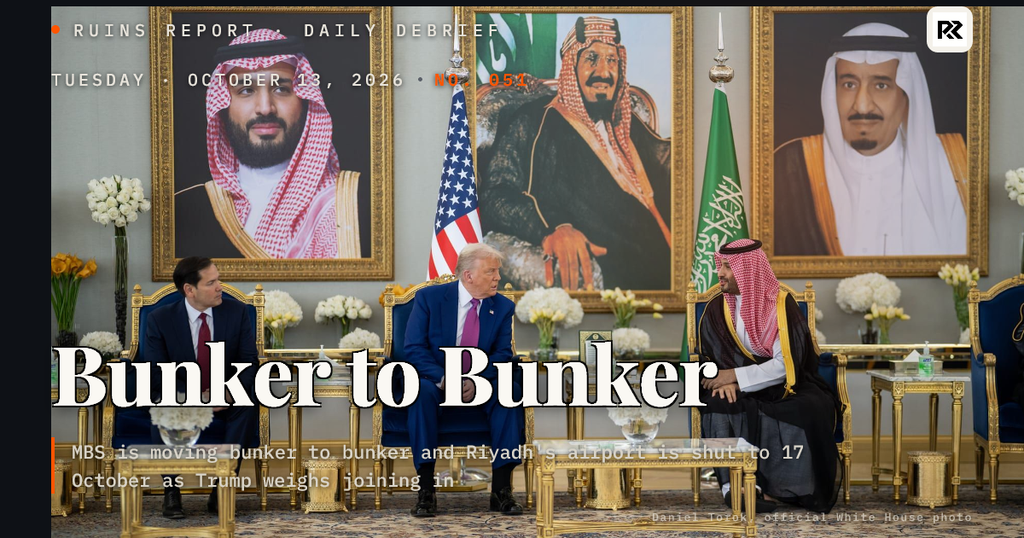
Mohammed bin Salman is moving from bunker to bunker. The Wall Street Journal gives the reason as fear that Ansar Allah will strike his palaces,¹ and adds that the kingdom, running low on interceptors, is pulling air-defence batteries back to cover its energy facilities and those palaces.² On Monday 12 October King Khalid International Airport outside Riyadh, where a missile killed at least 13 people and injured more than 300, was declared shut until 17 October,³ and the AP reports that Riyadh has opened an inquiry into why its air defences failed to stop the barrage.⁴
Donald Trump was asked outside the White House on Saturday 10 October whether the United States would join the Saudi strikes. "We may, we're going to look at it," he said. "We just found out about the recent attack. So we'll make a decision. We move very quickly."⁵
Robert Barnes does not expect the answer to be yes: the military command "already got whipped by the Houthis" and has "no interest to go on a two-front conflict in the Middle East."⁶ Patrick Henningsen was blunter: "the US doesn't give a damn about the security of any of these Gulf states. They painted targets on all of them."⁷ So the crown prince is underground, his main airport is shut, his interceptors are running out and his guarantor is deciding whether to show up. The question is where the danger to him actually sits, and on Monday's reading it is not in Yemen.
Alastair Crooke has seen the Journal's report and does not believe the fear it describes. "But this isn't the real threat to MBS. The real threat is an internal threat," he said. The crown prince is moving "from dugout to dugout," into safe rooms under his palaces, "for fear of a Houthi assassination"; what he is actually frightened of, in Crooke's reading, "is an assassination by one of his own family or by a military officer." The precedent is in the family record. "It was in 75 that a king was assassinated in his royal palace. And who assassinated him? Well, it wasn't an outsider. It was his own nephew."⁸ In a second interview the same day he said it without the hedge: "it's actually not Ansar Allah that is a threat to MBS in any physical sense at all." The likely cause of his downfall "will come from within Saudi Arabia within the tribal structures of Saudi Arabia," and the crown prince "has created this vulnerability by his own hand."⁹
The mechanism, as Crooke describes it, is that the crown prince dismantled the structure that kept his predecessors on the throne. "He has effectively cut off all the pillars of his support. The paradox is he's cut it off by his own hand." He divided the military and set its branches against one another, used the National Guard to "keep an eye out for any disaffection within the army, which is immediately dealt with," and diminished the religious authorities.¹⁰ A monarchy that once rested on the family, the tribes, the army and the clerics now rests on one man, and "he has cut away the pillars of his own legitimacy to the point at which yes he is threatened and may be deposed in this coming period."¹¹
Abdullah Alaoudh, the Saudi dissident, described the same design from inside it. "If you lock up not the king, just the crown prince in a room, the whole system will collapse," he said. "It's MBS. He made the system himself."¹² The host's gloss was a state with one point of failure rather than many nodes. The war has exposed it: "it's way more vulnerable than we ever anticipated," he said,¹³ and the United States "is not even willing to be a reliable supplier of interceptors because they struggle on their own."¹⁴ It is why he puts the odds of Saudi ground troops entering Yemen at five or ten percent: sending the army south "would make him weaker back home because there's less troops to protect the kingdom." The crown prince has begged Egypt, Syria's Ahmed al-Sharaa and others to send soldiers instead.¹⁵
“If you lock up not the king, just the crown prince in a room, the whole system will collapse.”
The second pressure is money. The damaged facilities will take "five years or more" to begin to restore, Crooke said, and in the meantime Riyadh is not exporting and not earning, while most of what it imports is paid for from oil revenue.¹⁶ He put the share at 83 percent: "That's a lot. And as the oil exports are now zero, what's going to happen?"¹⁷ Two exits remain, neither painless: let the riyal fall, or defend the peg by selling foreign exchange reserves, "but that will cause big consequences for the United States. Look what happened when Japan started doing that." On either path the Saudi standard of living "is going to decline."¹⁸ A ruler who has removed every other pillar is left standing on prosperity, and prosperity is what the war has already taken.
Pepe Escobar draws the conclusion. "But I think this is the beginning of the end for the house of Saud. It may take a long time. It could collapse just like that puppet government in Afghanistan that collapsed in 10 days." Nor does he expect a diplomatic exit: "He's so desperate, Danny. He even asked the Chinese to intervene."¹⁹ The timetable is short. "This is the escalation ladder for the next three weeks. It's not after the midterms."²⁰ The exchange so far is "an airport against an airport," but the Houthis "can up the ante anytime," and if the coalition escalates the answer is the East-West pipeline, Abqaiq and Yanbu, "paralyzed for many more weeks after that, perhaps even a month or two."²¹ Behind them stands Tehran: "Iran and Yemen come as a package."²²
Kevork Almassian explains why Riyadh cannot simply stop. Sanaa's rule is explicit: "If you're going to strike our airports, we're going to strike your airports."²³ But the war, in his reading, is no longer a choice the kingdom is making. "Yemen has become existential for the Saudi royal family after the failed war of aggression against Iran and Iran emerging as victorious," because the kingdom "is reliant and dependent on the American security architecture," and that architecture has just lost a war.²⁴ Washington's part is not rescue: "What Donald Trump is trying to do is to push the Saudis into the quagmire of Yemen again."²⁵
That is the deeper cause beneath the bunkers. Crooke, Alaoudh, Escobar and Almassian describe the same state from four angles: a monarchy that traded its old supports for a single ruler and an American guarantee, and has learned in the same month that the ruler is a target and the guarantee is something Trump will "look at." The missiles on King Khalid are the occasion. The threat is in the family, the tribes, the officer corps and the treasury, and by each of their readings the crown prince built it himself. Crooke mentioned reports, which he flagged as unverified, of contacts between Saudi tribal leaders and the IRGC about what follows the monarchy; that such a conversation is reported at all is the measure of how far the question has moved.
A truce Moscow never signed and six strikes in a day on Hormuz
Trump posted on Truth Social that Russia and Ukraine have agreed to an energy ceasefire; Moscow said only that contacts continue. Alexander Mercouris calls it "a ceasefire announcement that is just that, an announcement, no ceasefire," and reads Moscow plainly: "the Russians are not interested in a ceasefire in the conflict at this time," on the ground, in the sky or at sea.²⁶ Alexander Zhidkov, a Russian senator, gave the reason: "we can't make any temporary agreements with Zelensky. We should go to long-term agreements because every time when we make any temporary agreements Zelensky usually drop it."²⁷
The United Kingdom Maritime Trade Operations centre recorded six IRGC Navy strikes on shipping in Hormuz and the Gulf of Oman in 24 hours, the most in a day yet. Bobby Jones had a line for anyone claiming to control the strait: "You own the strait as much as I own a Lamborghini. We both don't have it."²⁸ On a wider American campaign: "I think if we escalate, it'll be the most expensive fireworks show that you've ever seen."²⁹
Sources
- Nima Alkhorshid, Dialogue Works · Wall Street Journal: MBS "is just moving bunker to bunker" for fear Ansar Allah will attack his palaces · watch ▶ 0:20
- Mario Nawfal, Mario Nawfal · Wall Street Journal: Saudi Arabia low on interceptors, redeploying air-defence batteries to protect energy facilities and the palaces · watch ▶ 1:10
- Nima Alkhorshid, Dialogue Works · King Khalid International Airport in Riyadh announced closed until 17 October; Jeddah's airport halted traffic · watch ▶ 1:05
- Nima Alkhorshid, Dialogue Works · AP: Saudi inquiry into why air defences failed, including the King Khalid strike "that killed at least 13 people and injured more than 300" · watch ▶ 5:50
- Daniel Davis, Daniel Davis / Deep Dive · Trump on joining the Saudi strikes: "We may, we're going to look at it... So we'll make a decision. We move very quickly." · watch ▶ 23:32
- Robert Barnes, Daniel Davis / Deep Dive · The military command "already got whipped by the Houthis" and has "no interest to go on a two-front conflict in the Middle East" · watch ▶ 23:32
- Patrick Henningsen, Daniel Davis / Deep Dive · "the US doesn't give a damn about the security of any of these Gulf states. They painted targets on all of them." · watch ▶ 8:49
- Alastair Crooke, Judging Freedom · "The real threat is an internal threat"; the 1975 king was killed in his palace by his own nephew · watch ▶ 13:25
- Alastair Crooke, Glenn Diesen · "it's actually not Ansar Allah that is a threat to MBS in any physical sense at all"; the downfall will come from within the tribal structures · watch ▶ 1:59
- Alastair Crooke, Judging Freedom · "He has effectively cut off all the pillars of his support. The paradox is he's cut it off by his own hand." · watch ▶ 17:13
- Alastair Crooke, Glenn Diesen · "he has cut away the pillars of his own legitimacy to the point at which yes he is threatened and may be deposed in this coming period" · watch ▶ 2:49
- Abdullah Alaoudh, Mario Nawfal · "If you lock up not the king, just the crown prince in a room, the whole system will collapse." · watch ▶ 33:57
- Abdullah Alaoudh, Mario Nawfal · "So it's way more vulnerable than we ever anticipated. And if you add to that the logistical problem of lacking interceptors..." · watch ▶ 37:41
- Abdullah Alaoudh, Mario Nawfal · "the US is not even willing to be a reliable supplier of interceptors because they struggle on their own." · watch ▶ 38:30
- Abdullah Alaoudh, Mario Nawfal · A 5 to 10 percent chance of Saudi ground troops in Yemen; it "would make him weaker back home"; he has begged Egypt, al-Sharaa and others for troops · watch ▶ 1:04:26
- Alastair Crooke, Judging Freedom · Repairs will take "five years or more"; Riyadh is not exporting or earning revenue while most imports are paid for from oil sales · watch ▶ 11:29
- Alastair Crooke, Glenn Diesen · "I think 83% of imports are financed by oil exports. That's a lot. And as the oil exports are now zero, what's going to happen?" · watch ▶ 6:10
- Alastair Crooke, Judging Freedom · Let the currency decline or sell reserves to hold the peg, "but that will cause big consequences for the United States"; the standard of living "is going to decline" · watch ▶ 12:27
- Pepe Escobar, Danny Haiphong · "this is the beginning of the end for the house of Saud"; MBS "even asked the Chinese to intervene" · watch ▶ 15:43
- Pepe Escobar, Danny Haiphong · "This is the escalation ladder for the next three weeks. It's not after the midterms."; only a "mega invasion" could subdue Ansar Allah · watch ▶ 2:30
- Pepe Escobar, Danny Haiphong · "This is an airport against an airport"; escalation brings the East-West pipeline, Abqaiq and Yanbu "paralyzed for many more weeks" · watch ▶ 26:44
- Pepe Escobar, Danny Haiphong · "Iran and Yemen come as a package." · watch ▶ 52:44
- Kevork Almassian, Rachel Blevins · "If you're going to strike our airports, we're going to strike your airports and that would deter the Saudis from striking the Yemeni infrastructure." · watch ▶ 4:03
- Kevork Almassian, Rachel Blevins · "Yemen has become existential for the Saudi royal family after the failed war of aggression against Iran"; the kingdom depends on the American security architecture · watch ▶ 6:32
- Kevork Almassian, Rachel Blevins · "What Donald Trump is trying to do is to push the Saudis into the quagmire of Yemen again." · watch ▶ 8:00
- Alexander Mercouris, Alexander Mercouris · "a ceasefire announcement that is just that an announcement no ceasefire"; "the Russians are not interested in a ceasefire in the conflict at this time" · watch ▶ 22:10
- Alexander Zhidkov, Daniel Davis / Deep Dive · "we can't make any temporary agreements with Zelensky. We should go to long-term agreements because every time when we make any temporary agreements Zelensky usually drop it." · watch ▶ 19:32
- Bobby Jones, Mario Nawfal · UKMTO logged six IRGC Navy strikes in 24 hours; "You own the strait as much as I own a Lamborghini. We both don't have it." · watch ▶ 17:53
- Bobby Jones, Mario Nawfal · "I think if we escalate, it'll be the most expensive fireworks show that you've ever seen." · watch ▶ 48:03
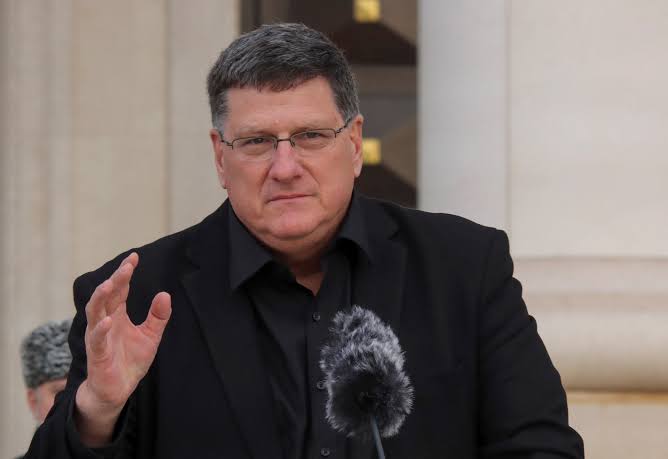
- Scott Ritter, Judging Freedom · "I think that we're looking at the end of the house of Saud. I think that Muhammad bin Salman is not long for this world." · watch ▶ 4:33
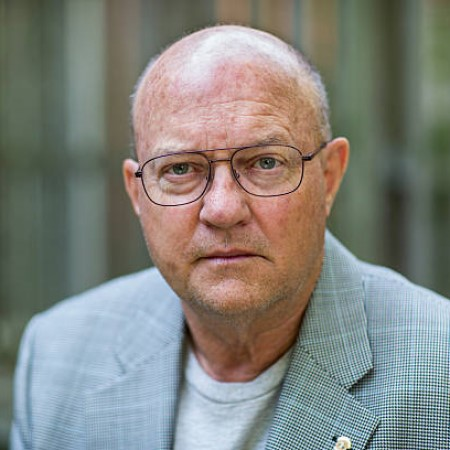
- Lawrence Wilkerson, Dialogue Works · "The House of Saud is being threatened existentially for the first time really in its history." · watch ▶ 4:38
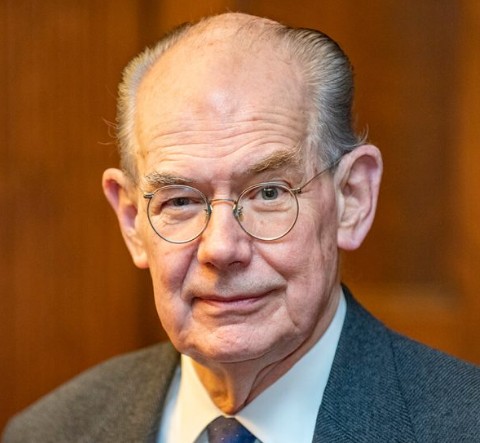
- John Mearsheimer, Rachel Blevins · "The Saudis are remarkably foolish to try to think that they can defeat the Houthis." · watch ▶
- Larry Johnson, Dialogue Works · "I would argue the collapse is already underway." · watch ▶ 12:53
By Ruins Report, a daily synthesis of what our tracked analysts said, not original reporting. Every numbered claim is sourced, dated, and timestamped above.
Newsletter
Get the Daily Debrief
One email each morning: what the analysts we track actually said, and every call timestamped to its source. Free.
Free. No spam. View on Substack →
Support the Report
Free to read, every day.
The Debrief is compiled each morning from what the analysts we track actually said, sourced and timestamped. No paywall, no ads, no investors. If it earns a place in your inbox, you can help keep it independent.
Support the report →